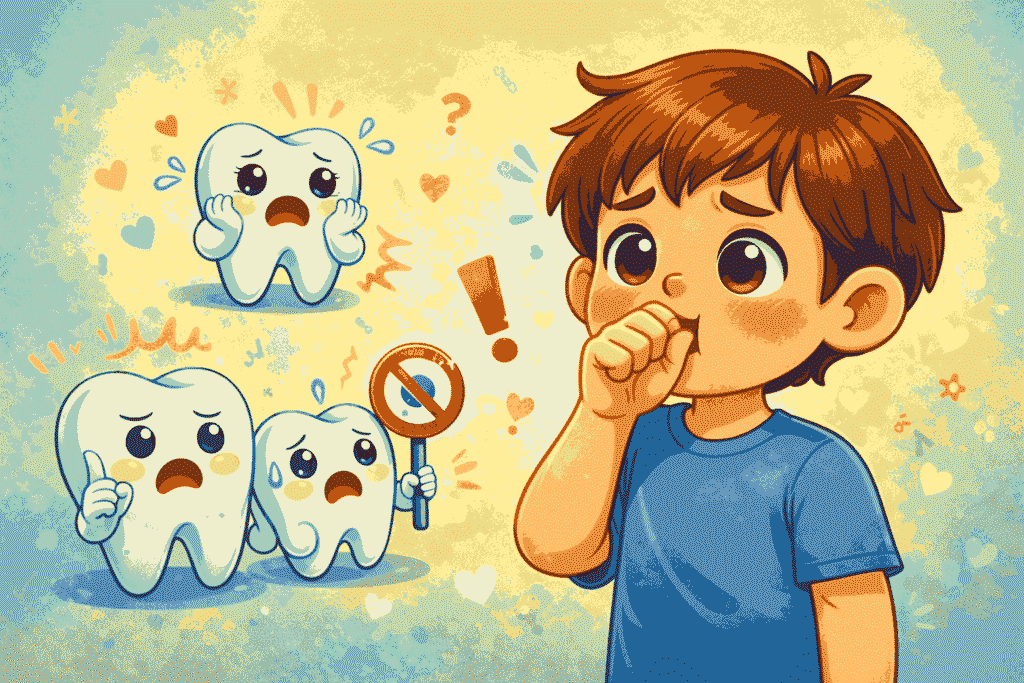
Thumb sucking is a natural and self-soothing habit seen in many babies and young children. It often helps infants feel secure and calm, especially during sleep or unfamiliar situations. While this behavior is completely normal in early childhood, prolonged thumb sucking can affect a child’s dental development and teeth alignment over time.
For parents, the challenge lies in knowing when thumb sucking is harmless and when it begins to cause dental problems. Understanding the impact of this habit can help parents intervene at the right time—without stress or unnecessary pressure on the child.
Why Do Children Suck Their Thumb?
Thumb sucking begins naturally in infancy, sometimes even before birth. Babies use it as a comforting mechanism that helps them relax, fall asleep, or cope with anxiety. As children grow, most gradually stop the habit on their own.
However, some children continue thumb sucking beyond toddler years due to emotional comfort, habit formation, or stress. When the habit persists for too long, it can start affecting oral structures.
Is Thumb Sucking Normal?
Thumb sucking is considered normal and harmless during the early years of life. In most cases, children stop naturally between the ages of 2 to 4 years.
At this stage:
- Baby teeth are still developing
- Jaw bones are flexible
- Permanent teeth have not yet erupted
Occasional thumb sucking during this period rarely causes long-term dental issues.
How Thumb Sucking Affects Teeth Alignment
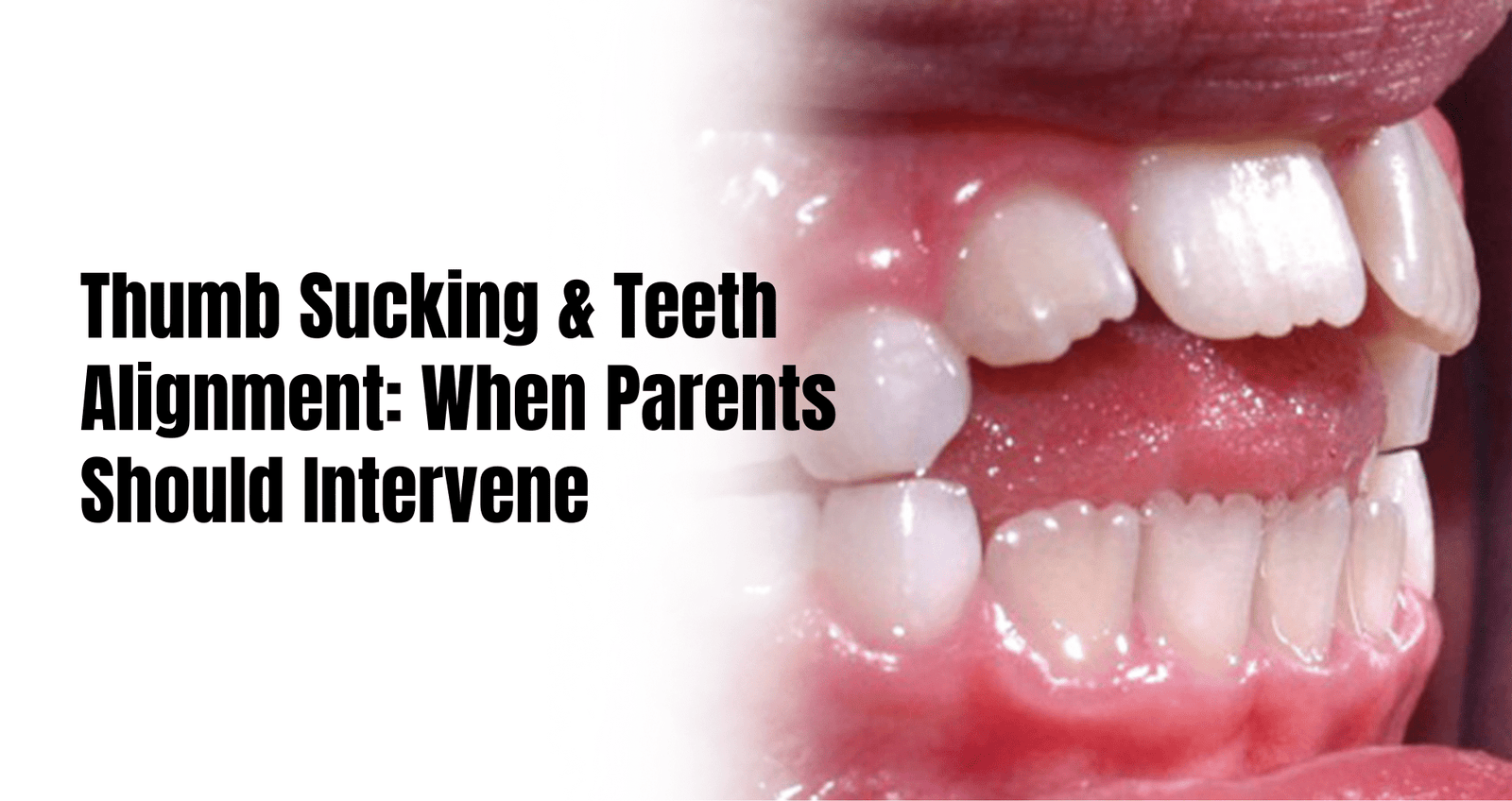
When thumb sucking continues beyond early childhood, constant pressure is applied to the teeth and jaw. Over time, this pressure can interfere with normal dental development.
Common dental effects include:
- Forward movement of upper front teeth
- Open bite (gap between upper and lower teeth)
- Narrowing of the upper jaw
- Misalignment of permanent teeth
- Speech issues related to tongue placement
The severity depends on how long, how often, and how intensely the child sucks their thumb.
When Does Thumb Sucking Become a Problem?
Thumb sucking becomes a concern when it continues after the age of 4–5 years, especially as permanent teeth begin to erupt. At this stage, the jaw becomes less flexible, and changes in alignment are more likely to persist.
Parents should pay attention if:
- The habit continues daily beyond preschool age
- Teeth appear to be shifting or protruding
- There is difficulty in closing the mouth properly
- Speech changes or lisps develop
Early observation helps prevent more complex orthodontic issues later.
When Parents Should Intervene
Intervention should be gentle, supportive, and age-appropriate. Harsh discipline or punishment can increase anxiety and reinforce the habit.
Parents should consider intervention when:
- The child is over 4 years old
- Permanent teeth are beginning to erupt
- Visible teeth alignment changes appear
- Thumb sucking occurs frequently and intensely
Positive reinforcement, encouragement, and addressing emotional triggers are usually more effective than forceful methods.
Learn more – Early Orthodontic Signs Parents Should Watch in Kids
Healthy Ways to Help Children Stop Thumb Sucking
Parents can guide children out of the habit using calm and reassuring strategies:
- Praise the child for not thumb sucking
- Identify triggers like stress or boredom
- Offer comfort in alternative ways
- Use reminder methods rather than punishment
- Encourage the child’s involvement in stopping
In some cases, professional guidance may be helpful if the habit is persistent.
Can Thumb Sucking Cause Permanent Damage?
If thumb sucking stops before permanent teeth erupt, most dental changes correct themselves naturally. However, prolonged habits can lead to alignment issues that may require orthodontic treatment later.
Early dental assessment helps determine whether changes are temporary or need intervention.
Why City Smiles Dental Care Is the Right Choice for Thumb Sucking Concerns in Kolkata
At City Smiles Dental Care, we understand how oral habits like thumb sucking can affect a child’s dental development. Our focus is on early evaluation of teeth alignment, identifying habit-related changes, and guiding parents with practical, child-friendly solutions. Each child is carefully assessed to determine whether intervention is necessary or natural correction is expected. Located in South Kolkata, the clinic provides dependable dental care for children and families.
Why parents choose City Smiles Dental Care for child dental concerns:
- Early assessment of teeth alignment and oral habits
- Gentle, child-friendly dental evaluations
- Clear guidance for parents on habit correction
- Preventive approach to orthodontic issues
- Ethical and patient-first dental care
- Comfortable environment for children
- Trusted dental clinic in South Kolkata

Conclusion
Thumb sucking is a normal part of early childhood, but when the habit continues beyond a certain age, it can affect teeth alignment and jaw development. Knowing when to observe and when to intervene helps parents protect their child’s oral health without unnecessary stress. Early awareness and timely dental guidance can prevent long-term dental and orthodontic problems.
FAQs
- Until what age is thumb sucking considered normal?
Thumb sucking is usually normal up to 3–4 years of age. - Can thumb sucking permanently damage teeth?
If the habit stops early, damage is usually reversible. Prolonged habits may cause lasting alignment issues. - Should parents force children to stop thumb sucking?
No. Gentle encouragement works better than force or punishment. - Does every child who sucks their thumb need braces later?
Not necessarily. Early habit correction often prevents orthodontic problems. - When should parents consult a dentist about thumb sucking?
If the habit continues beyond age 4–5 or teeth alignment changes are visible.