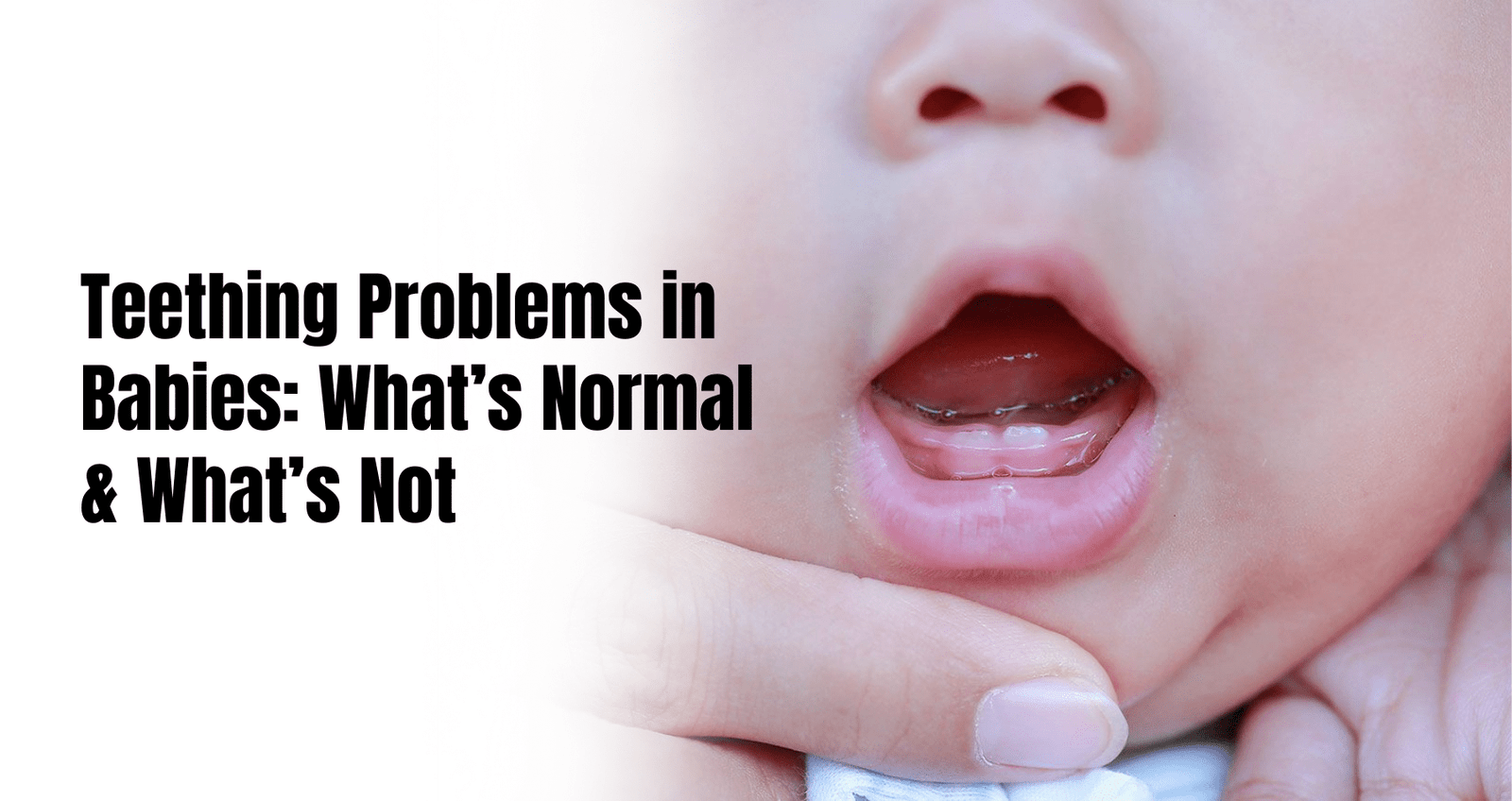
Teething is one of the earliest developmental milestones in a baby’s life—and also one of the most confusing stages for parents. As the first teeth begin to erupt, babies may become irritable, drool excessively, or experience disturbed sleep. While many of these signs are completely normal, others are often incorrectly blamed on teething.
Understanding teething problems in babies, knowing what symptoms are normal, and recognizing warning signs that need attention can help parents care for their child with confidence and avoid unnecessary anxiety.
What Is Teething?
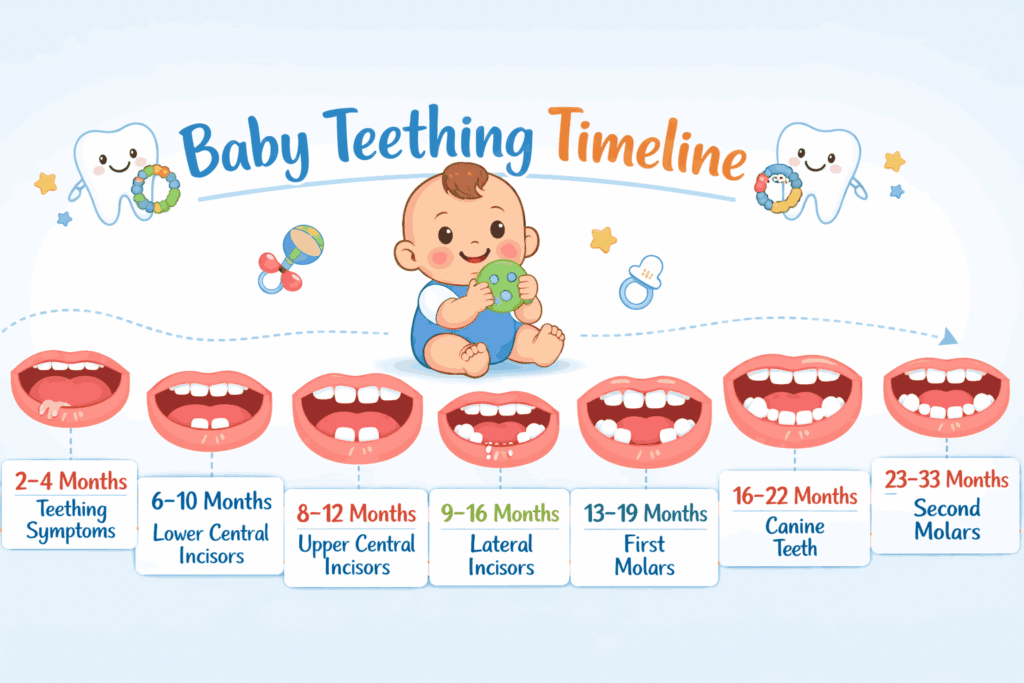
Teething is the process by which a baby’s primary (milk) teeth break through the gums. This usually begins around 6 months of age, though it can start earlier or later depending on the child. By the age of three, most children develop all 20 baby teeth.
As teeth push upward through the gum tissue, they cause pressure and mild inflammation. This is what leads to most teething-related discomfort.
Normal Teething Symptoms in Babies
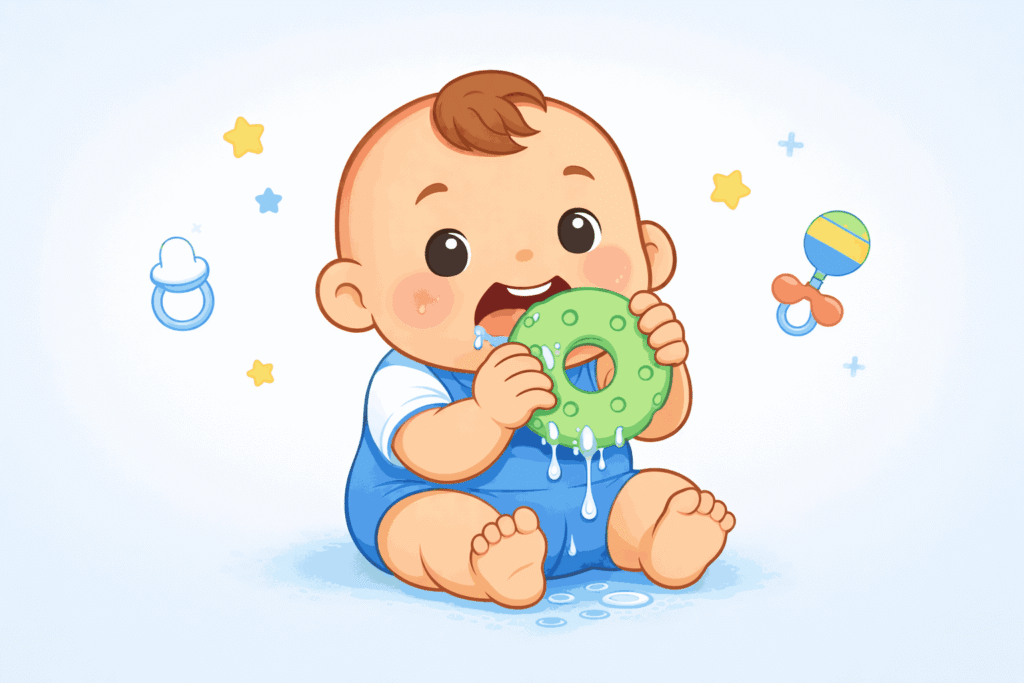
Most teething symptoms are mild, temporary, and harmless. These signs usually appear a few days before a tooth erupts and settle soon after.
Common normal teething symptoms include:
- Increased drooling
- Swollen or slightly red gums
- Chewing or biting on fingers or toys
- Mild fussiness or irritability
- Slight rise in body temperature (not fever)
- Temporary changes in sleep patterns
These symptoms vary from baby to baby. Some infants show very few signs, while others may appear more uncomfortable.
How Long Do Teething Problems Last?
Teething discomfort usually lasts a few days before and after a tooth erupts. It does not continue continuously for weeks. If symptoms persist for a long period or worsen, teething may not be the cause.
It is also normal for teething symptoms to come and go as different teeth erupt over time.
Teething Symptoms That Are NOT Normal
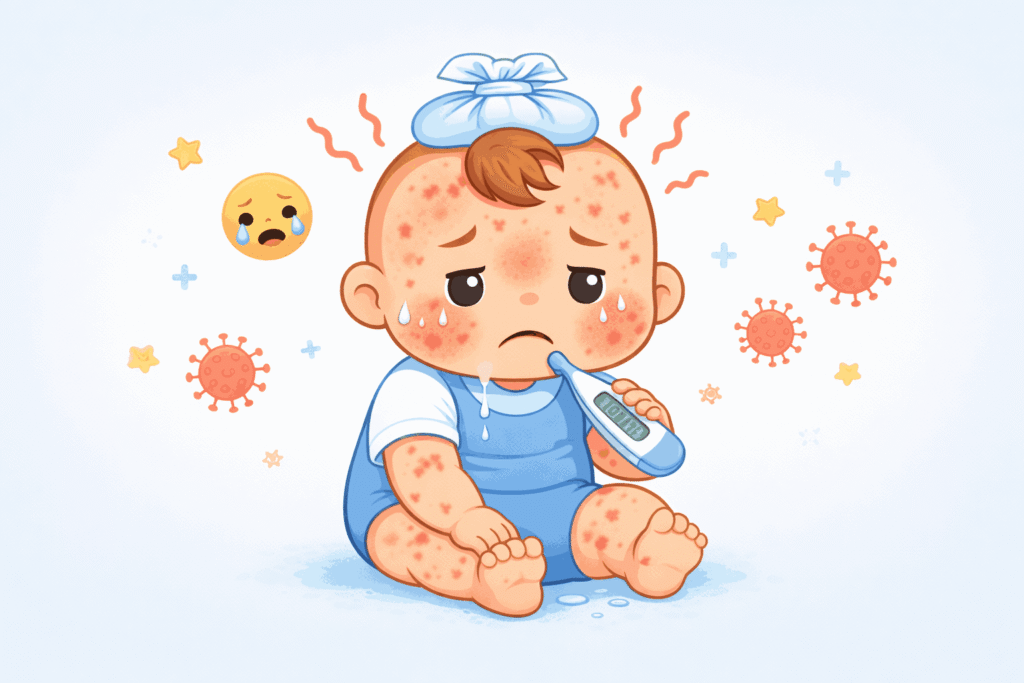
Many parents assume that every problem during infancy is caused by teething. However, several symptoms are not associated with teething and should never be ignored.
These include:
- High fever (above 38°C / 100.4°F)
- Diarrhea or vomiting
- Severe or spreading skin rashes
- Persistent crying or extreme discomfort
- Refusal to eat or drink for long periods
- Cold, cough, or signs of infection
These symptoms may indicate illness or infection and require medical evaluation rather than teething remedies.
Common Myths About Teething Problems
Myth: Teething causes high fever
Teething may cause mild gum inflammation but does not cause high fever.
Myth: Diarrhea is normal during teething
Digestive issues are not caused by teething and should be assessed separately.
Myth: Teething always causes severe pain
Most babies experience mild discomfort, not intense or prolonged pain.
Believing these myths can delay proper medical or dental care.
Safe Ways to Relieve Teething Pain in Babies
Parents can safely comfort babies during teething using gentle methods:
- Gently massaging gums with a clean finger
- Offering clean, chilled (not frozen) teething rings
- Allowing babies to chew on a clean, damp cloth
- Keeping the mouth clean even before teeth appear
Avoid unapproved teething gels, home remedies, or medications without professional advice, as some can be harmful to infants.
When Should Parents Seek Dental Advice?
Parents should consider a dental evaluation if:
- Teething discomfort seems excessive
- Teeth appear delayed, discolored, or malformed
- Gums look severely swollen or infected
- Baby shows signs of oral pain beyond teething
Early dental guidance helps ensure proper tooth development and reassures parents.
Importance of Early Dental Care for Babies
Baby teeth play a vital role in chewing, speech development, and guiding permanent teeth into correct positions. Poor oral health during infancy can lead to cavities, infections, and alignment issues later in life.
Early dental care focuses on prevention, parental education, and healthy oral habits from the very beginning.
Learn more – Diet & Dental Health: What Kolkata Parents Should Avoid Giving Their Kids
Why City Smiles Dental Care Is the Right Choice for Baby Dental Care in Kolkata
At City Smiles Dental Care, we understand how concerning teething problems in babies can be for parents. Our focus is on identifying whether symptoms are part of normal development or signs of an underlying issue, while providing clear guidance and reassurance. Every child is carefully evaluated to ensure oral comfort, healthy tooth eruption, and proper early dental development. Located in South Kolkata, the clinic offers dependable dental care for infants, children, and families.
Why parents choose City Smiles Dental Care for baby dental care:
- Gentle evaluation for infant oral concerns
- Clear guidance on normal vs abnormal teething symptoms
- Focus on preventive and early dental care
- Child-friendly and calm treatment approach
- Transparent communication with parents
- Ethical, patient-first dental care
- Trusted dental clinic in South Kolkata
Conclusion
Teething is a natural and important phase of a baby’s development, and most teething-related symptoms are mild and temporary. However, not every symptom during infancy should be attributed to teething. Knowing what is normal and what is not helps parents provide appropriate care, avoid unnecessary worry, and seek professional guidance when required. Early awareness and dental support lay the foundation for lifelong oral health.
FAQs
- At what age does teething usually start?
Most babies begin teething around 6 months, though timing varies. - Can teething cause fever in babies?
Teething may cause mild gum discomfort but does not cause high fever. - Is excessive drooling always a sign of teething?
Drooling is common but can also be part of normal development. - Are teething gels safe for babies?
Many are not recommended. Always consult a dental professional first. - When should a baby first see a dentist?
By the first birthday or when the first tooth erupts.