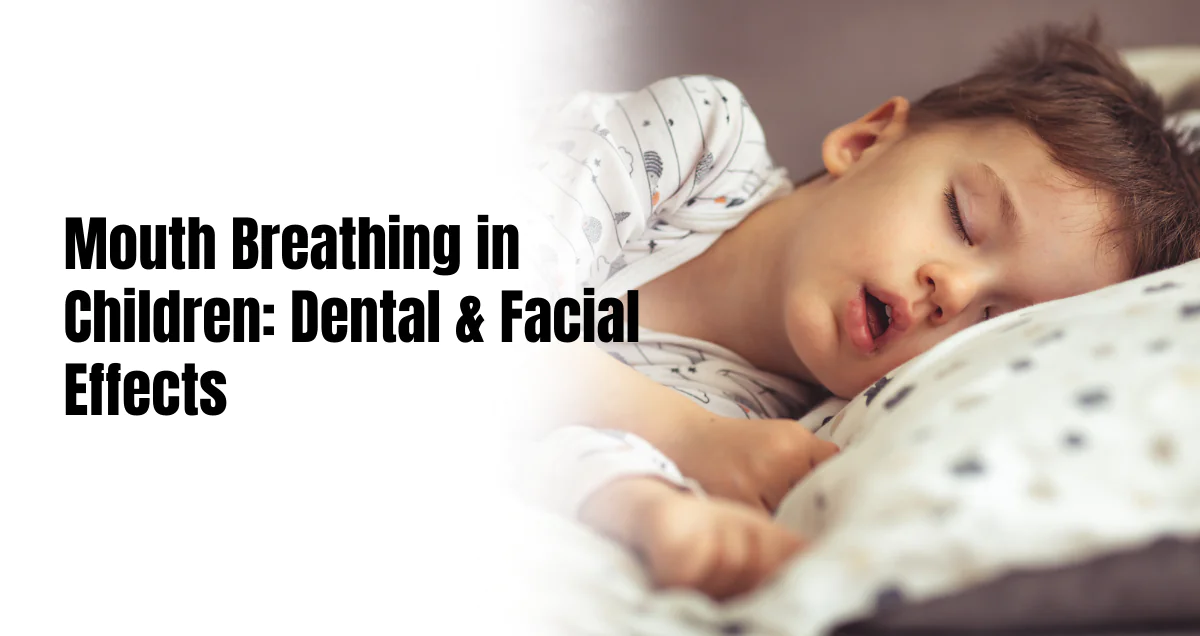
Many children breathe through their mouth occasionally, especially during a cold or blocked nose. However, when mouth breathing becomes a regular habit—during the day or while sleeping—it can quietly affect a child’s oral health and facial development.
Parents often overlook mouth breathing because it does not always cause pain. Yet, persistent mouth breathing in children is more than just a habit; it can influence how teeth align, how jaws grow, and even how the face develops over time.
What Is Mouth Breathing?
Mouth breathing occurs when a child breathes primarily through the mouth instead of the nose. While temporary mouth breathing due to nasal congestion is normal, chronic mouth breathing is a concern.
In healthy breathing, air passes through the nose, where it is filtered, warmed, and humidified. Breathing through the mouth bypasses this natural process and can disrupt normal oral and facial development in growing children.
Why Do Children Develop Mouth Breathing Habits?
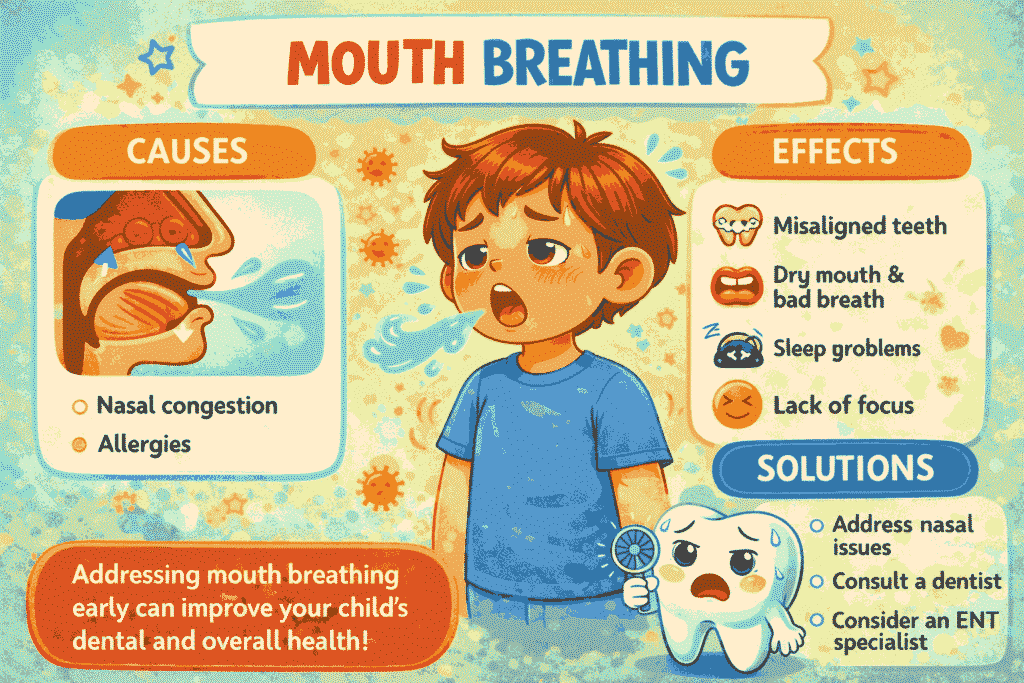
Several factors can lead to mouth breathing in children. In some cases, it begins due to physical blockage of the nasal airway, while in others it becomes a learned habit.
Common causes include:
- Chronic nasal congestion or allergies
- Enlarged adenoids or tonsils
- Deviated nasal septum
- Frequent upper respiratory infections
- Habitual breathing pattern developed early
If the underlying cause is not addressed, mouth breathing may continue even after the initial problem resolves.
How Mouth Breathing Affects Oral Health
Breathing through the mouth dries out oral tissues and changes tongue and jaw positioning. Saliva, which naturally protects teeth, is reduced when the mouth remains open for long periods.
This can lead to:
- Increased risk of tooth decay
- Gum inflammation and irritation
- Dry mouth and bad breath
- Higher chances of cavities
Over time, these oral changes create an environment that affects both dental health and alignment.
Dental Effects of Mouth Breathing in Children
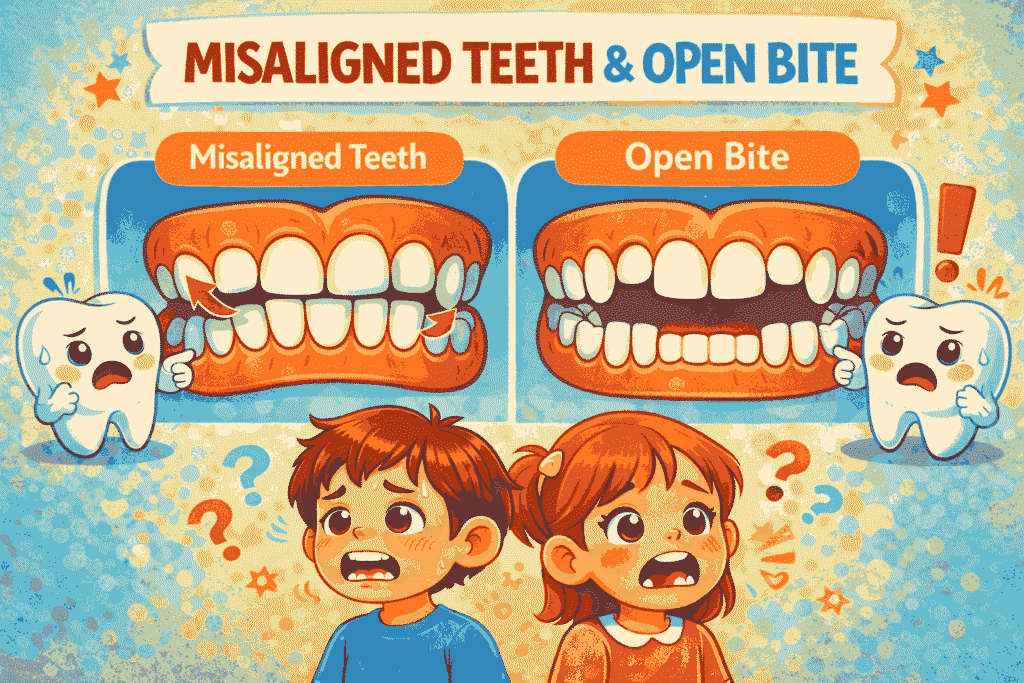
Chronic mouth breathing alters the natural balance of muscles in the face and mouth. The tongue often rests lower than normal, and lips remain open, which affects how teeth erupt and align.
Common dental effects include:
- Crowding or misalignment of teeth
- Open bite (upper and lower teeth do not meet)
- Protruding front teeth
- Narrow upper jaw
These changes often worsen as permanent teeth begin to erupt.
Facial Effects of Mouth Breathing
Facial development in children is closely linked to breathing patterns. Long-term mouth breathing can influence how facial bones grow.
Possible facial effects include:
- Long or narrow facial appearance
- Poor chin development
- Flattened mid-face
- Dark circles under the eyes
These changes may become more noticeable with age if the habit continues untreated.
Signs Parents Should Watch For
Parents may not always notice mouth breathing during the day, but nighttime signs are often more obvious.
Warning signs include:
- Sleeping with mouth open
- Snoring or noisy breathing
- Dry lips or mouth upon waking
- Daytime fatigue or poor concentration
- Frequent dental issues despite good hygiene
If several of these signs are present, evaluation is recommended.
Is Mouth Breathing Always Harmful?
Occasional mouth breathing due to a cold or allergy is not harmful. However, persistent mouth breathing over months or years can affect dental and facial development.
Early identification allows for correction before permanent changes occur.
When Should Parents Seek Professional Advice?
Parents should consider professional evaluation if:
- Mouth breathing continues beyond early childhood
- Teeth alignment changes are noticeable
- Facial growth appears uneven
- The child snores regularly or sleeps poorly
A combined medical and dental approach is often helpful in identifying and managing the cause.
Why City Smiles Dental Care Is the Right Choice for Mouth Breathing Concerns in Kolkata
At City Smiles Dental Care, we understand that habits like mouth breathing can have long-term effects on a child’s dental and facial development. Our focus is on early identification of dental changes related to breathing patterns and guiding parents with preventive and corrective care. Each child is carefully evaluated to assess teeth alignment, jaw development, and oral health. Located in South Kolkata, the clinic provides dependable, child-focused dental care for families.
Why parents choose City Smiles Dental Care for child dental concerns:
- Early assessment of dental and jaw development
- Evaluation of oral habits affecting teeth alignment
- Preventive approach to orthodontic problems
- Clear guidance for parents and caregivers
- Gentle, child-friendly dental care
- Ethical and patient-first treatment approach
- Trusted dental clinic in South Kolkata
Conclusion
Mouth breathing in children is often overlooked, but its effects on dental health and facial growth can be significant if left unaddressed. While temporary mouth breathing is normal, persistent habits may lead to long-term alignment and developmental issues. Early awareness and timely professional guidance help ensure healthy oral development and confident smiles as children grow.
FAQs
- Is mouth breathing normal in children?
Occasional mouth breathing is normal, but persistent mouth breathing is not. - Can mouth breathing affect teeth alignment?
Yes, it can lead to misalignment, open bite, and jaw development issues. - Does mouth breathing affect facial appearance?
Chronic mouth breathing may influence facial growth over time. - At what age should mouth breathing be evaluated?
If it continues beyond early childhood or affects sleep and teeth, evaluation is advised. - Can mouth breathing be corrected?
Yes, early identification and appropriate care can help correct the habit and prevent complications.