
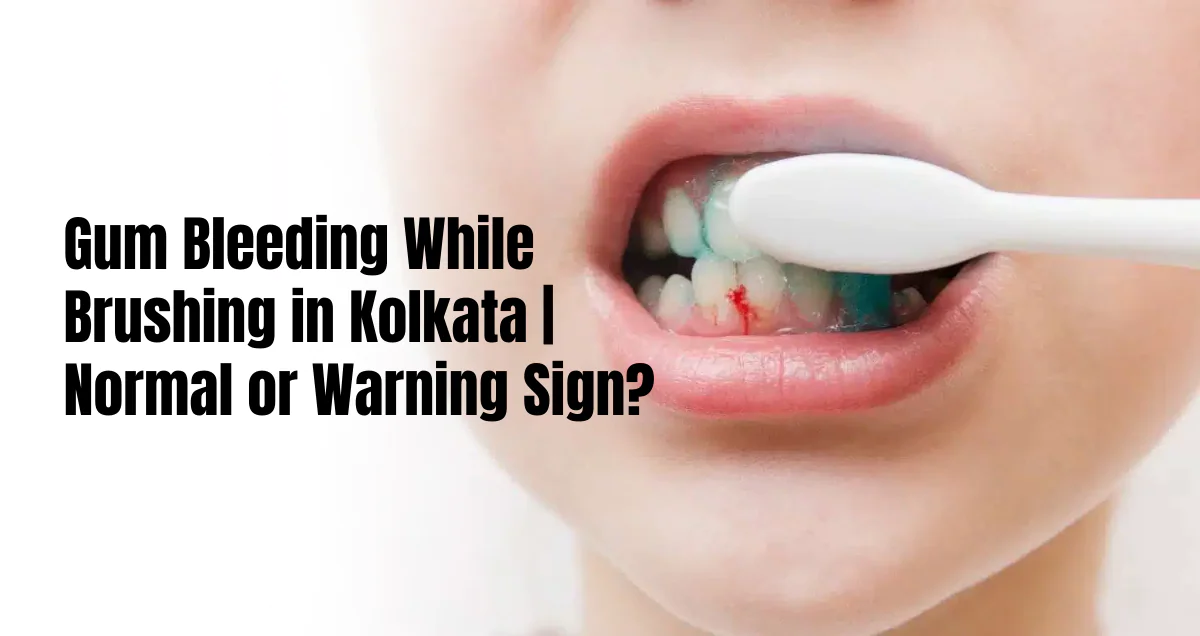
Seeing blood while brushing is often dismissed as a minor issue, but it is one of the earliest and most important warning signs of gum disease. Healthy gums are firm, pink, and do not bleed. When gums bleed regularly, it usually indicates inflammation caused by bacteria accumulation around the teeth.
Many adults in Kolkata ignore this symptom because it is painless in the beginning. Unfortunately, gum disease progresses silently. Bleeding gums are often the first visible signal that something is wrong beneath the surface, and early action can prevent serious complications.
Is Gum Bleeding While Brushing Ever Normal?
Gum bleeding is not considered normal, especially if it occurs repeatedly. In rare cases, mild bleeding may occur when someone starts flossing after a long gap or changes their brushing routine. This usually resolves within a few days.
However, if gums bleed every time you brush or floss, it is a sign of underlying gum inflammation. Persistent bleeding indicates that the gum tissue is unhealthy and reacting to bacterial irritation. Assuming this is normal delays diagnosis and allows gum disease to progress.
Why Do Gums Bleed While Brushing?
Gums bleed when they are inflamed, weak, or infected. The most common reason is plaque buildup—a sticky layer of bacteria that forms on teeth daily. When plaque is not removed properly, it irritates the gums and triggers inflammation.
Inflamed gums have fragile blood vessels that bleed easily, even with gentle brushing. Bleeding is not caused by brushing itself, but by the unhealthy condition of the gums.

Common Causes of Gum Bleeding While Brushing
Plaque Buildup and Gingivitis
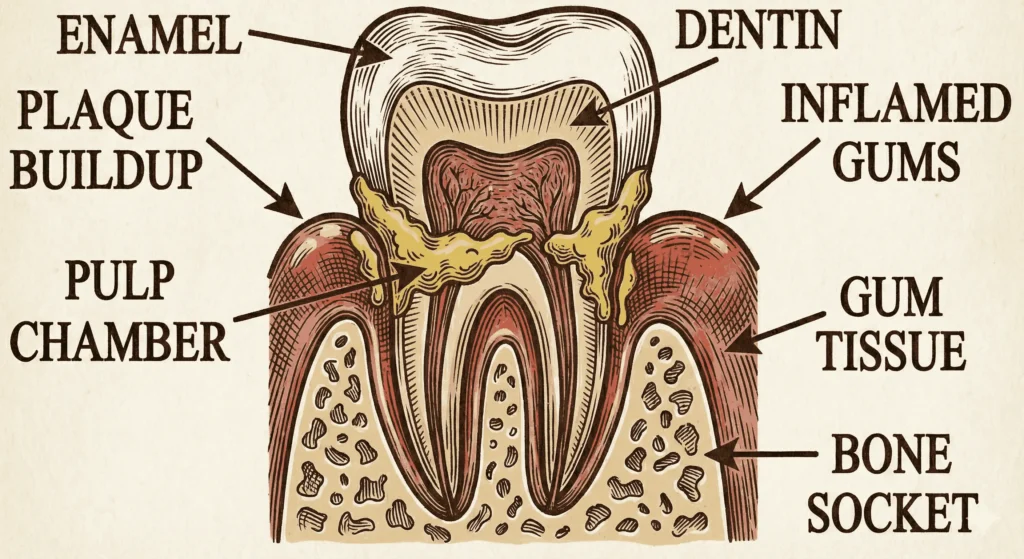
Gingivitis is the most common cause of bleeding gums. It occurs when plaque accumulates along the gum line and causes inflammation. At this stage, gums may appear red, swollen, and bleed easily during brushing or flossing.
The good news is that gingivitis is completely reversible if treated early. Professional dental cleaning combined with proper oral hygiene can restore gum health and stop bleeding.
Progression to Periodontitis
When gingivitis is ignored, it can progress into periodontitis, a more severe and irreversible form of gum disease. In this stage, bacteria move deeper below the gums and begin destroying the bone that supports the teeth.
Bleeding becomes more frequent and may be accompanied by bad breath, gum recession, pus discharge, and tooth mobility. Periodontitis cannot be cured with brushing alone and requires professional dental treatment.
Incorrect Brushing Technique
Using excessive force while brushing or using a hard-bristled toothbrush can damage gum tissue. While aggressive brushing can cause bleeding, it often worsens existing gum inflammation rather than being the main cause.
Correct brushing technique involves gentle, circular motions with a soft-bristled toothbrush. Brushing harder does not clean better—it increases gum damage.
Poor Oral Hygiene Habits
Skipping flossing or brushing irregularly allows plaque to accumulate between teeth and under the gum line. These areas are not easily cleaned by brushing alone, making them common sites for gum inflammation and bleeding.
Poor oral hygiene over time leads to tartar formation, which cannot be removed without professional dental cleaning.
Hormonal Changes
Hormonal fluctuations during pregnancy, puberty, or certain medical conditions increase blood flow to the gums and make them more sensitive to plaque. This sensitivity can cause gums to bleed more easily, even with good oral hygiene.
While hormones increase susceptibility, plaque is still the trigger. Dental evaluation and preventive care are essential during these periods.
Vitamin Deficiencies
Deficiencies, particularly vitamin C deficiency, weaken gum tissue and reduce its ability to heal. This makes gums more prone to inflammation and bleeding.
Dentists often consider nutritional factors when bleeding gums do not improve with routine dental care.
Medical Conditions and Medications
Conditions such as diabetes reduce the body’s ability to fight infection, increasing the risk of gum disease and bleeding. Blood-thinning medications may also cause gums to bleed more easily.
A dental examination helps determine whether bleeding is primarily dental or influenced by medical factors.
When Gum Bleeding Is a Warning Sign
Gum bleeding should be treated as a warning sign when it:
- Occurs frequently or daily
- Is accompanied by swelling or redness
- Comes with bad breath
- Causes discomfort while chewing
- Is associated with gum recession
These signs usually indicate active gum disease that needs professional care.
Why Ignoring Bleeding Gums Is Risky
Ignoring bleeding gums allows gum disease to progress silently. Over time, untreated gum disease can lead to bone loss, loose teeth, and eventual tooth loss.
Gum disease is also linked to systemic health issues such as diabetes and heart disease. Early treatment protects both oral and overall health.
How Dentists Treat Bleeding Gums
Professional Dental Cleaning
Scaling and polishing remove plaque and tartar from teeth and gum margins. This is usually sufficient to treat early gingivitis and stop bleeding.
Deep Cleaning (Scaling and Root Planing)
For moderate to advanced gum disease, deep cleaning removes bacteria from below the gum line and smoothens root surfaces, allowing gums to heal and reattach.
Gum Disease Management
Advanced cases require ongoing periodontal care, regular follow-ups, and strict oral hygiene maintenance to prevent progression.
Oral Hygiene Guidance
Dentists educate patients on correct brushing techniques, flossing methods, and product selection to maintain gum health long-term.
What You Should Do at Home
Home care plays a supportive role and includes:
- Gentle brushing twice daily
- Daily flossing
- Avoiding tobacco
- Balanced nutrition
However, home care alone cannot reverse established gum disease.
Why Choose City Smiles Dental Care for Bleeding Gums Treatment in Kolkata
City Smiles Dental Care focuses on identifying the exact cause of gum bleeding rather than offering short-term relief. Each patient undergoes a detailed gum evaluation to determine disease stage and appropriate treatment. The clinic emphasizes early intervention, ethical treatment planning, and long-term gum health. Located in South Kolkata, City Smiles Dental Care is trusted for comprehensive and patient-focused dental care.
Why patients trust City Smiles Dental Care:
- Accurate gum disease diagnosis
- Professional cleaning and periodontal care
- Clear treatment explanation
- Gentle, patient-friendly approach
- Focus on prevention and long-term results
- Trusted dental clinic in South Kolkata
Conclusion
Gum bleeding while brushing is never normal. It is an early warning sign of gum disease that should not be ignored. Early diagnosis and treatment can completely reverse the condition and prevent tooth loss.
For residents in Kolkata, timely dental consultation is essential. City Smiles Dental Care provides reliable diagnosis and effective treatment to restore healthy gums and protect long-term oral health.