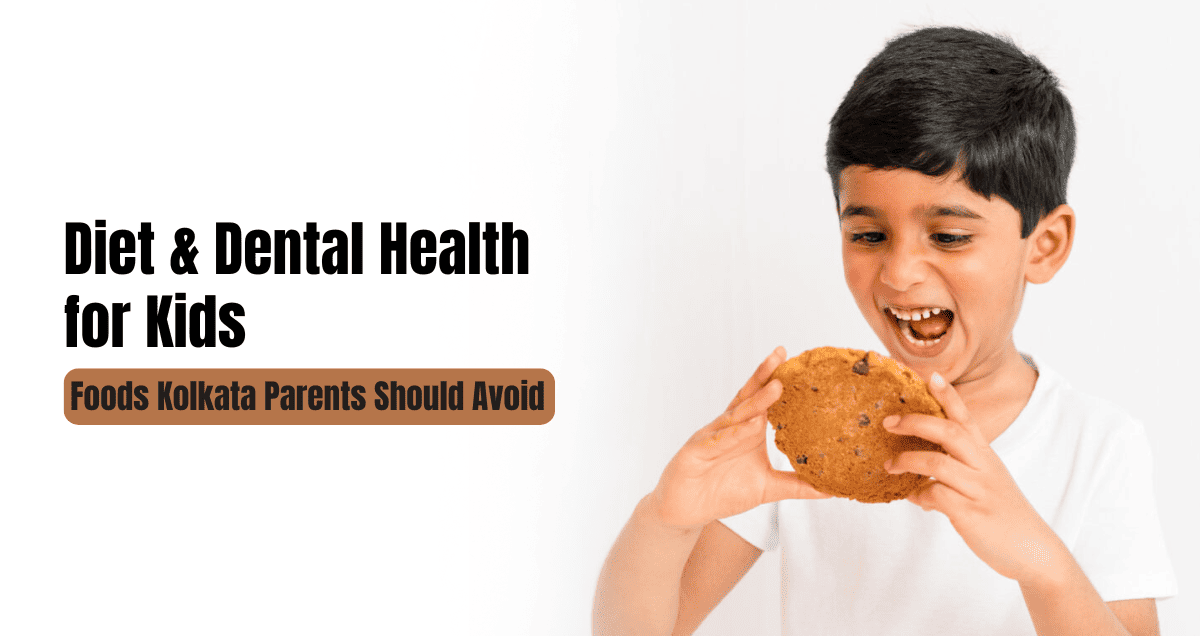
Diet plays a major role in a child’s dental health. What children eat daily directly affects the strength of their teeth, the risk of cavities, and overall oral hygiene. In Kolkata, children are frequently exposed to sweets, chocolates, packaged snacks, sugary drinks, and refined carbohydrates, which significantly increase the risk of tooth decay.
Many parents focus on brushing and dental visits but underestimate how strongly diet influences oral health. Understanding the connection between diet and dental health for kids helps parents make smarter food choices that protect their child’s teeth and reduce dental problems in the long run.
This guide explains which foods Kolkata parents should avoid giving their kids and why limiting these foods is essential for healthy teeth.
How Diet Affects Children’s Dental Health

When children eat foods high in sugar or refined carbohydrates, bacteria in the mouth feed on these sugars and produce acids. These acids attack the tooth enamel, gradually weakening it and leading to cavities. The more frequently a child consumes sugary or sticky foods, the longer the teeth are exposed to acid attacks.
Children’s teeth are more vulnerable because baby teeth have thinner enamel compared to adult teeth. This is why diet-related dental problems appear quickly in children. A balanced diet combined with good oral hygiene is essential for maintaining strong and healthy teeth.
Foods Kolkata Parents Should Avoid for Better Dental Health
1. Sugary Sweets and Chocolates
Sugary sweets and chocolates are one of the biggest contributors to cavities in children. Chocolates, candies, laddoos, rasgullas, and other sweets stick to the teeth and provide food for cavity-causing bacteria.
Frequent consumption of sweets, especially between meals, increases the risk of tooth decay. Parents should limit sweets to occasional treats and encourage children to rinse their mouth or brush after eating them.
2. Sticky Snacks Like Toffees and Chewing Candies
Sticky foods are particularly harmful because they cling to the teeth for a long time. Toffees, caramel candies, fruit chews, chikki, and gummy snacks are difficult to remove with saliva alone.
These foods stay stuck in grooves and between teeth, creating the perfect environment for bacteria to grow. Over time, this leads to cavities and tooth pain. Pediatric dentists often see severe decay linked to frequent consumption of sticky snacks.
3. Sugary Drinks and Packaged Juices
Sugary drinks are one of the most overlooked causes of dental problems in children. Soft drinks, packaged fruit juices, flavored milk, and sports drinks contain high sugar levels and acids.
Even drinks labeled as “healthy” may contain added sugars. Regular consumption exposes teeth to acid repeatedly throughout the day. Parents should encourage water instead of sugary drinks and limit juice intake to occasional use.
4. Biscuits, Cakes, and Bakery Items
Biscuits, cakes, pastries, and muffins may not taste very sweet, but they contain refined carbohydrates that break down into sugars in the mouth. These foods also tend to get stuck between teeth.
Children often eat biscuits as snacks or school tiffin items, increasing the frequency of sugar exposure. Replacing these with healthier alternatives helps reduce the risk of cavities.
5. Chips and Packaged Savory Snacks
Chips, namkeen, and other packaged savory snacks are not sweet, but they are harmful to teeth. These foods break down into starches that convert into sugars and stick to teeth.
Many children snack on chips multiple times a day, increasing plaque buildup. This leads to cavities and gum problems if oral hygiene is not maintained properly.
6. Frequent Snacking Throughout the Day
It is not just what children eat, but how often they eat that matters. Frequent snacking gives bacteria more opportunities to produce acid. Even small amounts of sugary or starchy food consumed repeatedly can cause damage.
Allowing time between meals helps saliva neutralize acids and protect teeth. Structured meal and snack times are better for dental health than constant grazing.
7. Bedtime Milk or Juice Without Brushing
Giving milk or juice at bedtime without brushing afterward is a major cause of early childhood cavities. Sugars remain on the teeth overnight, when saliva flow is low.
Parents should always clean the child’s teeth before bedtime and avoid feeding sugary liquids after brushing. This simple habit prevents severe dental problems in young children.
What Should Parents Encourage Instead?
While avoiding harmful foods is important, parents should also focus on healthy alternatives that support dental health.
Encourage:
- Fresh fruits and vegetables
- Dairy products like milk, curd, and cheese
- Whole grains
- Nuts and seeds (age-appropriate)
- Plenty of water
These foods help strengthen teeth, stimulate saliva production, and support overall health.
Role of Parents in Building Healthy Eating Habits
Parents play a key role in shaping a child’s diet. Children often follow eating patterns set at home. By limiting sugary snacks, offering healthier options, and explaining why certain foods are limited, parents can encourage better habits.
Teaching children to rinse their mouth after eating and brushing twice daily further protects teeth from diet-related damage.
When Should Parents Visit a Pediatric Dentist in Kolkata?

Parents should consult a pediatric dentist if:
- Child develops frequent cavities
- Tooth pain occurs
- Visible white or brown spots appear on teeth
- Gums bleed or swell
- Bad breath persists
A pediatric dentist in Kolkata can guide parents on diet modifications and preventive treatments such as fluoride application.
Learn more – When Should Your Child First Visit A Dentist? Complete Kolkata Parents’ Guide
Why Choose City Smiles Dental Care for Child Dental Guidance in Kolkata
City Smiles Dental Care focuses on preventive pediatric dentistry and parent education. The clinic helps families understand how diet affects dental health and provides practical guidance tailored to children’s needs. With a child-friendly approach and emphasis on prevention, City Smiles Dental Care supports long-term oral health for kids.
Why parents choose City Smiles Dental Care:
- Experienced pediatric dentist
- Strong focus on prevention and education
- Child-friendly and comfortable environment
- Personalized dietary and dental guidance
- Emphasis on long-term oral health
- Convenient South Kolkata location
Conclusion
Diet plays a critical role in a child’s dental health. Many common foods and drinks consumed by children in Kolkata increase the risk of cavities and tooth pain. By understanding what foods to avoid and what to encourage, parents can significantly reduce dental problems.
Combining healthy eating habits with regular dental checkups ensures children grow up with strong, healthy teeth and confident smiles.
Frequently Asked Questions
1. How does diet affect children’s teeth?
Sugary and starchy foods feed bacteria that produce acids, leading to cavities and enamel damage.
2. Are chocolates worse than biscuits for teeth?
Both can cause cavities, but sticky chocolates tend to remain on teeth longer and cause more damage.
3. Is fruit juice safe for children’s teeth?
Fruit juice contains natural sugars and acids and should be limited. Water is a better option.
4. Can diet alone prevent cavities?
No. A healthy diet combined with proper brushing and regular dental visits is necessary.
5. How often should children visit a dentist?
Every six months for routine checkups and preventive care.