
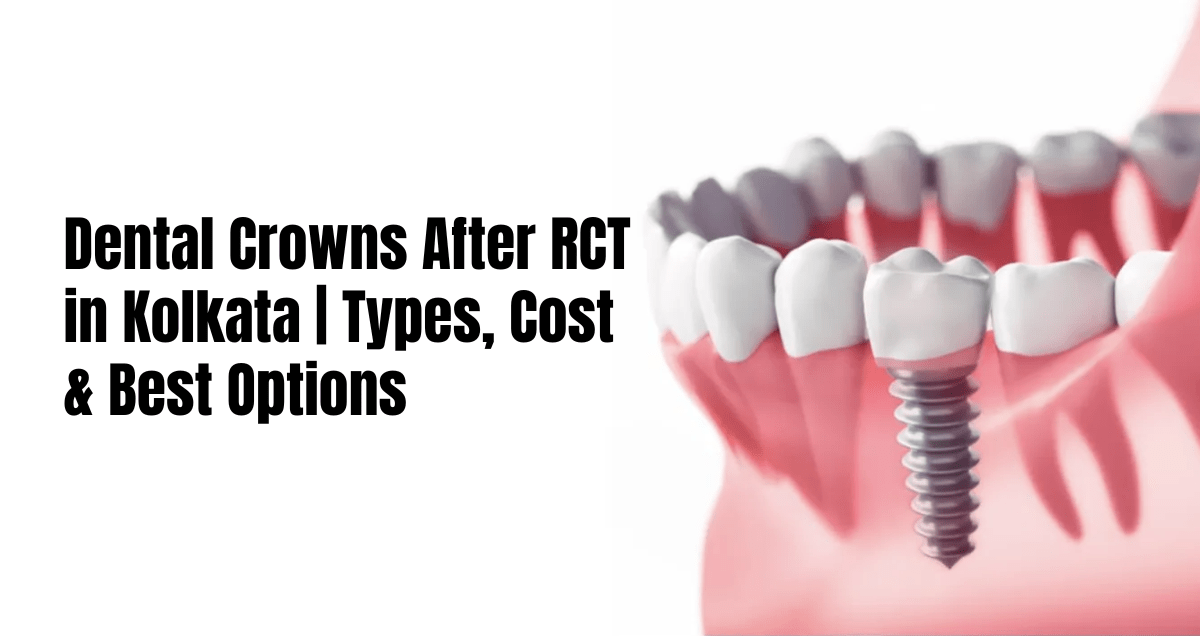
Dental Crowns After RCT: Types & Cost in Kolkata
Root canal treatment (RCT) saves a tooth that is badly decayed or infected. While RCT removes infection and relieves pain, it also leaves the tooth weaker than before. This is why dentists strongly recommend placing a dental crown after RCT, especially for back teeth that handle chewing pressure.
Many patients in Kolkata complete their root canal treatment but delay the crown placement, thinking the tooth is “fixed.” In reality, an RCT-treated tooth without a crown is more prone to cracking or breaking. Understanding the role of crowns helps patients protect their treated tooth for the long term.
Why Is a Dental Crown Needed After Root Canal Treatment?
After RCT, the tooth loses its nerve and blood supply, making it more brittle. Without proper protection, normal chewing forces can cause fractures.
A dental crown:
- Covers and protects the treated tooth
- Restores strength and function
- Prevents fracture and reinfection
- Improves appearance and shape
- Extends the life of the tooth
For molars and premolars, crowns are almost always necessary. Front teeth may sometimes avoid crowns depending on damage, but professional evaluation is essential.
What Happens If You Skip a Crown After RCT?
Skipping a crown can lead to serious problems such as:
- Cracks or fractures in the treated tooth
- Tooth breaking below the gum line
- Need for extraction
- More expensive treatments later
In many cases, patients who delay crown placement return with broken teeth that cannot be saved. Placing a crown on time is a preventive step that avoids future dental emergencies.
Types of Dental Crowns After RCT
Choosing the right crown depends on tooth location, chewing pressure, aesthetics, and budget. Below are the most common types of dental crowns used after RCT in Kolkata.
1. Metal Crowns
Metal crowns are made from alloys containing gold, nickel, or chromium.
Advantages:
- Extremely strong and durable
- Long lifespan
- Ideal for back teeth
Disadvantages:
- Metallic appearance
- Not suitable for visible areas
Metal crowns are cost-effective and functionally reliable, especially for molars.
2. Porcelain-Fused-to-Metal (PFM) Crowns
PFM crowns combine a metal base with a porcelain outer layer.
Advantages:
- Good strength
- Tooth-colored appearance
- Suitable for both front and back teeth
Disadvantages:
- Porcelain layer may chip over time
- Metal margin may show near gums
PFM crowns are a popular choice for patients seeking balance between strength and aesthetics.
3. Zirconia Crowns
Zirconia crowns are made from high-strength ceramic material and are increasingly popular.
Advantages:
- Excellent strength and durability
- Highly aesthetic and natural-looking
- Metal-free and biocompatible
- Suitable for all teeth
Disadvantages:
- Higher cost compared to metal or PFM
Zirconia crowns are ideal for patients who want long-lasting and aesthetic results.
4. All-Ceramic / E-Max Crowns
These crowns are made entirely from ceramic materials and are mostly used for front teeth.
Advantages:
- Superior aesthetics
- Natural translucency
- No metal components
Disadvantages:
- Less suitable for heavy chewing areas
- Higher cost
They are ideal for patients prioritizing appearance over strength.
How Is a Dental Crown Placed After RCT?
The crown placement process usually involves two visits:
First Visit:
- Tooth preparation
- Shaping the tooth to support the crow
- Impression or digital scan
- Temporary crown placement
Second Visit:
- Final crown fitting
- Bite adjustment
- Permanent cementation
At City Smiles Dental Care, modern techniques ensure precise fitting and comfort.
Cost of Dental Crowns After RCT in Kolkata
The cost of dental crowns in Kolkata varies depending on material and clinic expertise.
Approximate cost range:
- Metal crown: ₹2,000 – ₹4,000
- PFM crown: ₹4,000 – ₹7,000
- Zirconia crown: ₹8,000 – ₹15,000
- All-ceramic / E-Max crown: ₹10,000 – ₹18,000
Factors affecting cost include:
- Type of crown
- Tooth location
- Lab quality
- Dentist’s expertise
Choosing the right crown should balance cost, durability, and aesthetics.
How Long Do Dental Crowns Last After RCT?
With proper care, crowns can last:
- 8–10 years or more for PFM
- 10–15 years or more for zirconia and metal crowns
Regular dental checkups, good oral hygiene, and avoiding habits like teeth grinding help extend crown lifespan.
Learn more – Single-Sitting Root Canal: Myths, Facts & Benefits in South Kolkata
Care Tips for Dental Crowns After RCT
To protect your crown:
- Brush twice daily
- Floss around the crown
- Avoid biting hard objects
- Visit the dentist every six months
Crowns require the same care as natural teeth.
Why Choose City Smiles Dental Care for Dental Crowns After RCT in Kolkata
City Smiles Dental Care provides comprehensive post-RCT restoration with a focus on strength, comfort, and long-term success. Each crown is carefully planned based on bite, aesthetics, and tooth position to ensure durability and natural appearance. Patients receive clear guidance on crown selection and cost before treatment begins.
Why patients trust City Smiles Dental Care:
- Experienced dentists in RCT and crown placement
- High-quality crown materials and labs
- Precise fitting using modern techniques
- Clear explanation of crown options and cost
- Focus on long-term tooth preservation
- Ethical and patient-first approach
- Trusted dental clinic in South Kolkata
Conclusion
Placing a dental crown after root canal treatment is not optional—it is essential for protecting and strengthening the treated tooth. Understanding the types and cost of dental crowns after RCT in Kolkata helps patients make informed decisions that save time, money, and discomfort in the future.
Choosing the right clinic and crown material ensures your RCT-treated tooth remains healthy and functional for years. City Smiles Dental Care offers reliable, transparent, and expert crown solutions for lasting dental health.
Frequently Asked Questions
1. Is a crown mandatory after RCT?
Yes, especially for back teeth, to prevent fractures.
2. How soon should a crown be placed after RCT?
Ideally within a few weeks after completing root canal treatment.
3. Can I eat without a crown after RCT?
It is not recommended, as the tooth is fragile without protection.
4. Which crown is best after RCT?
Zirconia is often preferred for strength and aesthetics, but suitability depends on the tooth.
5. Does crown placement hurt?
No. The procedure is generally painless and comfortable.

About the Author
Dr. Sagnik Bhattacharya MDS
Consultant Endodontist (Root Canal Specialist)
Assistant Professor at Guru Nanak Institute of Dental Sciences and Research Kolkata
Founder & Lead Dentist, City Smiles Dental Care — Baghajatin, Kolkata
Dr. Sagnik is known for his gentle approach, precision-based dentistry, and modern treatment techniques. Specializing in endodontics (root canal treatment), pediatric dentistry, and pain-free restorative care, he has helped thousands of patients regain their smiles with confidence.
At City Smile Dental Care, the focus is simple:
Advanced dentistry. Zero fear. Total comfort.