
Root Canal Retreatment: Signs & When You Need It
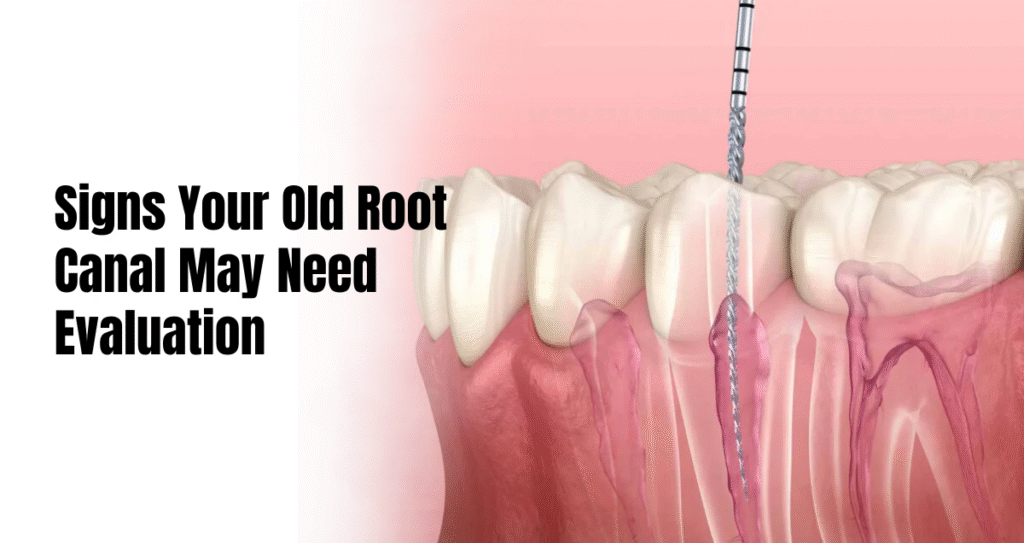
Root Canal Retreatment: Signs & When You Need It Root canal treatment is one of the most successful procedures in modern dentistry. It is designed to remove infection from inside the tooth and preserve your natural tooth structure for years. In many cases, a well-performed root canal can last decades without complications. However, sometimes a previously treated tooth may develop new symptoms. When this happens, root canal retreatment may be required to eliminate infection and restore the tooth’s health. Understanding when retreatment is necessary can help prevent severe complications such as bone loss, abscess formation, or tooth extraction. Why Would a Root Canal Need Retreatment? Root canal retreatment does not automatically mean the original procedure was poorly done. Several factors can lead to reinfection months or even years later. Common causes include: Complex Root Anatomy Some teeth—especially molars—have curved or accessory canals that may be difficult to detect during the initial treatment. If bacteria remain in tiny untreated canals, infection can redevelop. New Tooth Decay If a filling or crown becomes loose, damaged, or cracked, bacteria can enter the tooth again. Cracks or Fractures A treated tooth can develop microcracks over time, allowing infection to reach the root. Delayed Crown Placement Back teeth that do not receive a protective crown after root canal treatment are more vulnerable to leakage and fracture. These factors may lead to root canal failure symptoms, requiring professional evaluation. Signs You May Need Root Canal Retreatment Recognizing early warning signs can help save the tooth before the infection spreads. Persistent Pain After Root Canal It is not normal to experience recurring or worsening pain long after treatment. Mild tenderness immediately after RCT may occur, but pain returning months or years later is a red flag. Swelling or Gum Tenderness Swellen gums near a previously treated tooth may indicate infection at the root tip. The area may feel tender or slightly raised. Gum Boil or Pimple A small bump on the gums that releases pus is a classic sign of infection. This condition, called a sinus tract, indicates that bacteria are draining from the root area. Pain While Chewing If biting or chewing causes discomfort in a treated tooth, it may suggest internal inflammation or structural compromise. Tooth Discoloration A treated tooth that becomes darker over time may require evaluation, especially if accompanied by other symptoms. Bad Taste or Persistent Bad Breath Chronic infection can produce an unpleasant taste or odor. No Symptoms but Abnormal X-Ray Sometimes, patients feel no pain, but routine dental X-rays reveal bone loss or infection around the root tip. This is why regular dental checkups are important. Is It Normal to Feel Pain Years After a Root Canal? No. While temporary sensitivity after treatment is common, pain that reappears years later is not normal. Possible causes include: Recurrent infection Cracked root Missed canal Adjacent tooth infection Only a professional examination can confirm the exact cause. What Happens During Root Canal Retreatment? Root canal retreatment involves reopening the tooth and cleaning it again to remove persistent bacteria. The procedure typically includes: Removing the old filling material Cleaning and disinfecting all canals thoroughly Identifying previously missed canals Resealing the canals properly Placing a new restoration or crown In some complex cases, a minor surgical procedure known as apicoectomy may be recommended if infection persists at the root tip. Is Root Canal Retreatment Painful? Modern dental techniques and anesthesia make root canal retreatment comfortable. Most patients report that the procedure feels similar to the original treatment. Mild soreness may occur afterward, especially if infection was present, but it usually resolves within a few days. What Happens If Retreatment Is Delayed? Ignoring signs of infection can lead to: Spread of infection into surrounding bone Facial swelling Severe pain Formation of dental abscess Tooth loss Early root canal retreatment improves the chances of saving the natural tooth. Can All Failed Root Canals Be Retreated? Many previously treated teeth can be successfully retreated. However, success depends on: Structural condition of the tooth Extent of bone loss Presence of fractures If retreatment is not possible, alternative solutions such as extraction and replacement options may be discussed. Why City Smiles Dental Care Is the Right Choice for Root Canal Retreatment in Kolkata At City Smiles Dental Care, we understand that persistent discomfort after a previous root canal can be distressing. Our approach focuses on careful diagnosis to determine whether root canal retreatment is necessary. Each case is thoroughly evaluated using clinical examination and imaging to identify reinfection, structural damage, or restoration failure. Located in South Kolkata, the clinic provides dependable, patient-focused care aimed at preserving natural teeth whenever possible. Why patients choose City Smiles Dental Care for retreatment: Detailed evaluation of previously treated teeth Precision in identifying infection or structural issues Focus on saving natural teeth Clear explanation of retreatment options and costs Ethical and patient-first approach Long-term dental health planning Trusted dental clinic in South Kolkata Conclusion Root canal treatment is highly successful, but reinfection can occasionally occur. Persistent pain, swelling, chewing discomfort, or gum changes are warning signs that root canal retreatment may be needed. Early diagnosis and timely retreatment significantly improve the chances of preserving your natural tooth and preventing complications. If you notice any unusual symptoms around a previously treated tooth, prompt dental evaluation is essential. FAQs How long after a root canal can infection return? Infection can recur months or even years later if bacteria re-enter the tooth. Is root canal retreatment successful? Yes, retreatment has a high success rate when diagnosed early. Is retreatment more complicated than the first root canal? It can be slightly more complex because old material must be removed. Can antibiotics fix a failed root canal? Antibiotics may reduce symptoms temporarily but do not eliminate the source of infection. Does every painful root canal need retreatment? Not always. A thorough evaluation determines the exact cause of pain. About the Author Dr. Sagnik Bhattacharya MDS Consultant Endodontist (Root Canal Specialist) Assistant Professor at Guru Nanak Institute of Dental Sciences and
Root Canal for Front vs Back Teeth: Key Differences
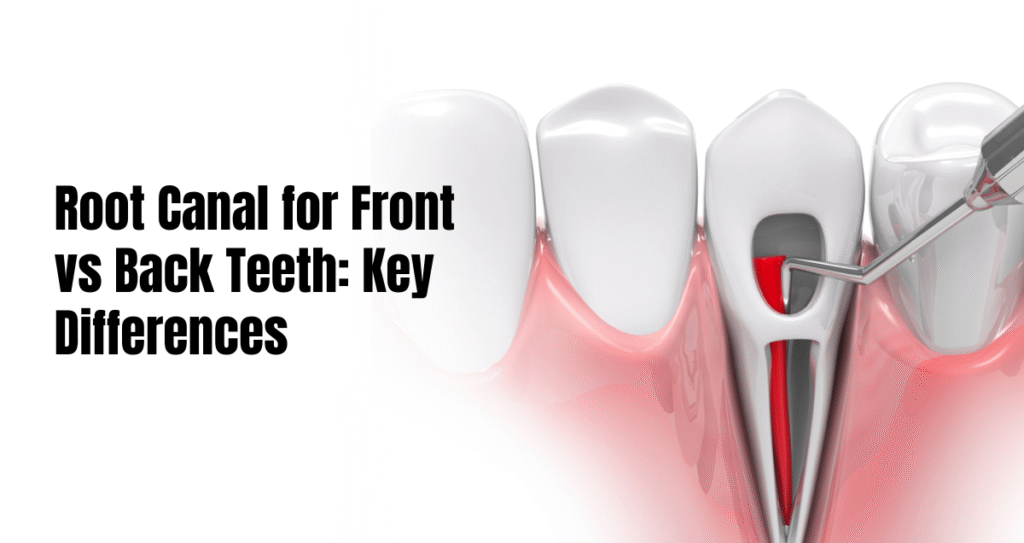
Root Canal for Front vs Back Teeth: What’s Different? When a tooth becomes severely infected or damaged, root canal treatment is often recommended to save it. However, many patients are surprised to learn that the experience of a root canal for front teeth can be quite different from a root canal for back teeth (molars or premolars). Understanding these differences helps reduce anxiety and allows patients to know what to expect in terms of procedure, time, complexity, and cost. What Is Root Canal Treatment? Root canal treatment (RCT) is a procedure used to remove infected or inflamed pulp from inside a tooth. The pulp contains nerves and blood vessels. Once infection reaches this inner layer, it can cause severe pain, swelling, and sensitivity. During the procedure: The infected pulp is removed The root canals are cleaned and disinfected The space is filled and sealed A restoration (filling or crown) is placed Although the purpose of treatment remains the same for all teeth, the complexity differs depending on whether the tooth is at the front or back of the mouth. Anatomical Differences Between Front and Back Teeth The biggest difference lies in the root structure. Front Teeth (Incisors & Canines) Usually have one root canal Easier access from the front surface Simpler internal structure Back Teeth (Premolars & Molars) Often have two to four root canals Complex and curved root structures Harder to access due to location Because molars have multiple canals, the treatment is generally more detailed and time-consuming. Procedure Differences Root Canal for Front Teeth A front tooth root canal is usually simpler because there is only one canal to clean and fill. The procedure typically: Takes less time May be completed in a single sitting Requires minimal drilling Front teeth are easier to isolate and access, which often makes the procedure more straightforward. Root Canal for Back Teeth A molar root canal is more complex. Molars have multiple roots and canals that must all be located, cleaned, and sealed properly. The procedure may: Take longer Require multiple appointments in some cases Demand advanced techniques due to curved canals Because back teeth handle chewing pressure, precise treatment is crucial for long-term durability. Is There a Difference in Pain? Many patients worry that a molar root canal will be more painful. In reality, modern anesthesia ensures that both front and back root canals are comfortable procedures. However: Back teeth may feel slightly sore longer due to chewing pressure Front teeth may feel sensitive temporarily, especially if trauma caused the infection Pain levels depend more on the severity of infection than the tooth location. Do Both Require Crowns? This is another key difference. Front Teeth Front teeth are not exposed to heavy chewing forces. In many cases, after a front tooth root canal, a filling may be sufficient. However, if the tooth is weakened or discolored, a crown may be recommended for aesthetics and strength. Back Teeth Molars experience significant chewing pressure. A crown is usually necessary after a molar root canal to prevent fracture. Skipping a crown on a back tooth can lead to cracking or failure of the treatment. Cost Differences in Kolkata The cost of root canal treatment varies depending on tooth type and complexity. Approximate range in Kolkata: Front tooth root canal: ₹3,000 – ₹6,000 Premolar root canal: ₹4,000 – ₹8,000 Molar root canal: ₹6,000 – ₹12,000 Additional costs may apply for crowns, especially in molars. Factors influencing cost include: Number of canals Severity of infection Technology used Dentist’s expertise Recovery Time Differences Recovery from both types of root canal is generally smooth. Front teeth often recover quickly due to less chewing pressure Back teeth may feel mild soreness for a few days Patients are usually advised to avoid chewing on the treated side until a permanent crown is placed. Why Timely Root Canal Treatment Is Important Whether it is a front or back tooth, delaying root canal treatment can lead to: Increased pain Spread of infection Swelling or abscess Tooth loss Saving the natural tooth is always preferable to extraction whenever possible. Why City Smiles Dental Care Is the Right Choice for Root Canal Treatment in Kolkata At City Smiles Dental Care, we understand that patients often feel anxious about root canal procedures, especially for molars. Our approach focuses on accurate diagnosis, careful cleaning of all root canals, and restoring the tooth to full function. Each case is evaluated to determine whether it involves a single-canal front tooth or a complex multi-canal molar. Located in South Kolkata, the clinic provides dependable and patient-focused root canal treatment designed for long-term success. Why patients choose City Smiles Dental Care for RCT: Detailed evaluation of infected teeth Precision in cleaning single and multi-root canal Focus on long-term durability and comfort Clear explanation of treatment and cost Ethical and transparent treatment planning Patient-first approach Trusted dental clinic in South Kolkata Conclusion While the goal of root canal treatment remains the same—removing infection and saving the tooth—the experience differs between front and back teeth. Front tooth root canals are typically simpler and quicker, while molar treatments are more complex due to multiple canals and chewing forces. Understanding these differences helps patients feel prepared and confident before treatment. Early intervention remains the key to preserving natural teeth and preventing complications. FAQs Is a molar root canal more painful than a front tooth root canal? No. Both procedures are performed under anesthesia and are generally comfortable. Do front teeth always need a crown after root canal? Not always. It depends on tooth strength and cosmetic needs. Why is molar root canal more expensive? Molars have multiple canals, making the procedure more complex. How long does root canal treatment take? Front teeth may take 45–60 minutes, while molars may take longer. Can I delay a root canal if pain reduces? No. Reduced pain does not mean infection is gone. Treatment should not be delayed. About the Author Dr. Sagnik Bhattacharya MDS Consultant
Dental Crowns After RCT: Types & Cost in Kolkata
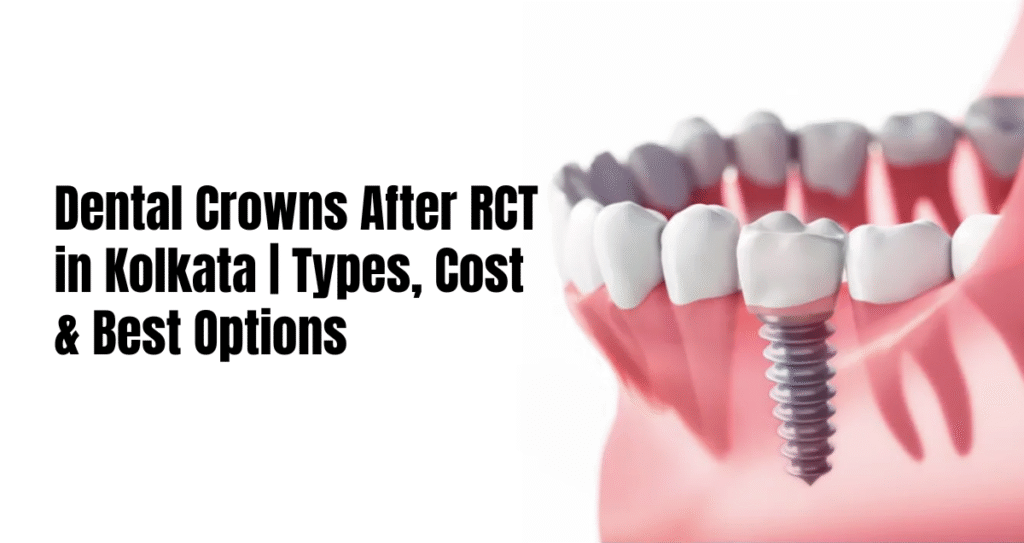
Dental Crowns After RCT: Types & Cost in Kolkata Root canal treatment (RCT) saves a tooth that is badly decayed or infected. While RCT removes infection and relieves pain, it also leaves the tooth weaker than before. This is why dentists strongly recommend placing a dental crown after RCT, especially for back teeth that handle chewing pressure. Many patients in Kolkata complete their root canal treatment but delay the crown placement, thinking the tooth is “fixed.” In reality, an RCT-treated tooth without a crown is more prone to cracking or breaking. Understanding the role of crowns helps patients protect their treated tooth for the long term. Why Is a Dental Crown Needed After Root Canal Treatment? After RCT, the tooth loses its nerve and blood supply, making it more brittle. Without proper protection, normal chewing forces can cause fractures. A dental crown: Covers and protects the treated tooth Restores strength and function Prevents fracture and reinfection Improves appearance and shape Extends the life of the tooth For molars and premolars, crowns are almost always necessary. Front teeth may sometimes avoid crowns depending on damage, but professional evaluation is essential. What Happens If You Skip a Crown After RCT? Skipping a crown can lead to serious problems such as: Cracks or fractures in the treated tooth Tooth breaking below the gum line Need for extraction More expensive treatments later In many cases, patients who delay crown placement return with broken teeth that cannot be saved. Placing a crown on time is a preventive step that avoids future dental emergencies. Types of Dental Crowns After RCT Choosing the right crown depends on tooth location, chewing pressure, aesthetics, and budget. Below are the most common types of dental crowns used after RCT in Kolkata. 1. Metal Crowns Metal crowns are made from alloys containing gold, nickel, or chromium. Advantages: Extremely strong and durable Long lifespan Ideal for back teeth Disadvantages: Metallic appearance Not suitable for visible areas Metal crowns are cost-effective and functionally reliable, especially for molars. 2. Porcelain-Fused-to-Metal (PFM) Crowns PFM crowns combine a metal base with a porcelain outer layer. Advantages: Good strength Tooth-colored appearance Suitable for both front and back teeth Disadvantages: Porcelain layer may chip over time Metal margin may show near gums PFM crowns are a popular choice for patients seeking balance between strength and aesthetics. 3. Zirconia Crowns Zirconia crowns are made from high-strength ceramic material and are increasingly popular. Advantages: Excellent strength and durability Highly aesthetic and natural-looking Metal-free and biocompatible Suitable for all teeth Disadvantages: Higher cost compared to metal or PFM Zirconia crowns are ideal for patients who want long-lasting and aesthetic results. 4. All-Ceramic / E-Max Crowns These crowns are made entirely from ceramic materials and are mostly used for front teeth. Advantages: Superior aesthetics Natural translucency No metal components Disadvantages: Less suitable for heavy chewing areas Higher cost They are ideal for patients prioritizing appearance over strength. How Is a Dental Crown Placed After RCT? The crown placement process usually involves two visits: First Visit: Tooth preparation Shaping the tooth to support the crow Impression or digital scan Temporary crown placement Second Visit: Final crown fitting Bite adjustment Permanent cementation At City Smiles Dental Care, modern techniques ensure precise fitting and comfort. Cost of Dental Crowns After RCT in Kolkata The cost of dental crowns in Kolkata varies depending on material and clinic expertise. Approximate cost range: Metal crown: ₹2,000 – ₹4,000 PFM crown: ₹4,000 – ₹7,000 Zirconia crown: ₹8,000 – ₹15,000 All-ceramic / E-Max crown: ₹10,000 – ₹18,000 Factors affecting cost include: Type of crown Tooth location Lab quality Dentist’s expertise Choosing the right crown should balance cost, durability, and aesthetics. How Long Do Dental Crowns Last After RCT? With proper care, crowns can last: 8–10 years or more for PFM 10–15 years or more for zirconia and metal crowns Regular dental checkups, good oral hygiene, and avoiding habits like teeth grinding help extend crown lifespan. Learn more – Single-Sitting Root Canal: Myths, Facts & Benefits in South Kolkata Care Tips for Dental Crowns After RCT To protect your crown: Brush twice daily Floss around the crown Avoid biting hard objects Visit the dentist every six months Crowns require the same care as natural teeth. Why Choose City Smiles Dental Care for Dental Crowns After RCT in Kolkata City Smiles Dental Care provides comprehensive post-RCT restoration with a focus on strength, comfort, and long-term success. Each crown is carefully planned based on bite, aesthetics, and tooth position to ensure durability and natural appearance. Patients receive clear guidance on crown selection and cost before treatment begins. Why patients trust City Smiles Dental Care: Experienced dentists in RCT and crown placement High-quality crown materials and labs Precise fitting using modern techniques Clear explanation of crown options and cost Focus on long-term tooth preservation Ethical and patient-first approach Trusted dental clinic in South Kolkata Conclusion Placing a dental crown after root canal treatment is not optional—it is essential for protecting and strengthening the treated tooth. Understanding the types and cost of dental crowns after RCT in Kolkata helps patients make informed decisions that save time, money, and discomfort in the future. Choosing the right clinic and crown material ensures your RCT-treated tooth remains healthy and functional for years. City Smiles Dental Care offers reliable, transparent, and expert crown solutions for lasting dental health. Frequently Asked Questions 1. Is a crown mandatory after RCT? Yes, especially for back teeth, to prevent fractures. 2. How soon should a crown be placed after RCT? Ideally within a few weeks after completing root canal treatment. 3. Can I eat without a crown after RCT? It is not recommended, as the tooth is fragile without protection. 4. Which crown is best after RCT? Zirconia is often preferred for strength and aesthetics, but suitability depends on the tooth. 5. Does crown placement hurt? No. The procedure is generally painless and comfortable. About the Author Dr. Sagnik Bhattacharya MDS Consultant Endodontist (Root Canal Specialist) Assistant Professor at Guru Nanak Institute
Why You Should Avoid Delaying Root Canal Treatment (Kolkata Edition)
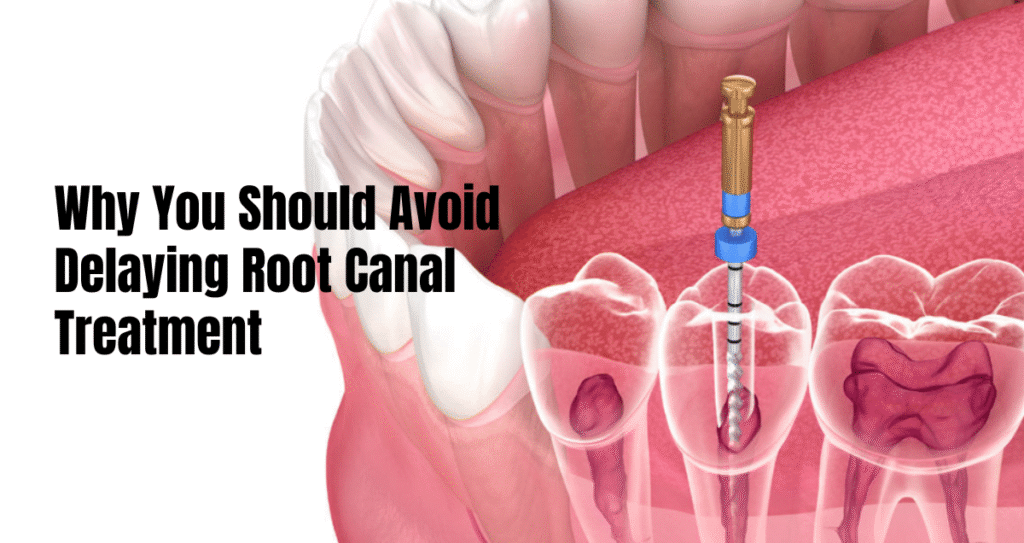
Why You Should Not Delay Root Canal Treatment in Kolkata Many patients in Kolkata delay root canal treatment even after being advised by a dentist. Common reasons include fear of pain, busy schedules, cost concerns, or the belief that the pain will go away on its own. Unfortunately, tooth pain caused by infection rarely resolves without treatment. Root canal treatment (RCT) is designed to remove infection from inside the tooth and save it from extraction. Delaying this procedure allows bacteria to spread deeper, increasing pain, complications, and treatment cost. Understanding why postponing RCT is risky helps patients make timely and informed decisions. What Happens When a Tooth Needs Root Canal Treatment? A tooth needs root canal treatment when the inner pulp becomes infected due to deep decay, repeated dental procedures, cracks, or trauma. The pulp contains nerves and blood vessels, which is why infection causes severe pain. Without treatment, the infection does not stay limited to the tooth. It gradually spreads to surrounding tissues and bone, leading to serious oral and health problems. Why Pain May Temporarily Reduce After Delay One reason patients delay treatment is that pain sometimes reduces after a few days. This does not mean the problem is cured. When pain decreases, it often indicates that the nerve inside the tooth has died. While pain may reduce temporarily, infection continues to grow silently. This stage is more dangerous because the tooth can develop an abscess without strong pain signals. Major Risks of Delaying Root Canal Treatment 1. Infection Spreads Beyond the Tooth When root canal treatment is delayed, bacteria spread from the pulp to the root tip and surrounding bone. This can lead to: Dental abscess Swelling of gums or face Bone loss around the tooth Once infection spreads, treatment becomes more complex and recovery takes longer. 2. Increased Pain and Sudden Dental Emergencies Delaying RCT often leads to unpredictable flare-ups. Pain can return suddenly, often at night, and may be more intense than before. Many patients end up needing emergency dental care in Kolkata because they waited too long, turning a planned procedure into an urgent one. 3. Higher Risk of Tooth Extraction A timely root canal can save a tooth. When treatment is delayed, the tooth structure weakens due to infection and decay. If the tooth cracks or the infection becomes too severe, extraction may be the only option. Losing a natural tooth leads to additional treatments like implants or bridges, which are more expensive and time-consuming. 4. Facial Swelling and Abscess Formation An untreated tooth infection can form a pus-filled abscess. This may cause: Severe facial swelling Fever Difficulty opening the mouth Difficulty swallowing In rare cases, dental infections can spread to other parts of the body, making delayed treatment a serious health risk. 5. Increased Treatment Cost Delaying root canal treatment often increases the total cost of care. What could have been a straightforward RCT may require: Multiple visits Additional medications Surgical intervention Tooth extraction and replacement Early treatment is usually simpler, quicker, and more affordable. 6. Damage to Surrounding Teeth and Gums Infection from one tooth can affect neighboring teeth and gums. Bacteria spread through bone and soft tissue, increasing the risk of gum disease and decay in nearby teeth. This creates a chain reaction of dental problems that could have been avoided. Warning Signs You Should Not Ignore Visit a dentist immediately if you experience: Persistent tooth pain Sensitivity to hot or cold that lingers Swelling near a tooth or gums Bad taste or pus discharge Pain while chewing Darkening of a tooth These signs indicate pulp infection and the need for root canal treatment. Learn more – Single-Sitting Root Canal: Myths, Facts & Benefits in South Kolkata Is Root Canal Treatment Painful Today? Modern root canal treatment is not painful. With advanced anesthesia and techniques, RCT is usually as comfortable as getting a filling. Most patients report relief from pain after treatment, not increased discomfort. Fear of pain should never be a reason to delay RCT. What Happens During Timely Root Canal Treatment? When done on time, RCT: Removes infection completely Relieves pain Saves the natural tooth Prevents spread of infection Restores normal chewing Early intervention leads to better outcomes and faster healing. Why Choose City Smiles Dental Care for Root Canal Treatment in Kolkata City Smiles Dental Care focuses on timely, accurate, and patient-friendly root canal treatment. Each case is thoroughly evaluated to confirm the need for RCT and to plan treatment that prioritizes comfort and long-term tooth preservation. The clinic emphasizes early intervention to prevent complications and unnecessary extractions. Conveniently located in South Kolkata, City Smiles Dental Care is trusted for ethical and effective root canal care. Why patients trust City Smiles Dental Care: Experienced dentists in root canal treatment Accurate diagnosis using modern tools Gentle, pain-managed procedures Clear explanation of treatment steps and cost Focus on saving natural teeth Ethical, patient-first approach Trusted dental clinic in South Kolkata When Should You Book a Root Canal Appointment Immediately? Do not delay if: Tooth pain lasts more than a day Swelling appears Pain returns after reducing temporarily Fever accompanies dental pain A dentist has already advised RCT Early action prevents serious complications. Conclusion Delaying root canal treatment is a common mistake that can lead to pain, infection, tooth loss, and higher treatment costs. While temporary relief may mislead patients, the infection continues to spread silently. For patients in Kolkata, timely root canal treatment is the safest way to relieve pain and preserve natural teeth. City Smiles Dental Care offers reliable, patient-focused root canal treatment designed to stop infection early and protect long-term oral health. Frequently Asked Questions 1. Can I delay root canal treatment if pain reduces? No. Reduced pain often means nerve damage, not healing. 2. How long can a tooth infection wait? Tooth infections should be treated as soon as possible to avoid complications. 3. Is root canal treatment safer than extraction? Yes. Saving the natural tooth is usually better for oral health. 4. Does
Top Signs You Need a Root Canal: Expert Guide for Patients in South Kolkata

Root Canal Symptoms: Top Signs You Need RCT in South Kolkata Tooth pain can appear suddenly or gradually, and many people ignore early symptoms until the discomfort becomes unbearable. But certain signs clearly indicate that the nerve inside your tooth is infected — and this is when a root canal becomes necessary. If you live in South Kolkata, especially near Baghajatin, Santoshpur or Jadavpur, this guide will help you identify the early warning signs and understand when to seek professional treatment. What Is a Root Canal and Why Is It Needed? A root canal is a treatment used to remove infection from the inside of a tooth. When the pulp (nerve) becomes infected due to deep decay or injury, the tooth becomes painful and sensitive. The treatment cleans the infection and saves the natural tooth. Why Root Canals Are Important Removes infection before it spreads Eliminates pain Saves the natural tooth Prevents swelling and abscess Avoids future complications Modern root canals are safe, quick and comfortable. Sign 1: Persistent Tooth Pain That Doesn’t Go Away Pain that stays for hours or returns frequently is a major warning sign. This type of pain often worsens at night or while chewing. When Pain Suggests Root Canal Deep throbbing pain Sharp pain while biting Pain radiating to the jaw or ear Pain coming in waves Ignoring this can cause the infection to worsen. Sign 2: Sensitivity to Hot or Cold That Lingers Longer Than Normal It’s normal to feel momentary sensitivity, but if the sensation stays for more than 10–30 seconds, it often means the nerve is damaged. Common Sensitivity Issues Pain with hot tea or coffee Electric shock-like sensation Sensitivity triggered by cold water Lingering tingling or discomfort This symptom is one of the strongest indicators of a root canal requirement. Sign 3: Swollen or Tender Gums Near the Tooth Gum swelling or redness near one specific tooth usually indicates infection. Look Out for Localised swelling Tenderness when touching the gums Pimple-like bump (gum boil) Bad taste or pus discharge This means the infection is spreading to the surrounding tissues. Sign 4: Darkening or Discoloration of the Tooth A tooth turning darker than the rest is a sign of nerve death. It could appear brown, grey or black. Why This Happens Untreated cavity Trauma or injury Nerve damage Deep infection Discoloration is often ignored by patients, but it is a major internal warning sign. Sign 5: Pain While Chewing or Biting If you experience a sharp pain when applying pressure, this may mean the infection has reached the root or bone. Reasons for Chewing Pain Tooth fracture Abscess formation Deep cavity touching the nerve Inflammation of the root tip A dentist should check this symptom immediately. Sign 6: The Tooth Feels “Loose” or Raised An infected tooth may feel like it is sitting higher than the rest due to swelling inside the bone. Symptoms to Notice Tooth feels raised Slight movement Pain while tapping the tooth Pressure when biting This is often seen in moderate to severe infections. Sign 7: Pimple on the Gum (Dental Abscess) A gum boil or pus-filled bump is a clear sign of an abscess — a serious dental infection. What It Means Infection has reached the root Pus is draining through the gum Immediate treatment is required Delaying this can cause swelling and fever. Is Root Canal Treatment Painful Today? No. Modern root canal treatment is painless because of advanced anesthesia and rotary systems. What Patients Usually Feel Mild pressure during cleaning Temporary soreness after procedure Immediate relief from severe pain Most patients say it’s as comfortable as a normal filling. What Happens If You Delay a Root Canal? Avoiding treatment can lead to severe complications. Risks of Postponing Treatment Increased pain Gum swelling Abscess formation Bone loss Tooth extraction may become necessary Early treatment saves the tooth and reduces discomfort. Why Choose City Smiles Dental Care for Root Canal Treatment in South Kolkata City Smiles offers advanced endodontic care with the latest technology. What We Provide Painless anesthesia Single-sitting root canals (case-based) Rotary and digital RCT systems Experienced RCT specialist Comfortable clinic environment We treat patients from Baghajatin, Santoshpur, Jadavpur and nearby areas with care and precision. Areas We Serve in South Kolkata We are conveniently located for patients from: Baghajatin Santoshpur Jadavpur Garfa Garia Selimpur Patuli Final Takeaway Tooth infection symptoms should never be ignored. Persistent pain, sensitivity, swelling or discoloration are key indicators that you may need a root canal. Early treatment is the safest and most comfortable approach. If you’re experiencing these symptoms, visit us for a quick evaluation. Tap here to find City Smiles Dental Care on Google:https://share.google/sw0xDcxXZLRbNT7xS About the Author Dr. Sagnik Bhattacharya MDS Consultant Endodontist (Root Canal Specialist) Assistant Professor at Guru Nanak Institute of Dental Sciences and Research Kolkata Founder & Lead Dentist, City Smiles Dental Care — Baghajatin, Kolkata Dr. Sagnik is known for his gentle approach, precision-based dentistry, and modern treatment techniques. Specializing in endodontics (root canal treatment), pediatric dentistry, and pain-free restorative care, he has helped thousands of patients regain their smiles with confidence. At City Smile Dental Care, the focus is simple:Advanced dentistry. Zero fear. Total comfort.
Single-Sitting Root Canal Treatment: Myths, Facts and Complete Guide for South Kolkata Patients
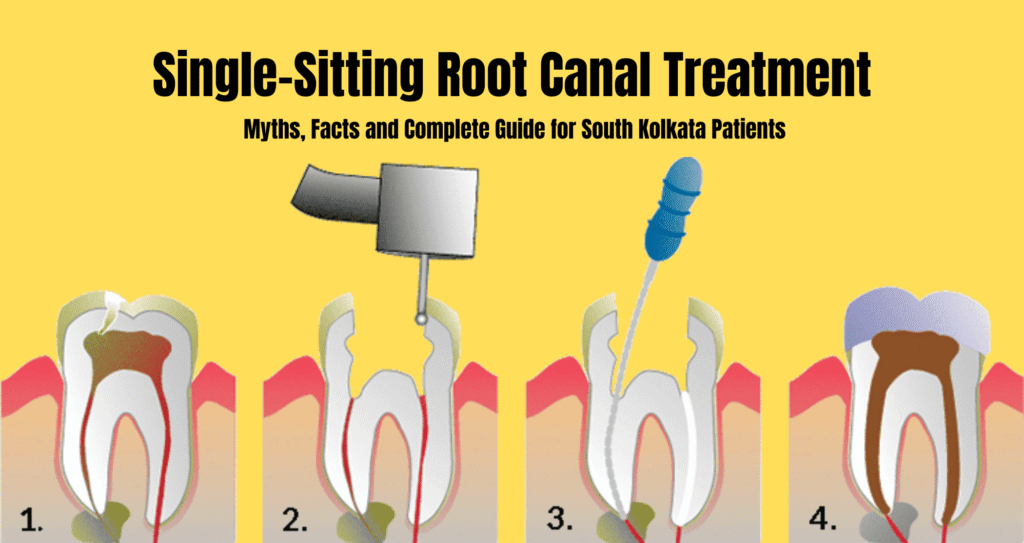
Single-Sitting Root Canal: Myths, Facts & Benefits in South Kolkata Root canal treatment has a reputation for being painful and time-consuming, but modern dentistry has changed everything. Many patients today can complete the entire procedure in just one sitting. If you live in South Kolkata — especially around Baghajatin, Santoshpur or Jadavpur — and are struggling with tooth pain or infection, this guide will help you understand whether single-sitting RCT is right for you. What Is a Single-Sitting Root Canal Treatment? A single-sitting root canal is a modern dental procedure where the infected nerve of the tooth is cleaned, disinfected and sealed in just one visit. This is possible due to advanced rotary instruments and high-precision digital techniques. Why This Method Is Becoming Popular Fast treatment Minimal visits Reduced discomfort Efficient cleaning of the infected tooth Immediate relief from pain For many cases, this method is completely safe and highly effective. Is Single-Sitting Root Canal Safe? Yes, single-sitting RCT is considered safe for most cases when performed by an experienced RCT specialist. The procedure is done under local anesthesia and advanced digital monitoring. When It Is Safe Early to moderate infections No abscess or swelling Tooth structure still strong No severe anatomical complications When Multiple Visits Are Better Large swelling Severe infection Re-root canal cases Complex root anatomy Your dentist will make the final call after examining X-rays. Myths About Single-Sitting Root Canals (And the Truth) There are many misconceptions that confuse patients. Let’s clear them: Common Myths vs Facts Myth: Single sitting RCT is risky.Fact: It is safe for most cases when done by a trained specialist. Myth: It is more painful than traditional RCT.Fact: It is painless due to modern anesthesia and rotary tools. Myth: It is less effective.Fact: Success rates are equal or higher when done correctly. Myth: It is only for minor infections.Fact: Moderate infections can also be treated in a single sitting. Who Is an Ideal Candidate for Single-Sitting RCT? Not all cases qualify for single-sitting treatment, but many do. Ideal Candidates People with mild or moderate tooth infection Patients with time constraints Individuals with no swelling or abscess Those seeking quick relief Adults or children with uncomplicated root structure If you’re unsure, your dentist will evaluate with X-rays. How Does Single-Sitting Root Canal Work? Step-by-Step The procedure is simple and efficient. What Happens During the Visit Local anesthesia to numb the area Cleaning of the infected nerve Shaping and disinfecting the canals Filling the canals with a sealing material Temporary or permanent filling placed In many cases, the entire process takes 30 to 60 minutes. How Long Does a Single-Sitting Root Canal Last? When done properly, the results can last many years. The key is to get a crown placed after the procedure. Why a Crown Is Important Protects the tooth from breaking Strengthens chewing ability Prevents reinfection Ensures long-term stability Most dentists recommend getting a crown within 1–2 weeks. Does Single-Sitting RCT Hurt? No. The treatment is painless because: The tooth is fully numbed Advanced rotary tools reduce discomfort The infection is removed quickly Some patients may feel mild soreness afterward, which is normal and temporary. Why Choose City Smiles Dental Care for Root Canal Treatment in South Kolkata City Smiles Dental Care is known for providing painless and quick root canal treatments, including single-sitting procedures. What We Offer Advanced rotary RCT systems Digital X-ray and precision tools Painless anesthesia Single-sitting RCT (case-based) Experienced root canal specialist Comfortable and hygienic setup Patients from Baghajatin, Santoshpur and Jadavpur trust us for fast and reliable treatment. Areas We Serve in South Kolkata We are easily accessible to patients from: Baghajatin Santoshpur Jadavpur Garfa Patuli Garia Selimpur Final Takeaway Single-sitting root canal treatment is a modern, safe and effective way to save your natural tooth with minimal discomfort and fewer visits. If you’re dealing with tooth pain, don’t delay treatment — early diagnosis makes the procedure simpler and faster. If you want fast, painless root canal treatment in South Kolkata, we are here to help you. Tap here to find City Smiles Dental Care on Google:https://share.google/sw0xDcxXZLRbNT7xS About the Author Dr. Sagnik Bhattacharya MDS Consultant Endodontist (Root Canal Specialist) Assistant Professor at Guru Nanak Institute of Dental Sciences and Research Kolkata Founder & Lead Dentist, City Smiles Dental Care — Baghajatin, Kolkata Dr. Sagnik is known for his gentle approach, precision-based dentistry, and modern treatment techniques. Specializing in endodontics (root canal treatment), pediatric dentistry, and pain-free restorative care, he has helped thousands of patients regain their smiles with confidence. At City Smile Dental Care, the focus is simple:Advanced dentistry. Zero fear. Total comfort.
Best Root Canal Treatment in Kolkata — A Complete Patient Guide
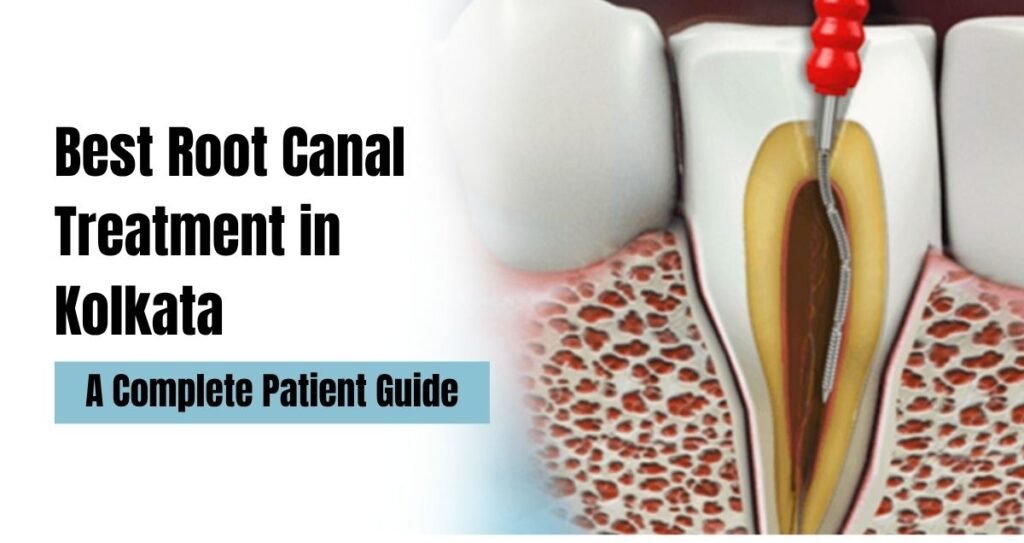
Root canals have a reputation that could scare even the bravest souls — a reputation mostly built on outdated stories, not reality. Today, with modern dental tech and advanced techniques, root canal treatment (RCT) is more efficient, more comfortable, and often no more painful than a simple filling. If you’re searching for the best root canal treatment in Kolkata, this guide gives you everything you need to know — symptoms, cost, pain levels, procedure, aftercare, FAQs, and how to choose the right dentist. 1. Introduction Root canals have always carried this cinematic reputation — dim lights, buzzing drills, trembling patients. Truth? Modern root canal treatment is nothing like that. In cities like Kolkata, dental clinics now use: High-precision rotary instruments Digital X-rays Apex locators Better anesthesia Microscopic dentistry techniques The result? A smooth, controlled, pain-free treatment that saves your natural tooth and eliminates infection at its root. In this guide, we’ll break down everything a patient needs: What RCT actually is Why it’s needed Whether it hurts How many visits you’ll need Cost in Kolkata Aftercare and longevity Plus the most common FAQs This is your no-panic, no-jargon guide to root canal treatment — written to help you make confident decisions about your oral health. 2. What Is Root Canal Treatment? A root canal is a dental procedure that removes infection from inside a tooth while preserving the natural structure. Inside every tooth is a soft core called pulp — a tiny compartment filled with nerves, blood vessels, and tissues. When this pulp becomes infected due to decay, cracks, or trauma, it causes pain and swelling. Root canal treatment cleans out this infected pulp, shapes the canals, disinfects them, and seals the space to prevent reinfection. Think of it as rescuing a damaged tooth from extraction — a final, effective treatment to maintain your natural smile. 3. When Do You Need a Root Canal? You might need an RCT if you’re experiencing: Persistent toothache Sensitivity to hot or cold that lingers Gum swelling or a small pimple-like boil Deep cavities Sudden tooth darkening/discoloration Pain while chewing How dentists diagnose it: Digital X-rays Pulp vitality tests Percussion tests Clinical examination If the pulp is infected or dying, an RCT is the best way to save the tooth. 4. Is Root Canal Treatment Painful? Here’s the part everyone wants to know — does it hurt?Short answer: Not anymore. Modern anesthesia = zero pain Local anesthesia completely numbs the tooth and surrounding tissue. Most patients report no pain during the procedure — just some movement or mild vibrations. Rotary tools vs old techniques Older methods used manual files — slower and more uncomfortable.New-age rotary systems make treatment: Faster More precise More comfortable More successful Pain during vs after treatment During: Almost always pain-free.After: Mild soreness for 24–48 hours is normal and manageable with routine painkillers. Modern dentistry in Kolkata has made RCT a comfortable, predictable, and highly effective treatment. 5. How Does Root Canal Treatment Work? (Step-by-Step) Numbing the area Opening the tooth to access the pulp Cleaning & shaping the canals using rotary files Disinfecting the inside Filling the canals with biocompatible material Sealing the tooth Placing a crown (if required) for strength 6. How Many Visits Are Needed? Most patients need 1–2 visits.Severe infections may require a third cleaning session. 7. Why Saving a Tooth Is Better Than Removal Keeping your natural tooth prevents: Shifting of nearby teeth Bite imbalance Bone loss Expensive replacements Long-term complications RCT saves both the tooth and your smile. 8. Crown After Root Canal — Do You Need One? Back teeth almost always need a crown because they bear heavier chewing forces.Without a crown, the tooth can crack or break.Front teeth may not require one unless severely damaged. 9. How Long Does a Root Canal Last? With proper care + crown, results often last 10–20 years or more. Many last a lifetime. 10. Eating After a Root Canal Wait until numbness fades Stick to soft foods initially Avoid chewing on the treated side Resume normal eating after the crown is placed 11. Cost of Root Canal Treatment in Kolkata Cost varies depending on: Number of canals Tooth position (front vs molar) Equipment used Crown material For an accurate estimate, book a consultation at City Smile Dental Care. 12. Aftercare Tips Take prescribed medications Avoid hard foods Maintain oral hygiene Get the crown placed on time 13. Common Myths About RCT — Busted ❌ “Root canals are painful.”✔ Modern RCT is nearly painless. ❌ “It’s better to remove the tooth.”✔ Saving your natural tooth is healthier and cheaper long-term. ❌ “Root canals don’t last.”✔ With crowns, success rate is 90–95%. FAQ: Root Canal Treatment in Kolkata 1. Is a root canal painful? Modern RCT is mostly pain-free due to advanced anesthesia and rotary tools. 2. What is the cost of a root canal in Kolkata? Costs vary by tooth type and complexity. The cost of root canal starts at 3500 and will increase depending on the tooth and complexity of the caseCall City Smile Dental Care for an exact quote. 3. Do I need a crown after root canal? Usually yes — especially for molars and premolars. 4. What happens if I delay the treatment? Delays can lead to: Severe pain Swelling Infection spread Tooth fracture Extraction 5. What is the success rate? About 90–95% with proper technique and crown placement. 6. How long is recovery? 24–48 hours of mild soreness is normal. 7. How many appointments do I need? 1–2 visits for most cases. 8. Can I eat after the procedure? Yes — once numbness wears off.Avoid chewing on the treated side until the crown is fitted. 9. Is RCT a surgery? No. It’s a non-surgical dental procedure. 10. How long can I wait to get the crown? Preferably within 1–2 weeks. 11. Can I skip the crown? Not recommended for back teeth — high risk of fractures. 12. Are implants better than RCT? Implants are great, but saving your natural tooth is almost always
Top 5 Signs You Need Root Canal Treatment
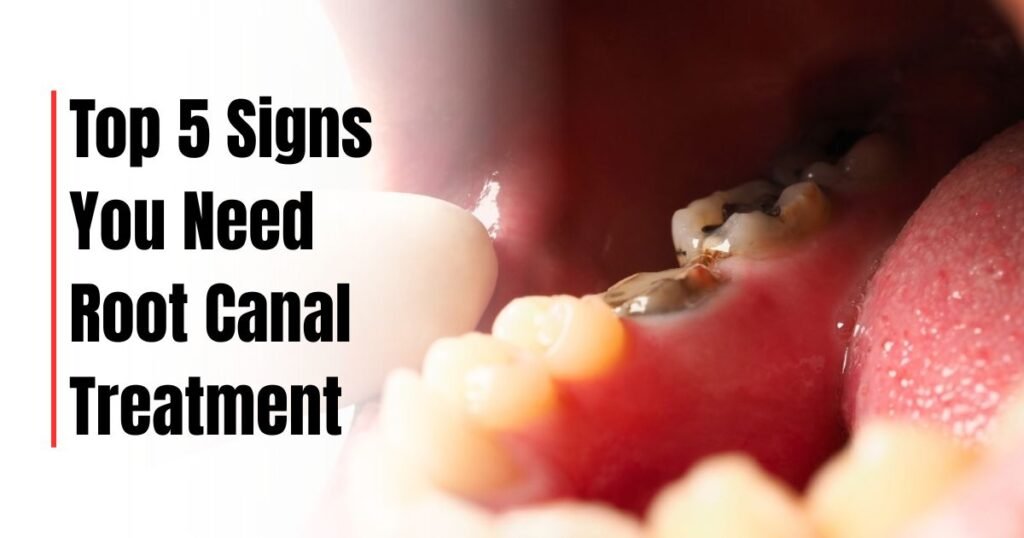
If you’ve been struggling with tooth pain, swelling, or sensitivity to hot and cold, your tooth might be trying to tell you something serious — it may need root canal treatment (RCT). While many people associate the term “root canal” with discomfort, modern dentistry has made it a painless and quick procedure that can actually save your natural tooth and restore your confident smile. Let’s understand the early signs that indicate you may need a root canal — and why ignoring them can lead to long-term damage. Quick Symptoms Checklist Before diving deep, here are the common symptoms that suggest your tooth might need professional care: Persistent tooth pain that doesn’t go away Swelling or tenderness in the gums near a specific tooth Prolonged sensitivity to hot or cold, even after the source is removed Darkening or discoloration of the affected tooth Pimple-like bump (abscess) on the gum line near the tooth If you’re experiencing any of these, it’s time to schedule an examination. Early diagnosis can make treatment faster, simpler, and more comfortable. 1. Persistent Tooth Pain Tooth pain is often the first and most noticeable sign that something is wrong. However, not all toothaches are equal.If your tooth pain is deep, throbbing, or constant, especially when chewing or touching the area, it may indicate an infection in the pulp — the innermost part of the tooth containing nerves and blood vessels. Pain may also spread to your jaw, ear, or temple, making it hard to pinpoint the exact source. In such cases, a root canal is often the only way to remove the infection while preserving your tooth structure. Ignoring this symptom can allow bacteria to multiply, leading to abscess formation and, eventually, tooth loss. 2. Sensitivity to Hot and Cold Occasional sensitivity to temperature changes is normal — but prolonged sensitivity (lasting more than a few seconds after the trigger) could signal deeper damage. If you feel a lingering sharp or dull ache when sipping tea, coffee, or even cold water, it could mean that the tooth nerve is exposed or infected. This type of sensitivity won’t improve with toothpaste alone. It requires timely evaluation and, often, root canal treatment to remove the infected pulp and seal the tooth. 3. Swollen or Tender Gums Have you noticed swelling, tenderness, or a small bump on your gums? These are classic signs of an underlying tooth infection.The swelling might appear and disappear but can be accompanied by a foul taste if pus drains from the infected area. This condition, if untreated, can lead to bone loss around the tooth root. A root canal not only removes the infection but also allows the surrounding tissues to heal completely, preventing further complications. 4. Tooth Discoloration or Darkening A tooth that turns greyish, brown, or black without any external cause (like staining from food or smoking) is often a sign of nerve damage inside the tooth. When the pulp dies, blood supply stops, and the tooth begins to darken from within. This is an irreversible process and one of the clearest signs that root canal therapy is needed. At City Smiles Dental Care, we not only treat the infection but can also restore the tooth’s natural appearance with cosmetic fillings or crowns, ensuring your smile looks as good as it feels. 5. Pimple-like Bump or Abscess on the Gums If you notice a small pimple or bump on your gums that occasionally releases pus, it’s a sign of an active abscess.An abscess is your body’s way of responding to a deep infection — and it’s a dental emergency that should not be ignored. Without treatment, the infection can spread to adjacent teeth or jawbone, causing severe pain and systemic health risks.A root canal procedure will remove the infected pulp, clean the canals, and seal the tooth to prevent future infections. Why Ignoring These Signs Can Cause Permanent Damage Neglecting dental pain or infection can have serious, long-term consequences.Without timely treatment, bacteria from an infected tooth can: Spread to the jawbone, causing bone loss Damage surrounding teeth and gums Enter the bloodstream, leading to systemic infections Result in tooth extraction, which is more expensive and invasive than a root canal In short — delaying treatment means risking your smile and overall oral health.A root canal doesn’t just save your tooth; it saves you from extensive dental complications later. Why Choose City Smiles for Root Canal in Kolkata At City Smiles Dental Care, South Kolkata, we combine advanced technology with gentle expertise to make your root canal experience quick, comfortable, and effective. Here’s why patients across Baghajatin, Santoshpur, and Jadavpur trust us: ✅ Single-sitting RCT: Modern rotary endodontics allows us to complete most treatments in just one visit.✅ Painless Procedure: Local anesthesia and digital precision ensure zero discomfort.✅ Microscopic Accuracy: We use advanced tools for thorough cleaning and sealing.✅ Post-treatment Restoration: Durable crowns and fillings restore strength and aesthetics. Click here to book your painless RCT consultation on Google. Root Canal in Milk Teeth – Child Dentistry Did you know children may also need root canal treatment?In pediatric cases, a “pulpotomy” or “pulpectomy” is performed to save milk teeth affected by deep cavities or trauma. Preserving milk teeth is essential for proper spacing and alignment of permanent teeth. Explore our Child Dentistry services to learn how City Smiles ensures gentle, stress-free dental care for kids. Post-Root Canal Alignment Corrections After saving your tooth with an RCT, you might experience minor alignment issues due to uneven bite forces. That’s where braces or clear aligners come in handy! Check out our Braces Treatment options to maintain perfect alignment and a confident smile after your root canal. FAQs About Root Canal Treatment Is root canal treatment painful? Not anymore! With modern anesthesia and rotary tools, the procedure is virtually painless. You may feel mild tenderness for a day or two, which subsides with medication. How long does a root canal take? At City Smiles, most RCTs are done in a single sitting lasting about 45–60 minutes,