
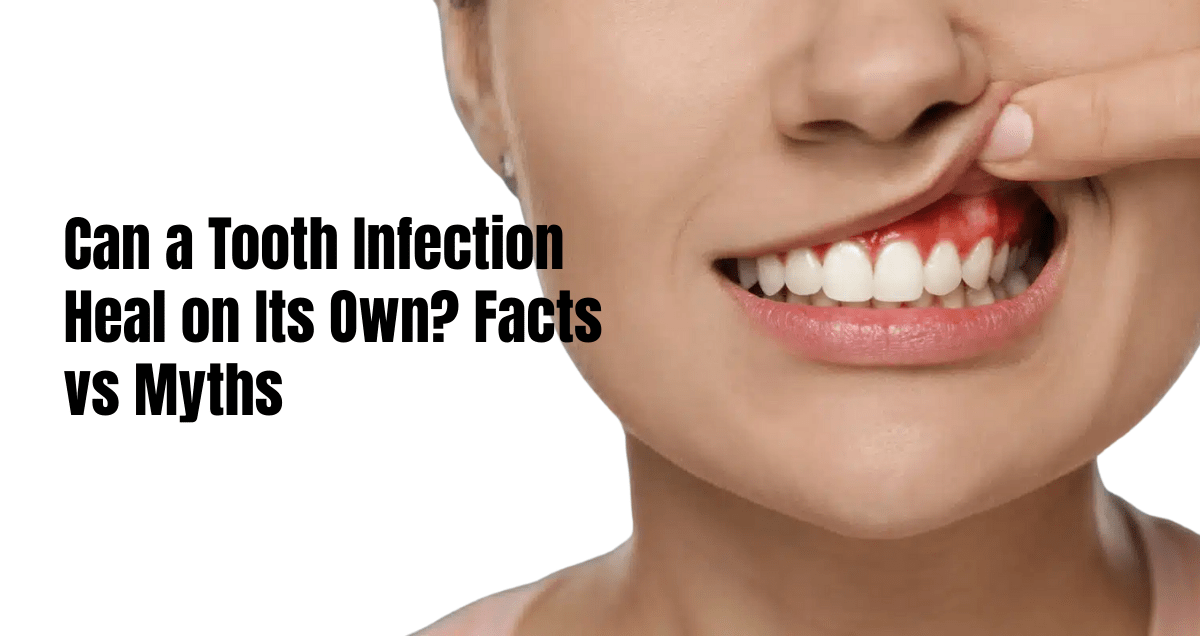
Can a Tooth Infection Heal on Its Own? Facts vs Myths
At City Smiles Dental Care, we often meet patients who come to us only after days—or even weeks—of ignoring tooth pain. One of the most common reasons for delay is a simple belief: “The pain will go away on its own.”
This leads to an important and frequently searched question: can a tooth infection heal on its own?
For patients and parents alike, understanding the real answer can prevent severe pain, emergency situations, and long-term dental damage. In this blog, our dentists explain the facts vs myths, symptoms to watch for, and why early treatment is always the safest option.
What Is a Tooth Infection?
A tooth infection occurs when bacteria enter the inner part of the tooth, known as the pulp. This pulp contains nerves and blood vessels that keep the tooth alive. Under normal conditions, it is well protected by enamel and dentin. However, when a tooth develops deep decay, cracks, broken fillings, gum disease, or trauma, bacteria can reach this sensitive area.
Once bacteria infect the pulp, the tooth becomes inflamed and painful. Because the tooth is a hard, enclosed structure, the infection cannot drain naturally. This causes pressure buildup and pus formation, which is known as a dental abscess. Over time, the infection spreads from the tooth root into the surrounding bone and soft tissues.
Can a Tooth Infection Heal on Its Own?
The clear and medically correct answer is no, a tooth infection cannot heal on its own.
Many patients feel temporary relief when tooth pain suddenly disappears and assume the infection has resolved. In reality, this usually means the nerve inside the tooth has died. While pain may reduce, the infection remains active and often becomes more dangerous because it continues without noticeable symptoms.
The body’s immune system cannot fully fight a tooth infection because blood supply to the infected pulp is severely limited. Without professional dental treatment, the bacteria stay trapped inside the tooth and continue to spread.
Facts vs Myths About Tooth Infection Healing
Myth: If the pain stops, the infection is cured
This is one of the most harmful misconceptions. Pain often stops when the nerve dies—not when the infection heals. Many serious dental abscess cases begin after patients ignore pain-free infected teeth.
Myth: Antibiotics alone can cure a tooth infection
Antibiotics may temporarily reduce swelling or fever, but they cannot remove infected tissue from inside the tooth. Once antibiotics are stopped, the infection almost always returns.
Myth: Home remedies can heal a tooth infection
Salt water rinses, clove oil, garlic, or herbal remedies may provide short-term comfort, but they cannot kill bacteria deep inside the tooth or jawbone.
Myth: Tooth infections in children are not serious
In children, tooth infections spread faster due to thinner bone and can damage developing permanent teeth if left untreated.
Why Tooth Infections Do Not Heal Naturally
Unlike skin infections or minor wounds, tooth infections are trapped inside a closed structure. Once bacteria reach the pulp:
- The infection becomes sealed within the tooth
- Pus accumulates without a natural drainage pathway
- Pressure increases, damaging surrounding bone
- Infection spreads to gums, jawbone, or facial tissues
Because of this, waiting for a tooth infection to heal naturally is unsafe and ineffective.
Common Signs and Symptoms of a Tooth Infection
Tooth infections do not always start with severe pain. Early symptoms are often ignored, especially by children who may not express discomfort clearly.
Common symptoms include:
- Persistent or throbbing toothache
- Sensitivity to hot or cold foods
- Swollen or tender gums
- A pimple-like bump on the gums
- Bad taste or foul-smelling breath
As the infection worsens, symptoms may progress to facial swelling, fever, fatigue, difficulty chewing, or trouble opening the mouth. In children, irritability, sleep disturbance, and refusal to eat are common warning signs.
What Happens If a Tooth Infection Is Left Untreated?
An untreated tooth infection does not stay confined to the mouth. Over time, it can lead to serious health complications such as:
- Jawbone damage, which weakens tooth support and may cause tooth loss
- Facial and neck swelling, sometimes affecting breathing or swallowing
- Sinus infections, especially from upper teeth
- Spread of infection, which in rare cases can enter the bloodstream
At our South Kolkata clinic, we regularly see patients whose treatment could have been much simpler if addressed earlier.
Learn more – Tooth Pain at Night in Kolkata | Causes & Immediate Relief
Tooth Infection Treatment Options
The treatment required depends on how advanced the infection is and whether the tooth can be saved.
Common treatment options include:
- Root canal treatment, which removes infected pulp and preserves the natural tooth
- Tooth extraction, when the tooth is too damaged to be saved
- Abscess drainage, to relieve pressure and remove pus
- Antibiotics, used only as supportive treatment along with dental procedures
Early treatment not only reduces pain but also lowers cost and treatment complexity.
Tooth Infections in Children: What Parents Should Know
Parents often assume baby teeth are temporary and less important. However, infections in primary teeth can affect a child’s nutrition, speech development, sleep quality, and the proper alignment of permanent teeth.
Prompt dental care prevents emergencies and ensures healthy oral development. Regular checkups help detect infections before they become painful or dangerous.
Conclusion
A tooth infection cannot heal on its own, even if pain disappears temporarily. Delaying treatment allows the infection to spread, increases health risks, and often results in more invasive procedures. Early diagnosis and timely dental care are always the safest and most effective solutions.
Call to Action
If you or your child is experiencing tooth pain, swelling, or any signs of infection, do not wait.
At City Smiles Dental Care, South Kolkata, our experienced dentists diagnose and treat tooth infections at an early stage to prevent complications. Book a consultation today and protect your oral and overall health.
FAQs
- Can a tooth infection go away naturally without treatment?
No. The infection remains active and worsens over time. - Why does tooth pain sometimes stop on its own?
Pain usually stops when the nerve dies, not because the infection has healed. - Are antibiotics enough for tooth infection treatment?
No. Dental procedures are required to remove infected tissue. - How urgent is treatment for a tooth infection?
Very urgent. Delaying treatment increases the risk of serious complications. - 5. Can untreated tooth infection affect overall health?
Yes. In severe cases, it can spread beyond the mouth and become dangerous.

About the Author
Dr. Sagnik Bhattacharya MDS
Consultant Endodontist (Root Canal Specialist)
Assistant Professor at Guru Nanak Institute of Dental Sciences and Research Kolkata
Founder & Lead Dentist, City Smiles Dental Care — Baghajatin, Kolkata
Dr. Sagnik is known for his gentle approach, precision-based dentistry, and modern treatment techniques. Specializing in endodontics (root canal treatment), pediatric dentistry, and pain-free restorative care, he has helped thousands of patients regain their smiles with confidence.
At City Smile Dental Care, the focus is simple:
Advanced dentistry. Zero fear. Total comfort.