Root canals have a reputation that could scare even the bravest souls — a reputation mostly built on outdated stories, not reality. Today, with modern dental tech and advanced techniques, root canal treatment (RCT) is more efficient, more comfortable, and often no more painful than a simple filling.
If you’re searching for the best root canal treatment in Kolkata, this guide gives you everything you need to know — symptoms, cost, pain levels, procedure, aftercare, FAQs, and how to choose the right dentist.
1. Introduction
Root canals have always carried this cinematic reputation — dim lights, buzzing drills, trembling patients. Truth? Modern root canal treatment is nothing like that.
In cities like Kolkata, dental clinics now use:
- High-precision rotary instruments
- Digital X-rays
- Apex locators
- Better anesthesia
- Microscopic dentistry techniques
The result? A smooth, controlled, pain-free treatment that saves your natural tooth and eliminates infection at its root.
In this guide, we’ll break down everything a patient needs:
- What RCT actually is
- Why it’s needed
- Whether it hurts
- How many visits you’ll need
- Cost in Kolkata
- Aftercare and longevity
- Plus the most common FAQs
This is your no-panic, no-jargon guide to root canal treatment — written to help you make confident decisions about your oral health.
2. What Is Root Canal Treatment?
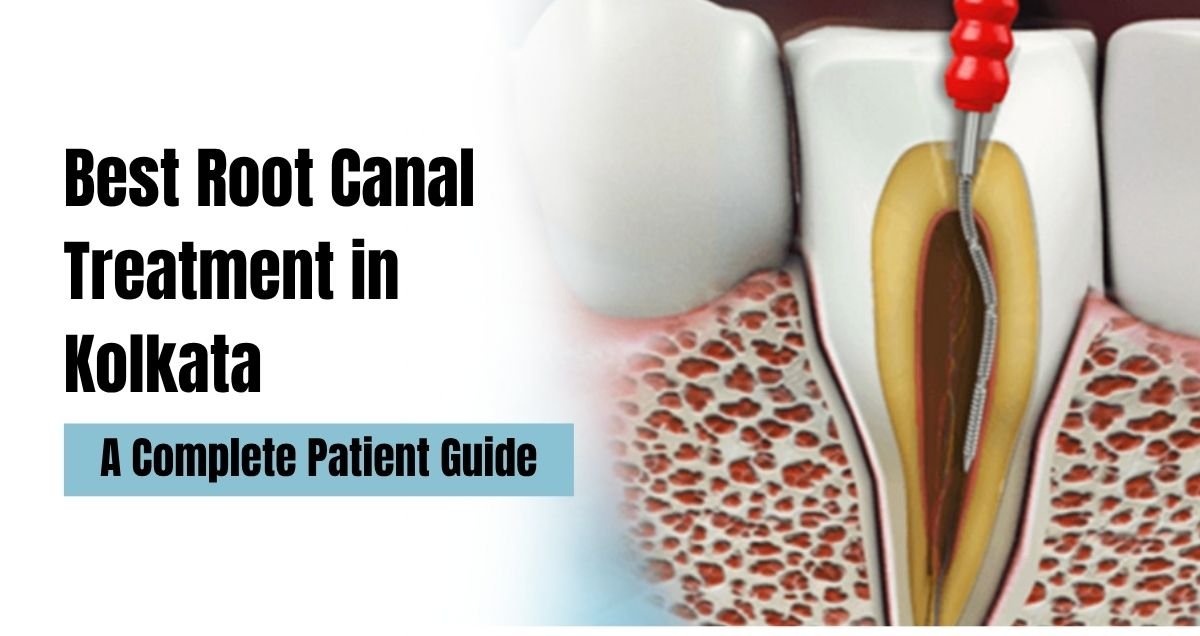
A root canal is a dental procedure that removes infection from inside a tooth while preserving the natural structure.
Inside every tooth is a soft core called pulp — a tiny compartment filled with nerves, blood vessels, and tissues. When this pulp becomes infected due to decay, cracks, or trauma, it causes pain and swelling.
Root canal treatment cleans out this infected pulp, shapes the canals, disinfects them, and seals the space to prevent reinfection.
Think of it as rescuing a damaged tooth from extraction — a final, effective treatment to maintain your natural smile.
3. When Do You Need a Root Canal?
You might need an RCT if you’re experiencing:
- Persistent toothache
- Sensitivity to hot or cold that lingers
- Gum swelling or a small pimple-like boil
- Deep cavities
- Sudden tooth darkening/discoloration
- Pain while chewing
How dentists diagnose it:
- Digital X-rays
- Pulp vitality tests
- Percussion tests
- Clinical examination
If the pulp is infected or dying, an RCT is the best way to save the tooth.
4. Is Root Canal Treatment Painful?
Here’s the part everyone wants to know — does it hurt?
Short answer: Not anymore.
Modern anesthesia = zero painLocal anesthesia completely numbs the tooth and surrounding tissue. Most patients report no pain during the procedure — just some movement or mild vibrations.
Rotary tools vs old techniques
Older methods used manual files — slower and more uncomfortable.
New-age rotary systems make treatment:
- Faster
- More precise
- More comfortable
- More successful
Pain during vs after treatment
During: Almost always pain-free.
After: Mild soreness for 24–48 hours is normal and manageable with routine painkillers.
Modern dentistry in Kolkata has made RCT a comfortable, predictable, and highly effective treatment.
5. How Does Root Canal Treatment Work? (Step-by-Step)
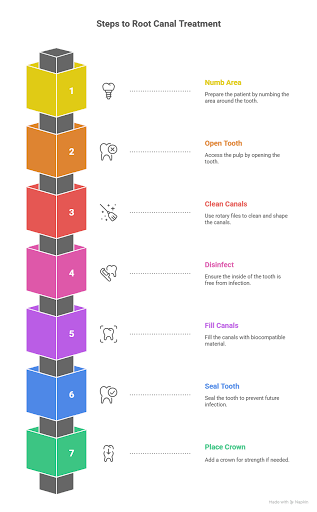
- Numbing the area
- Opening the tooth to access the pulp
- Cleaning & shaping the canals using rotary files
- Disinfecting the inside
- Filling the canals with biocompatible material
- Sealing the tooth
- Placing a crown (if required) for strength
6. How Many Visits Are Needed?
Most patients need 1–2 visits.
Severe infections may require a third cleaning session.
7. Why Saving a Tooth Is Better Than Removal
Keeping your natural tooth prevents:
- Shifting of nearby teeth
- Bite imbalance
- Bone loss
- Expensive replacements
- Long-term complications
RCT saves both the tooth and your smile.
8. Crown After Root Canal — Do You Need One?
Back teeth almost always need a crown because they bear heavier chewing forces.
Without a crown, the tooth can crack or break.
Front teeth may not require one unless severely damaged.
9. How Long Does a Root Canal Last?
With proper care + crown, results often last 10–20 years or more. Many last a lifetime.
10. Eating After a Root Canal
- Wait until numbness fades
- Stick to soft foods initially
- Avoid chewing on the treated side
- Resume normal eating after the crown is placed
11. Cost of Root Canal Treatment in Kolkata
Cost varies depending on:
- Number of canals
- Tooth position (front vs molar)
- Equipment used
- Crown material
For an accurate estimate, book a consultation at City Smile Dental Care.
12. Aftercare Tips
- Take prescribed medications
- Avoid hard foods
- Maintain oral hygiene
- Get the crown placed on time
13. Common Myths About RCT — Busted
❌ “Root canals are painful.”
✔ Modern RCT is nearly painless.
❌ “It’s better to remove the tooth.”
✔ Saving your natural tooth is healthier and cheaper long-term.
❌ “Root canals don’t last.”
✔ With crowns, success rate is 90–95%.
FAQ: Root Canal Treatment in Kolkata
1. Is a root canal painful?
Modern RCT is mostly pain-free due to advanced anesthesia and rotary tools.
2. What is the cost of a root canal in Kolkata?
Costs vary by tooth type and complexity. The cost of root canal starts at 3500 and will increase depending on the tooth and complexity of the case
Call City Smile Dental Care for an exact quote.
3. Do I need a crown after root canal?
Usually yes — especially for molars and premolars.
4. What happens if I delay the treatment?
Delays can lead to:
- Severe pain
- Swelling
- Infection spread
- Tooth fracture
- Extraction
5. What is the success rate?
About 90–95% with proper technique and crown placement.
6. How long is recovery?
24–48 hours of mild soreness is normal.
7. How many appointments do I need?
1–2 visits for most cases.
8. Can I eat after the procedure?
Yes — once numbness wears off.
Avoid chewing on the treated side until the crown is fitted.
9. Is RCT a surgery?
No. It’s a non-surgical dental procedure.
10. How long can I wait to get the crown?
Preferably within 1–2 weeks.
11. Can I skip the crown?
Not recommended for back teeth — high risk of fractures.
12. Are implants better than RCT?
Implants are great, but saving your natural tooth is almost always the first choice.