
Self-Ligating Braces: Faster & Comfortable? Cost in Kolkata
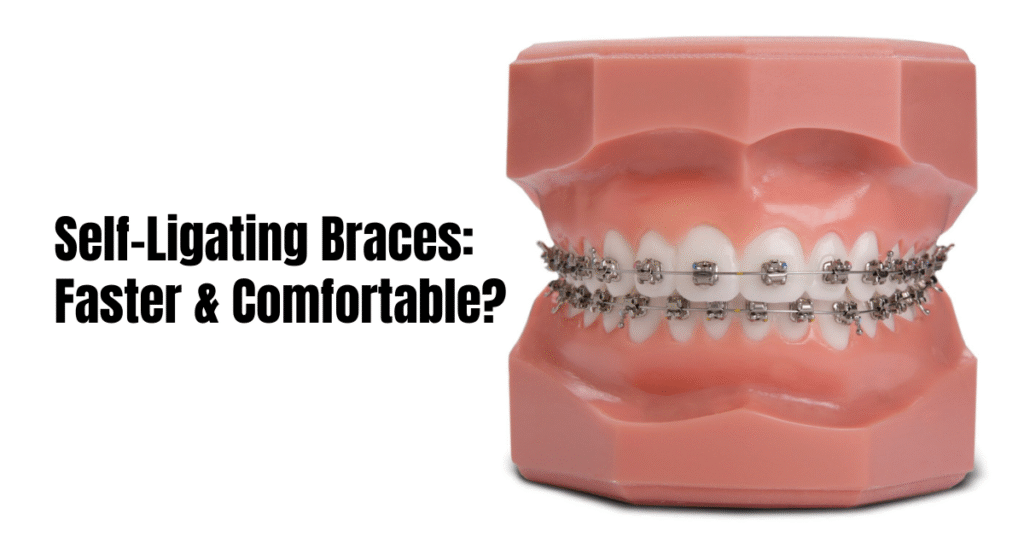
Self-Ligating Braces: Faster & Comfortable? Cost in Kolkata Braces have come a long way from bulky wires and frequent painful adjustments. Today, many patients exploring orthodontic treatment ask about self-ligating braces—often described as faster, more comfortable, and more hygienic than traditional braces. But are self-ligating braces really better? Are they suitable for everyone? And most importantly, what is the cost of self-ligating braces in Kolkata? This blog explains how self-ligating braces work, their benefits and limitations, and what patients should realistically expect before choosing this treatment. What Are Self-Ligating Braces? Self-ligating braces are a modern type of fixed orthodontic appliance that straighten teeth using brackets and wires—similar to traditional braces. The key difference lies in how the wire is held in place. Instead of elastic or rubber ties, self-ligating brackets use a built-in clip or sliding door mechanism to secure the wire. This reduces friction and allows teeth to move more freely during treatment. Self-ligating braces can be: Metal self-ligating braces Ceramic (tooth-colored) self-ligating braces Both types work on the same principle but differ in appearance. How Do Self-Ligating Braces Work? In traditional braces, elastic ties hold the wire tightly to the brackets, creating friction during tooth movement. Self-ligating braces eliminate these ties. Because the wire is loosely held within the bracket: Teeth experience gentler, more consistent force Adjustments are often quicker There is less pressure during movement This design allows orthodontists to guide teeth into proper alignment more efficiently in many cases. Are Self-Ligating Braces Faster Than Traditional Braces? One of the most common questions patients ask is whether self-ligating braces shorten treatment time. In many cases, treatment with self-ligating braces may progress faster, especially during early alignment stages. However, the actual treatment duration depends on: Severity of misalignment Jaw structure Patient age Compliance with appointments Self-ligating braces are not a “shortcut,” but they often provide smoother and more efficient tooth movement. Are Self-Ligating Braces More Comfortable? Comfort is another major reason patients consider self-ligating braces. Patients often report: Less pressure after adjustments Reduced soreness compared to traditional braces Fewer emergency visits due to broken elastic ties While mild discomfort is still normal with any braces, self-ligating systems generally feel less restrictive. Benefits of Self-Ligating Braces Self-ligating braces offer several advantages: Reduced friction between wire and bracket Shorter adjustment appointments Easier oral hygiene (no elastic ties) Fewer clinic visits in some cases More comfortable tooth movement These benefits make them a popular choice for teens and adults alike. Are There Any Limitations? Despite their advantages, self-ligating braces are not ideal for everyone. Limitations include: Higher cost compared to traditional braces Not significantly faster in complex orthodontic cases Still visible unless ceramic options are chosen An orthodontic evaluation is essential to determine suitability. Cost of Self-Ligating Braces in Kolkata The cost of self-ligating braces in Kolkata varies based on multiple factors, including case complexity and brace type. Approximate cost range: Metal self-ligating braces: ₹60,000 – ₹90,00 Ceramic self-ligating braces: ₹80,000 – ₹1,20,000 Factors affecting cost include: Duration of treatment Need for additional procedures Orthodontist’s expertise Follow-up and retention care A personalized consultation provides the most accurate estimate. Who Is a Good Candidate for Self-Ligating Braces? Self-ligating braces are suitable for: Crowded or misaligned teeth Spacing issues Mild to moderate bite problems Teens and adults seeking comfortable treatment Severe skeletal issues may require additional orthodontic planning. Why City Smiles Dental Care Is the Right Choice for Self-Ligating Braces in Kolkata At City Smiles Dental Care, we understand that choosing the right orthodontic treatment is a long-term decision. Our focus is on evaluating each patient’s dental alignment, bite condition, and treatment goals before recommending self-ligating braces. Every patient receives a detailed assessment to ensure the chosen orthodontic solution is effective, comfortable, and suitable for their needs. Located in South Kolkata, the clinic offers dependable orthodontic care for both adolescents and adults. Why patients choose City Smiles Dental Care for braces treatment: Detailed orthodontic evaluation before treatment Clear explanation of treatment options and timelines Focus on comfort, aesthetics, and long-term results Ethical, transparent treatment planning Care for teenagers and adults Patient-first and evidence-based approach Trusted dental clinic in South Kolkata Conclusion Self-ligating braces offer a modern, comfortable, and efficient approach to teeth alignment. While they may not drastically shorten treatment for every case, they often provide smoother tooth movement, easier maintenance, and improved comfort. Understanding how they work and their cost in Kolkata helps patients make informed orthodontic decisions. A professional evaluation remains the most important step in determining whether self-ligating braces are the right option. FAQs Are self-ligating braces better than traditional braces? They offer greater comfort and convenience, but suitability depends on the case. Do self-ligating braces hurt less? Most patients report less discomfort compared to traditional braces. How long does treatment take with self-ligating braces? Treatment duration varies, but many cases progress efficiently. Are self-ligating braces suitable for adults? Yes, they are commonly chosen by adult patients. Is the cost of self-ligating braces higher? Yes, they generally cost more than traditional braces due to advanced design. About the Author Dr. Rajshelhar Banerjee BDS (MCODS Mangalore), MDS (A.B. Shetty Dental College) Consultant Orthodontist | Certified Platinum Invisalign Provider Dr. Rajshelhar Banerjee is an experienced orthodontist specializing in creating beautifully aligned, healthy smiles through both traditional braces and advanced clear aligner therapy. Trained at MCODS Mangalore and A.B. Shetty Dental College, he is skilled in fixed orthodontics, Invisalign, growth modulation, and aesthetic smile design. As a Certified Platinum Invisalign Provider, he is recognized for his expertise in planning and executing complex aligner cases with precision. Known for his meticulous approach and patient-focused care, Dr. Banerjee ensures comfortable treatment and predictable results for every patient. At City Smile Dental Care, the focus is simple:Advanced dentistry. Zero fear. Total comfort.
Damon Braces vs Traditional Braces: Key Differences
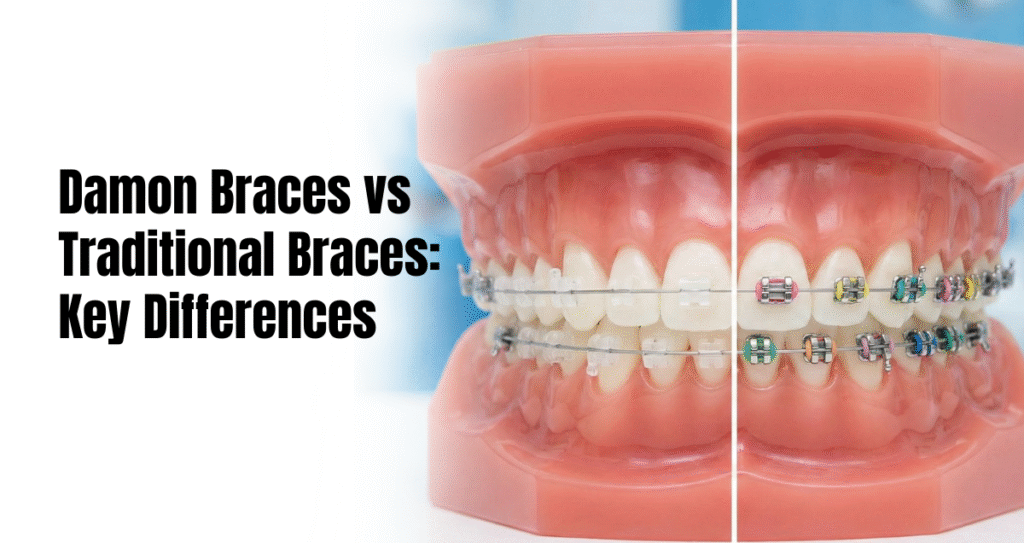
Damon Braces vs Traditional Braces: Key Differences When considering braces for teeth alignment, many patients come across two common options: Damon braces and traditional braces. While both aim to straighten teeth and improve bite alignment, they differ in design, comfort, and sometimes treatment experience. Choosing the right orthodontic treatment depends on understanding how each system works, what benefits they offer, and whether they suit your specific dental condition. This detailed comparison will help you make an informed decision. What Are Traditional Braces? Traditional braces are the most widely used orthodontic system. They consist of metal brackets bonded to the teeth, connected by an archwire. Small elastic bands (also called ligatures) hold the wire in place. As the wire is adjusted periodically, it applies pressure to gradually move teeth into the desired position. Traditional braces are effective for: Crowded teeth Gaps between teeth Overbite and underbite Complex orthodontic cases They have been used successfully for decades and remain a reliable treatment option. What Are Damon Braces? Damon braces are a type of self-ligating braces. Unlike traditional braces, they do not use elastic ties to hold the archwire. Instead, they use a built-in sliding mechanism that secures the wire. This design reduces friction between the wire and bracket, allowing teeth to move more freely. Damon braces are available in: Metal Damon braces Clear (ceramic) Damon braces They are often promoted as more comfortable and efficient compared to traditional braces. Key Differences Between Damon Braces and Traditional Braces 1. Mechanism Traditional braces use elastic ties that create friction during tooth movement. Damon braces use a sliding door mechanism that reduces friction and allows smoother movement. 2. Comfort Level Many patients report slightly less pressure with Damon braces because of reduced friction. However, mild discomfort is common with both systems, especially after adjustments. 3. Adjustment Frequency Traditional braces may require more frequent tightening appointments. Damon braces sometimes require fewer adjustments, depending on the case. 4. Treatment Time Treatment duration depends mainly on case complexity. While Damon braces are often marketed as faster, actual treatment time varies from patient to patient. 5. Appearance Both options are visible. However, ceramic Damon braces may appear less noticeable compared to metal traditional braces. Are Damon Braces Faster Than Traditional Braces? There is a common belief that Damon braces significantly reduce treatment time. In reality, the speed of orthodontic treatment depends on: Severity of misalignment Age of the patient Jaw structure Compliance with instructions In mild to moderate cases, Damon braces may provide efficient early alignment. However, for complex cases, treatment duration may be similar with both systems. Which Is More Comfortable? Damon braces are often described as more comfortable because they apply lighter, continuous forces. The absence of elastic ties may also reduce irritation inside the mouth. That said, discomfort levels vary by individual. Both systems require an adjustment period, especially in the first few weeks. Cost Comparison in Kolkata The cost of orthodontic treatment depends on the type of braces and complexity of the case. Approximate cost range in Kolkata: Traditional metal braces: ₹40,000 – ₹70,000 Damon braces: ₹70,000 – ₹1,20,000 Factors influencing cost include: Duration of treatment Type of braces (metal vs ceramic) Orthodontist’s experience Follow-up visits and retention phase A personalized consultation is necessary to determine exact treatment cost. Who Should Choose Damon Braces? Damon braces may be suitable for: Patients seeking smoother tooth movement Individuals wanting fewer adjustment visits Adults looking for slightly less noticeable options Mild to moderate alignment issues Traditional braces remain highly effective for: Severe crowding Complex bite corrections Budget-conscious treatment plans An orthodontic evaluation is essential before deciding. Why City Smiles Dental Care Is the Right Choice for Braces Treatment in Kolkata At City Smiles Dental Care, we understand that choosing between Damon braces and traditional braces can feel overwhelming. Our focus is on detailed orthodontic evaluation to determine the most suitable treatment based on your alignment needs, facial profile, and long-term goals. Each patient receives a customized treatment plan designed to ensure comfort, efficiency, and stable results. Located in South Kolkata, the clinic offers dependable orthodontic care for teenagers and adults. Why patients choose City Smiles Dental Care for orthodontic treatment: Comprehensive orthodontic assessment Clear comparison of treatment options Focus on comfort and long-term stability Ethical and transparent cost planning Treatment for both teens and adults Patient-first and evidence-based approach Trusted dental clinic in South Kolkata Conclusion Both Damon braces and traditional braces are effective orthodontic treatment options. While Damon braces offer reduced friction and potentially greater comfort, traditional braces remain reliable for complex cases and budget-friendly treatment. The right choice depends on your dental condition, goals, and professional recommendation. A detailed orthodontic consultation is the best way to determine which system suits you. FAQs Are Damon braces better than traditional braces? Both are effective. The choice depends on case complexity and patient preference. Do Damon braces hurt less? Many patients report slightly less discomfort, but experiences vary. Are Damon braces faster? They may allow efficient early movement, but total treatment time depends on the case. Are Damon braces more expensive? Yes, they generally cost more than traditional braces. Can adults choose Damon braces? Yes, they are commonly chosen by adult orthodontic patients. About the Author Dr. Rajshelhar Banerjee BDS (MCODS Mangalore), MDS (A.B. Shetty Dental College) Consultant Orthodontist | Certified Platinum Invisalign Provider Dr. Rajshelhar Banerjee is an experienced orthodontist specializing in creating beautifully aligned, healthy smiles through both traditional braces and advanced clear aligner therapy. Trained at MCODS Mangalore and A.B. Shetty Dental College, he is skilled in fixed orthodontics, Invisalign, growth modulation, and aesthetic smile design. As a Certified Platinum Invisalign Provider, he is recognized for his expertise in planning and executing complex aligner cases with precision. Known for his meticulous approach and patient-focused care, Dr. Banerjee ensures comfortable treatment and predictable results for every patient. At City Smile Dental Care, the focus is simple:Advanced dentistry. Zero fear. Total comfort.
Deep Bite Correction: Treatment Options Explained
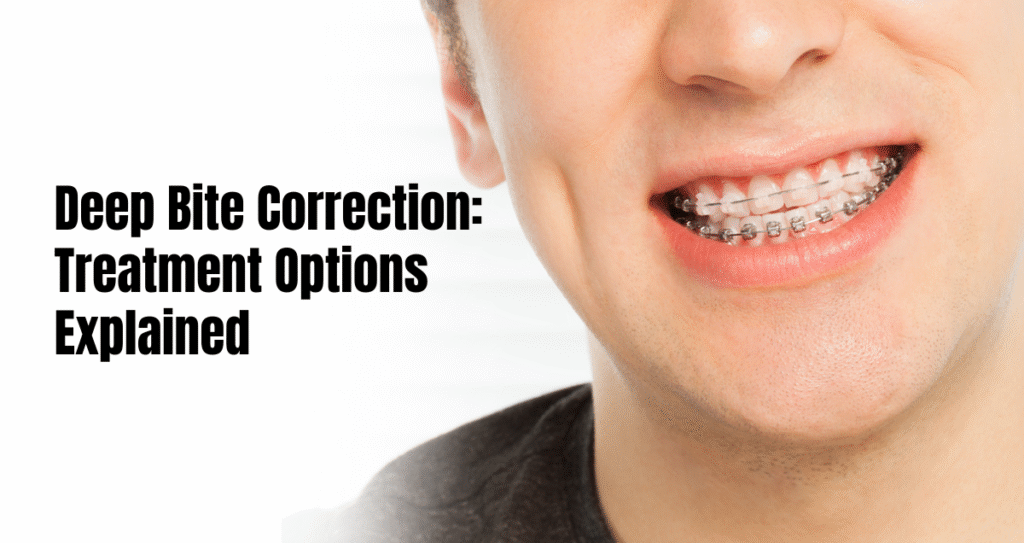
Deep Bite Correction: Treatment Options Explained A deep bite is one of the most common orthodontic problems seen in both children and adults. Many people are unaware they have it until a dentist points it out during a routine checkup. While mild cases may not cause immediate discomfort, a severe deep bite can affect chewing, jaw health, speech, and even facial appearance. Understanding what a deep bite is and exploring available deep bite correction treatment options can help patients make informed decisions about their oral health. What Is a Deep Bite? A deep bite, also known as a deep overbite, occurs when the upper front teeth excessively overlap the lower front teeth when the mouth is closed. In a normal bite, upper teeth slightly cover the lower teeth. However, in a deep bite, the overlap is much more pronounced. In severe cases: Lower teeth may touch the roof of the mouth Lower teeth may not be visible when smiling Excess pressure is placed on front teeth This excessive overlap can lead to long-term dental complications if untreated. What Causes a Deep Bite? Several factors contribute to the development of a deep bite: Genetics Jaw size and tooth alignment often run in families. Improper Jaw Development If the lower jaw is shorter or positioned backward, it may result in a deep bite. Teeth Grinding (Bruxism) Excessive grinding can gradually alter tooth structure and bite alignment. Tooth Loss Missing back teeth may cause shifting, increasing front tooth overlap. Childhood Habits Thumb sucking and prolonged pacifier use can influence bite development. Understanding the cause is essential for selecting the correct treatment approach. Signs and Symptoms of a Deep Bite Some patients experience noticeable symptoms, while others do not realize they have a problem. Common signs include: Excessive overlap of front teeth Jaw discomfort or clicking Frequent headaches Tooth wear on lower front teeth Gum irritation behind upper teeth Difficulty chewing If left untreated, a deep bite may worsen over time. Why Deep Bite Correction Is Important Ignoring a deep bite can lead to several complications: Premature tooth wear Gum recession Increased risk of tooth fractures Temporomandibular joint (TMJ) issues Facial imbalance Early correction can prevent more complex dental and jaw problems later. Treatment Options for Deep Bite Correction The appropriate treatment depends on the patient’s age, severity of the bite, and jaw structure. 1. Braces for Deep Bite Traditional metal or ceramic braces are highly effective for deep bite correction. Braces gradually reposition teeth and adjust bite alignment over time. Braces may include: Bite turbos (small pads placed behind teeth to prevent excessive overlap) Elastics to guide jaw alignment 2. Clear Aligners For mild to moderate cases, clear aligners can help reposition teeth and reduce excessive overlap. Aligners are removable and more discreet, making them popular among adults. 3. Growth Modification (For Children) In growing children, orthodontic appliances may guide jaw development, reducing the severity of deep bite naturally. 4. Orthodontic-Surgical Approach (Severe Cases) In rare and severe cases involving jaw discrepancies, combined orthodontic and surgical treatment may be recommended. How Long Does Deep Bite Correction Take? Treatment duration varies depending on case severity. Mild cases: 12–18 months Moderate to severe cases: 18–24 months Consistency in wearing braces or aligners significantly affects treatment time. Can Deep Bite Correct Itself? A deep bite does not correct itself once permanent teeth have erupted. Without orthodontic intervention, it often becomes more pronounced over time. Early evaluation is especially important in children to guide jaw growth appropriately. When Is Deep Bite a Serious Concern? Deep bite becomes more concerning when: Lower teeth damage upper gums There is chronic jaw pain Tooth wear becomes visible Speech is affected Professional orthodontic assessment helps determine severity and urgency. Learn more – Early Orthodontic Signs Parents Should Watch in Kids Why City Smiles Dental Care Is the Right Choice for Deep Bite Correction in Kolkata At City Smiles Dental Care, we understand that deep bite correction requires careful diagnosis and personalized treatment planning. Our focus is on evaluating bite alignment, jaw development, and facial balance before recommending braces or aligners. Each patient receives a customized orthodontic plan designed to ensure long-term stability and comfort. Located in South Kolkata, the clinic provides dependable orthodontic care for children, teenagers, and adults. Why patients choose City Smiles Dental Care for deep bite treatment: Detailed orthodontic evaluation Customized bite correction planning Options including braces and aligners Focus on functional and aesthetic improvement Transparent treatment timelines and costs Patient-first and ethical approach Trusted dental clinic in South Kolkata Conclusion A deep bite may seem minor at first, but it can lead to significant dental and jaw problems if left untreated. Fortunately, modern orthodontic treatments such as braces and aligners provide effective solutions. Early diagnosis and personalized treatment planning are key to achieving long-lasting results and improved oral health. FAQs Is a deep bite the same as an overbite? A deep bite is a severe form of overbite with excessive vertical overlap. Can braces fix a deep bite? Yes, braces are highly effective in correcting deep bites. Are aligners suitable for deep bite correction? For mild to moderate cases, clear aligners may be effective. Does deep bite cause jaw pain? In some cases, it can contribute to jaw discomfort and headaches. At what age should deep bite be treated? Evaluation is recommended in childhood, but treatment can be done at any age. About the Author Dr. Rajshelhar Banerjee BDS (MCODS Mangalore), MDS (A.B. Shetty Dental College) Consultant Orthodontist | Certified Platinum Invisalign Provider Dr. Rajshelhar Banerjee is an experienced orthodontist specializing in creating beautifully aligned, healthy smiles through both traditional braces and advanced clear aligner therapy. Trained at MCODS Mangalore and A.B. Shetty Dental College, he is skilled in fixed orthodontics, Invisalign, growth modulation, and aesthetic smile design. As a Certified Platinum Invisalign Provider, he is recognized for his expertise in planning and executing complex aligner cases with precision. Known for his meticulous approach and patient-focused care, Dr. Banerjee ensures comfortable treatment and predictable results for
Clear Aligners Treatment in Kolkata: Step-by-Step Process Explained for Patients
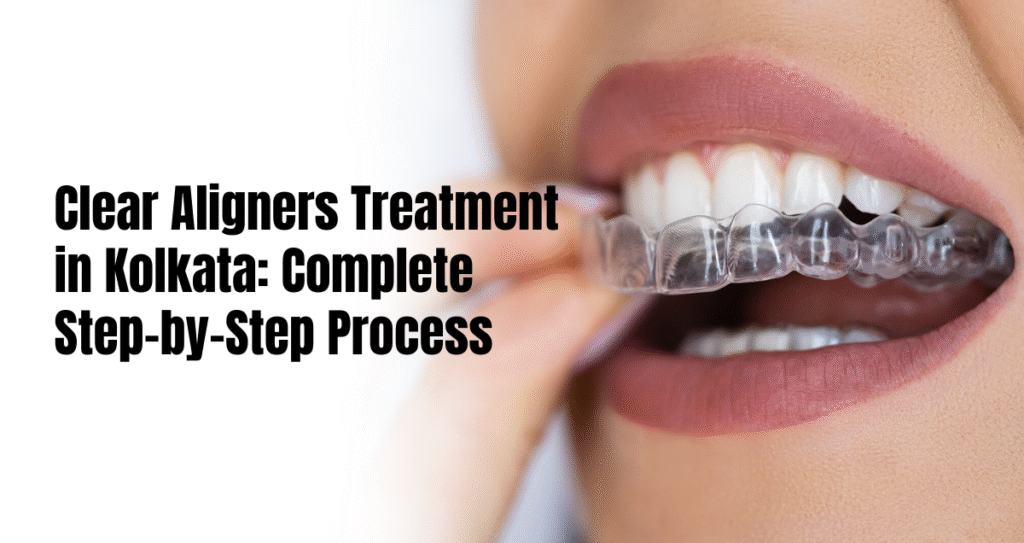
Clear Aligners Treatment in Kolkata: Step-by-Step Process Explained for Patients Clear aligners have become one of the most preferred orthodontic solutions for people who want to straighten their teeth without the visibility and inconvenience of traditional braces. In cities like Kolkata, especially among working professionals and young adults, clear aligners treatment is gaining popularity because it is discreet, comfortable, and fits easily into daily life. Unlike metal braces, clear aligners are transparent and removable. They allow patients to eat freely, maintain better oral hygiene, and continue social and professional activities without hesitation. However, many patients still want to understand how the treatment actually works before making a decision. This guide explains the complete step-by-step clear aligners treatment process, helping patients in Kolkata and South Kolkata know exactly what to expect. Step 1: Consultation for Clear Aligners Treatment The first step in clear aligners treatment is a detailed consultation with an orthodontist. During this visit, the dentist evaluates whether aligners are suitable for your dental condition. The orthodontist examines tooth alignment, spacing, crowding, bite issues such as overbite or underbite, and overall oral health. Gum condition and bone support are also assessed to ensure safe tooth movement. This step is important because clear aligners work best for mild to moderate alignment issues, while some complex cases may still require braces. At this stage, the dentist also explains treatment duration, expected results, cost, and patient responsibilities. This consultation helps patients set realistic expectations and make an informed decision. Step 2: Digital 3D Scanning of Teeth Once aligners are confirmed as the right option, the next step involves taking a digital 3D scan of the teeth. Most modern clinics offering clear aligners use advanced intraoral scanners instead of traditional impression molds. The scanner captures highly accurate images of the teeth and gums within minutes. This process is comfortable, painless, and avoids the gagging sensation often associated with traditional impressions. The digital scan forms the foundation of the entire treatment plan. Accurate scanning is essential because even minor errors can affect aligner fit and tooth movement. This technology ensures precision and predictability throughout the treatment. Step 3: 3D Treatment Planning and Smile Preview One of the biggest advantages of clear aligners treatment in Kolkata is digital treatment planning. Using the scan data, the orthodontist creates a detailed 3D simulation that shows how your teeth will gradually move over time. Patients are shown a visual preview of their current tooth position, each stage of movement, and the final expected smile. The estimated treatment duration and number of aligner trays required are also explained. This step helps patients understand the process clearly and builds confidence before starting treatment. It also allows orthodontists to plan tooth movements carefully, ensuring safety and effectiveness. Step 4: Manufacturing of Custom Clear Aligners After the treatment plan is approved, the aligners are manufactured using medical-grade transparent material. Each aligner tray is custom-made to fit your teeth and apply gentle, controlled pressure. You will receive a series of aligners, with each tray designed to move teeth slightly closer to the desired position. The aligners are numbered and worn in sequence, following the treatment plan created during the digital simulation. This customization is what makes teeth alignment treatment with clear aligners comfortable and highly precise. Step 5: Starting Clear Aligners Treatment When the aligners are ready, the orthodontist checks the fit and ensures they sit properly on your teeth. Patients are given clear instructions on how to wear, remove, and clean the aligners. Typically, aligners must be worn for 20 to 22 hours per day, and removed only while eating, drinking anything other than water, or brushing. In some cases, small tooth-colored attachments may be placed on certain teeth to help guide movement more effectively. Following instructions carefully at this stage is crucial for successful clear aligners treatment. Learn more – Early Orthodontic Signs Parents Should Watch in Kids Step 6: Daily Life with Clear Aligners Adjusting to clear aligners is usually quick and easy. Most patients experience mild pressure during the first few days of a new aligner, which is a normal sign that the teeth are moving. Clear aligners fit smoothly into daily routines. Since they are removable, patients can eat normally and brush without difficulty. Maintaining good oral hygiene is easier compared to braces, reducing the risk of cavities and gum problems. This convenience is one of the main reasons patients in South Kolkata prefer aligners over traditional orthodontic options. Step 7: Follow-Up Visits with an Orthodontist Follow-up appointments are scheduled every 6 to 8 weeks to monitor progress. During these visits, the orthodontist checks how well the teeth are responding to treatment and ensures aligners are fitting correctly. Compared to braces, clear aligners require fewer clinic visits, making them suitable for busy professionals and students. Regular monitoring ensures the treatment stays on track and adjustments are made if necessary. Choosing an experienced orthodontist plays a major role in achieving accurate and timely results. Step 8: Refinements for Final Alignment Some patients may require refinement aligners toward the end of treatment. Refinements are additional trays designed to correct minor spacing, rotation, or bite issues that remain after the initial aligner sequence. This step ensures the final smile closely matches the planned result and delivers optimal aesthetics and function. Refinements are common and considered a normal part of aligner treatment. Step 9: Retainers After Clear Aligners Treatment Once treatment is complete, retainers are provided to maintain the new tooth position. Teeth have a natural tendency to shift back, and retainers prevent relapse. Patients are advised on how often and how long to wear retainers. This step is essential for preserving the results of clear aligners treatment and ensuring long-term stability. Cost of Clear Aligners Treatment in Kolkata The cost of clear aligners treatment in Kolkata varies based on case complexity and aligner brand. Approximate cost ranges: Basic aligners: ₹70,000 – ₹1,20,000 Premium aligners: ₹1,20,000 – ₹1,80,000 Invisalign treatment: ₹1,80,000 – ₹3,50,000 Although aligners are more expensive than braces, many patients choose them for comfort, aesthetics,
Loose Teeth in Adults: Causes & Dental Treatment Options
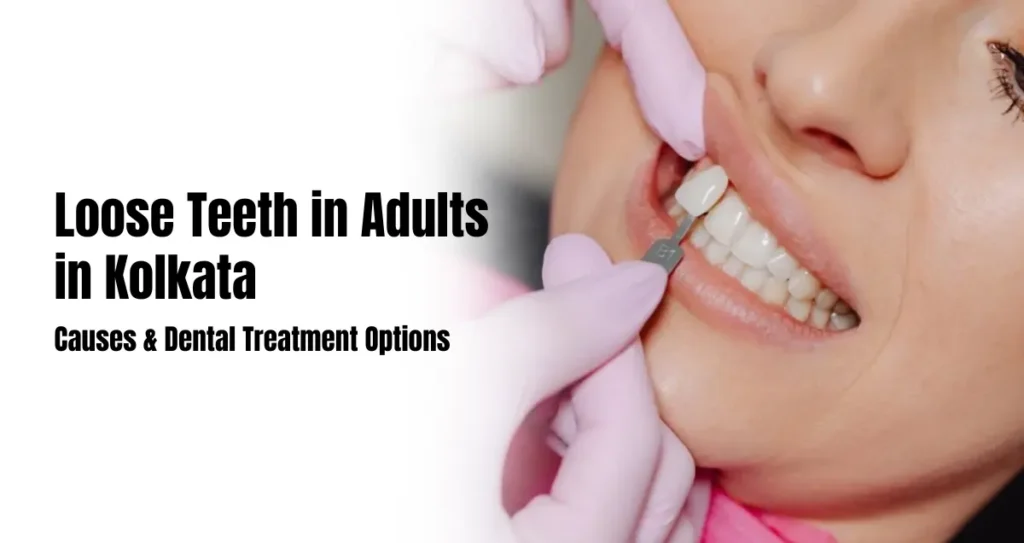
Loose Teeth in Adults: A Serious Dental Warning Sign Loose teeth are commonly associated with childhood, but loose teeth in adults are never normal. If a permanent tooth feels wobbly, shifts while chewing, or feels different when biting, it usually indicates an underlying dental or gum problem. Many adults in Kolkata ignore early tooth looseness because it may not cause pain initially. However, tooth mobility often means damage to the gums, bone, or supporting structures. Without timely treatment, loose teeth can eventually fall out or require extraction. Understanding the causes of loose teeth in adults and available dental treatment options helps patients take early action and save their natural teeth. Why Do Adult Teeth Become Loose? Adult teeth are anchored firmly into the jawbone by gums, ligaments, and bone. When any of these supporting structures weaken, teeth start to lose stability. Loose teeth usually develop gradually, and early symptoms are often subtle. Identifying the cause is critical for successful treatment. Common Causes of Loose Teeth in Adults 1. Gum Disease (Periodontitis) Gum disease is the most common cause of loose teeth in adults. It begins as gingivitis (gum inflammation) and progresses into periodontitis if left untreated. As gum disease advances: Gums pull away from teeth Bone supporting the teeth starts to dissolve Teeth lose their anchorage and become mobile Symptoms may include bleeding gums, bad breath, gum recession, and pus discharge. Periodontitis requires professional dental treatment and cannot be reversed with home care alone. 2. Teeth Grinding (Bruxism) Habitual grinding or clenching of teeth puts excessive pressure on teeth and surrounding bone. Over time, this pressure damages the supporting structures, leading to looseness. Bruxism often occurs at night and may go unnoticed. Common signs include jaw pain, headaches, worn-down teeth, and morning stiffness. 3. Dental Trauma or Injury A fall, accident, or sports injury can damage the ligaments holding the tooth in place. Even if the tooth does not fall out immediately, trauma can cause delayed looseness days or weeks later. Any tooth injury should be evaluated promptly to prevent long-term damage. 4. Bone Loss Due to Missing Teeth When a tooth is missing and not replaced, the surrounding jawbone begins to shrink. This bone loss can affect nearby teeth, making them loose over time. Replacing missing teeth helps maintain bone health and tooth stability. 5. Poorly Fitted Crowns or Bridges Dental restorations that are improperly fitted can place uneven pressure on teeth. Over time, this stress can weaken tooth support and contribute to mobility. Regular dental checkups help detect such issues early. 6. Hormonal Changes and Medical Conditions Certain conditions such as diabetes, osteoporosis, and hormonal changes can increase the risk of bone and gum loss, leading to loose teeth. Medications affecting bone density can also contribute to tooth mobility. Early Signs of Loose Teeth You Should Not Ignore Adults should consult a dentist if they notice: Teeth shifting while chewing Gaps increasing between teeth Bleeding or swollen gums Bad breath that does not improve Pain while biting Receding gums Early treatment significantly improves the chances of saving the tooth. Dental Treatment Options for Loose Teeth in Adults Treatment depends on the underlying cause and severity of tooth mobility. 1. Professional Deep Cleaning (Scaling & Root Planing) For gum-related looseness, deep cleaning removes plaque and bacteria below the gum line. This helps reduce inflammation and allows gums to heal. In early to moderate cases, this treatment can stabilize teeth effectively. 2. Gum Disease Treatment Advanced gum disease may require: Deep gum therapy Medications Ongoing periodontal maintenance Controlling infection is essential to prevent further bone loss. 3. Dental Splinting Dental splinting involves bonding loose teeth to adjacent stable teeth. This redistributes chewing forces and provides support while gums and bone heal. Splinting is often used alongside gum treatment. 4. Bite Guards for Teeth Grinding Custom night guards protect teeth from excessive grinding forces. This helps reduce pressure on loose teeth and prevents further damage. 5. Treating the Underlying Cause If looseness is due to trauma, faulty restorations, or missing teeth, treatment may include: Crown or bridge correction Tooth replacement options Bite correction Addressing the root cause is essential for long-term stability. 6. Tooth Extraction (Last Resort) If a tooth is severely damaged and cannot be saved, extraction may be recommended to prevent infection spread. Tooth replacement options are then discussed to preserve function and bone health. Can Loose Teeth Be Saved? Yes, loose teeth in adults can often be saved if treated early. The success of treatment depends on: Early diagnosis Severity of gum and bone loss Patient’s oral hygiene Regular dental follow-ups Delaying treatment reduces the chances of saving the tooth. Learn more – 10 Early Childhood Dental Problems: A Detailed Guide for Parents in South Kolkata Why Choose City Smiles Dental Care for Loose Teeth Treatment in Kolkata City Smiles Dental Care focuses on identifying the exact cause of tooth mobility before starting treatment. Every patient receives a thorough gum and bone evaluation to determine whether the tooth can be stabilized and saved. The clinic follows a conservative, tooth-preserving approach while using modern diagnostic and treatment techniques. Located in South Kolkata, City Smiles Dental Care is trusted for ethical and long-term dental solutions. Why patients trust City Smiles Dental Care: Accurate diagnosis of tooth mobility causes Advanced gum and bone evaluation Conservative tooth-saving treatment approach Clear explanation of treatment options Focus on long-term stability and oral health Trusted dental clinic in South Kolkata When Should You Visit a Dentist Immediately? Book a dental appointment urgently if: A tooth feels suddenly loose Gums are swollen or bleeding Pain occurs while chewing Pus or discharge is present Tooth mobility is increasing Early care can prevent tooth loss. Conclusion Loose teeth in adults are a serious dental warning sign that should never be ignored. Whether caused by gum disease, grinding, trauma, or bone loss, early diagnosis and treatment can often save the tooth. For adults in Kolkata, professional evaluation is essential to determine the cause and begin the right treatment.
Do Braces Hurt? What Patients in Kolkata Should Expect
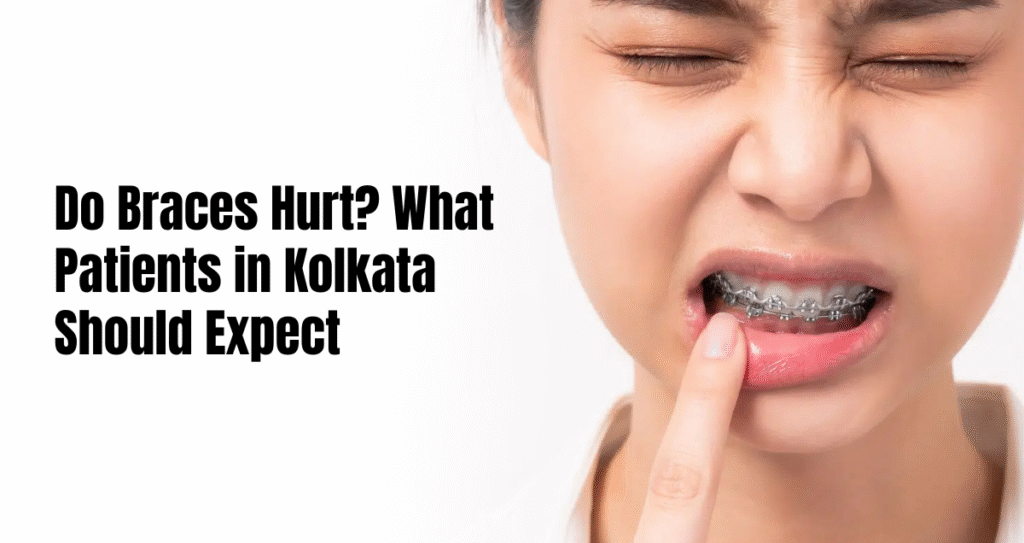
Do Braces Hurt? What Patients in Kolkata Should Expect One of the first questions patients ask before starting orthodontic treatment is, “Do braces hurt?” This concern is completely natural. Whether you are a teenager, adult, or parent considering braces for your child, the fear of pain often delays treatment. In Kolkata, many patients avoid braces because they assume the treatment will be extremely painful. The truth is that braces do cause some discomfort, especially at certain stages, but the pain is usually mild, temporary, and manageable. Understanding what to expect during braces treatment helps reduce anxiety and prepares patients for a smoother experience. This guide explains when braces may hurt, how long discomfort lasts, and how orthodontists help manage pain effectively. Why Do Braces Cause Discomfort? Braces work by applying gentle, continuous pressure to move teeth into proper alignment. This pressure affects the bone and tissues around the teeth, triggering a biological response that allows teeth to shift gradually. The discomfort associated with braces is not injury-related pain. It is a normal response to tooth movement. As your mouth adapts, the discomfort reduces significantly. Does It Hurt When Braces Are First Put On? When braces are first placed, most patients do not feel pain immediately. The brackets and wires themselves do not hurt during placement. However, within a few hours to a day, patients may start feeling: Tightness in teeth Mild soreness Pressure while biting or chewing This initial discomfort usually peaks within 24–72 hours and then gradually subsides as the mouth adapts to the braces. How Long Does Braces Pain Last? For most patients in Kolkata: Initial soreness lasts 3–5 days Mild sensitivity may continue for a week Discomfort reduces significantly after the first week As treatment progresses, patients become accustomed to the sensation of braces, and pain becomes less noticeable. Do Braces Hurt After Adjustments or Tightening? Yes, mild discomfort can occur after periodic brace adjustments. During these visits, the orthodontist adjusts the wire or replaces elastics to continue tooth movement. After adjustments, patients may experience: Mild pressure Temporary soreness Sensitivity while chewing This discomfort usually lasts 1–3 days and is often less intense than the initial phase. Do Braces Cause Cuts or Mouth Sores? In the early stages, brackets and wires may rub against the inside of the cheeks or lips, causing irritation or small sores. This is common and temporary. Orthodontic wax is usually provided to cover sharp areas and reduce irritation. As the mouth adjusts, the tissues toughen slightly and sores stop occurring. Learn more – Metal vs Ceramic vs Lingual Braces: Best Option in South Kolkata Is Braces Pain Worse for Adults Than Children? Adults may experience slightly more discomfort because: Adult bones are denser Tooth movement can feel more noticeable initially However, this difference is minor. With proper planning and gentle force application, adults tolerate braces very well. Many adult patients in Kolkata complete orthodontic treatment comfortably. Braces vs Clear Aligners: Which Is Less Painful? Clear aligners are often perceived as less painful because they apply pressure more gradually. However, both braces and aligners involve tooth movement and some degree of discomfort. General comparison: Braces: Mild soreness after placement and adjustments Aligners: Mild pressure during tray changes The level of discomfort depends more on individual sensitivity and treatment complexity than the appliance type. Learn more – Clear Aligners vs Braces: Best Teeth Straightening in South Kolkata How Orthodontists Minimize Pain During Braces Treatment Experienced orthodontists focus on comfort as much as results. Pain is minimized by: Using light, controlled forces Gradual adjustments Proper appliance selection Monitoring tooth movement closely Modern orthodontic techniques have significantly reduced discomfort compared to older methods. Simple Ways to Manage Braces Pain at Home Patients can easily manage discomfort using simple steps: Eat soft foods for a few days Avoid hard, crunchy, or sticky foods Use orthodontic wax on irritating areas Apply a cold compress externally Maintain good oral hygiene Over-the-counter pain relief may be used if recommended by your dentist. When Should Braces Pain Be a Concern? While mild discomfort is normal, you should contact your orthodontist if: Pain is severe or persistent A wire or bracket breaks and causes injury Swelling or infection develops Pain interferes with daily activities beyond a few days Such situations are uncommon but should be addressed promptly. Why Braces Pain Is Worth It Although braces may cause temporary discomfort, the long-term benefits far outweigh the short-term inconvenience. Braces help: Improve chewing and speech Reduce risk of cavities and gum disease Prevent jaw problems Enhance facial balance Boost confidence Most patients say the discomfort was manageable and well worth the final results. Why Choose City Smiles Dental Care for Braces Treatment in Kolkata City Smiles Dental Care provides orthodontic treatment with a strong focus on patient comfort and long-term results. Every braces treatment plan is carefully customized to apply gentle forces while achieving effective alignment. Patients are guided at every stage so they know what to expect and how to manage temporary discomfort. Located in South Kolkata, the clinic is trusted for ethical, patient-friendly orthodontic care. Why patients trust City Smiles Dental Care: Experienced orthodontist in South Kolkata Gentle, comfort-focused braces treatment Clear explanation of each treatment stage Modern orthodontic techniques Care for children, teens, and adults Ethical and transparent treatment planning Conclusion So, do braces hurt? The answer is yes—but only mildly and temporarily. Most patients experience pressure and soreness during the initial days and after adjustments, but the discomfort is manageable and short-lived. For patients in Kolkata considering braces, understanding what to expect helps reduce fear and build confidence. With proper care and guidance from an experienced orthodontist, braces treatment can be a comfortable and rewarding journey. City Smiles Dental Care offers trusted orthodontic solutions focused on comfort, safety, and lasting results. Frequently Asked Questions 1. Do braces hurt all the time? No. Discomfort is temporary and usually occurs only after placement or adjustments. 2. How long does braces pain last? Typically 3–5 days after placement or tightening. 3. Are
Overbite, Underbite & Crowded Teeth: Orthodontic Solutions in Kolkata
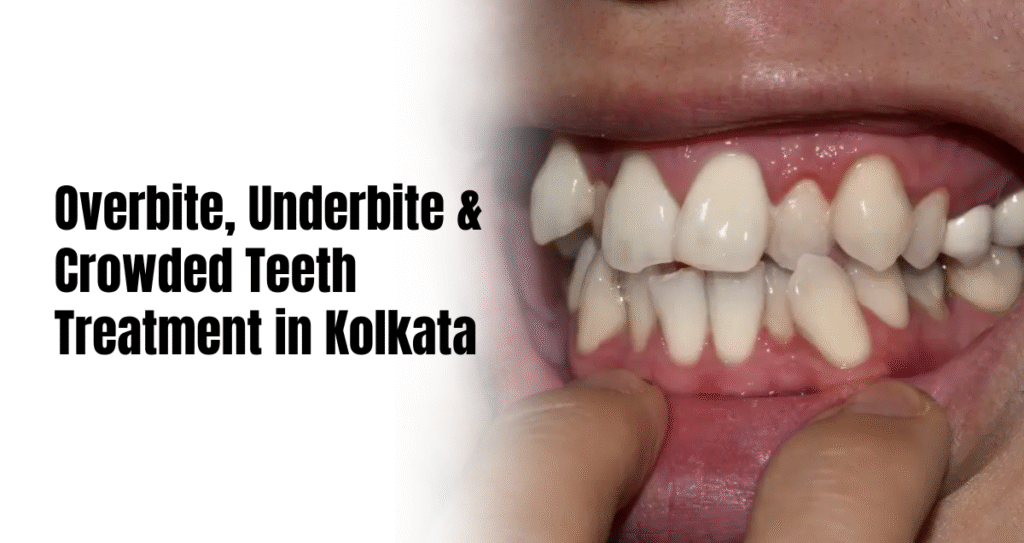
Overbite, Underbite & Crowded Teeth: Orthodontic Solutions in Kolkata Dental alignment issues such as overbite, underbite, and crowded teeth are more common than many people realize. These problems affect not only the appearance of the smile but also chewing efficiency, speech, jaw comfort, and long-term oral health. In Kolkata, both children and adults increasingly seek orthodontic care to correct these issues and prevent complications later in life. Orthodontic treatment focuses on correcting how teeth and jaws align. Understanding the nature of these problems helps patients know when treatment is necessary and what options are available. What Is an Overbite? An overbite occurs when the upper front teeth excessively overlap the lower front teeth when the mouth is closed. A mild overbite is normal, but a deep overbite can cause functional and aesthetic issues. Problems Caused by an Overbite Increased wear on lower teeth Jaw pain or discomfort Speech difficulties Gum injury behind upper teeth Facial imbalance over time Untreated overbite can worsen with age and may lead to temporomandibular joint (TMJ) issues. Orthodontic Solutions for Overbite in Kolkata Overbite treatment depends on age and severity. Common options include: Braces (metal or ceramic) Clear aligners for mild to moderate cases Bite-correcting appliances in children Growth modification in growing patients Early evaluation allows orthodontists to guide jaw growth and reduce treatment complexity later. What Is an Underbite? An underbite occurs when the lower teeth extend forward beyond the upper teeth. This condition often has a genetic component and may involve jaw size imbalance. Problems Caused by an Underbite Difficulty chewing food properly Speech issues Excessive tooth wear Jaw strain and facial imbalance Higher risk of dental trauma Underbites often become more noticeable with growth and should not be ignored. Orthodontic Solutions for Underbite in Kolkata Treatment depends on whether the issue is dental (teeth-related) or skeletal (jaw-related). Common solutions include: Braces combined with elastics Clear aligners in selected cases Orthopedic appliances for growing children Combined orthodontic and surgical approach in severe adult cases Early orthodontic assessment improves outcomes significantly, especially in children. What Are Crowded Teeth? Crowded teeth occur when there is insufficient space in the jaw for all teeth to align properly. Teeth may overlap, rotate, or erupt in abnormal positions. Crowding is one of the most common reasons patients seek orthodontic solutions in Kolkata. Problems Caused by Crowded Teeth Difficulty brushing and flossing Increased risk of cavities and gum disease Food trapping Uneven tooth wear Aesthetic concerns Crowding often worsens over time, especially if not treated early. Orthodontic Solutions for Crowded Teeth in Kolkata Treatment options depend on space availability and alignment severity: Braces to gradually align teeth Clear aligners for mild to moderate crowding Tooth extraction in severe cases to create space Expansion appliances for children Orthodontic planning focuses on creating balance between jaw size and tooth alignment. Braces vs Clear Aligners: Which Works Better for Bite Problems? Both braces and aligners are effective orthodontic solutions, but the choice depends on the condition. Braces Are Preferred When: Bite problems are severe Jaw movement is required Precise tooth control is needed Clear Aligners Are Suitable When: Bite issues are mild to moderate Aesthetic preference is important Patient compliance is high An orthodontist evaluates bite complexity before recommending the best option. Learn more – Clear Aligners vs Braces: Best Teeth Straightening in South Kolkata When Should You See an Orthodontist in Kolkata? Orthodontic evaluation is recommended: By age 7 for children When teeth appear crowded or misaligned If chewing or jaw pain is present When facial profile seems imbalanced Before choosing aligners or braces Early diagnosis often reduces treatment duration and complexity. Orthodontic Treatment Duration Treatment time varies depending on the condition: Mild cases: 6–12 months Moderate cases: 12–18 months Severe cases: 18–24 months or more Consistent follow-ups and patient compliance play a major role in success. Why Choose City Smiles Dental Care for Orthodontic Solutions in Kolkata City Smiles Dental Care provides personalized orthodontic treatment plans focused on both function and aesthetics. Each patient receives a detailed bite analysis before treatment begins, ensuring the chosen solution addresses the root cause of misalignment. The clinic emphasizes long-term stability, comfort, and clear communication throughout the orthodontic journey. Why patients trust City Smiles Dental Care: Experienced orthodontist in South Kolkata Advanced diagnostic and treatment planning Braces and clear aligner options available Personalized treatment for children and adults Focus on bite correction and long-term results Transparent guidance and ethical care Conclusion Overbite, underbite, and crowded teeth are more than cosmetic concerns. They affect daily comfort, oral health, and long-term dental stability. With the right orthodontic solutions in Kolkata, these problems can be corrected safely and effectively at any age. Early evaluation, correct treatment planning, and expert care ensure healthy alignment and confident smiles. City Smiles Dental Care offers reliable orthodontic solutions designed to restore balance, function, and aesthetics for patients in South Kolkata. Frequently Asked Questions 1. Are overbite and underbite serious problems? Yes. If left untreated, they can cause tooth wear, jaw pain, and functional issues. 2. Can crowded teeth be fixed without extraction? In many cases, yes. Treatment depends on space and severity. 3. Are clear aligners effective for bite correction? They are effective for mild to moderate bite problems when properly planned. 4. Is orthodontic treatment only for children? No. Adults can also benefit from orthodontic treatment. 5. How do I know which treatment is right for me? A consultation with an orthodontist is necessary to determine the best option. About the Author Dr. Rajshelhar Banerjee BDS (MCODS Mangalore), MDS (A.B. Shetty Dental College) Consultant Orthodontist | Certified Platinum Invisalign Provider Dr. Rajshelhar Banerjee is an experienced orthodontist specializing in creating beautifully aligned, healthy smiles through both traditional braces and advanced clear aligner therapy. Trained at MCODS Mangalore and A.B. Shetty Dental College, he is skilled in fixed orthodontics, Invisalign, growth modulation, and aesthetic smile design. As a Certified Platinum Invisalign Provider, he is recognized for his expertise in planning
10 Things You Must Know Before Starting Aligners Treatment in Kolkata
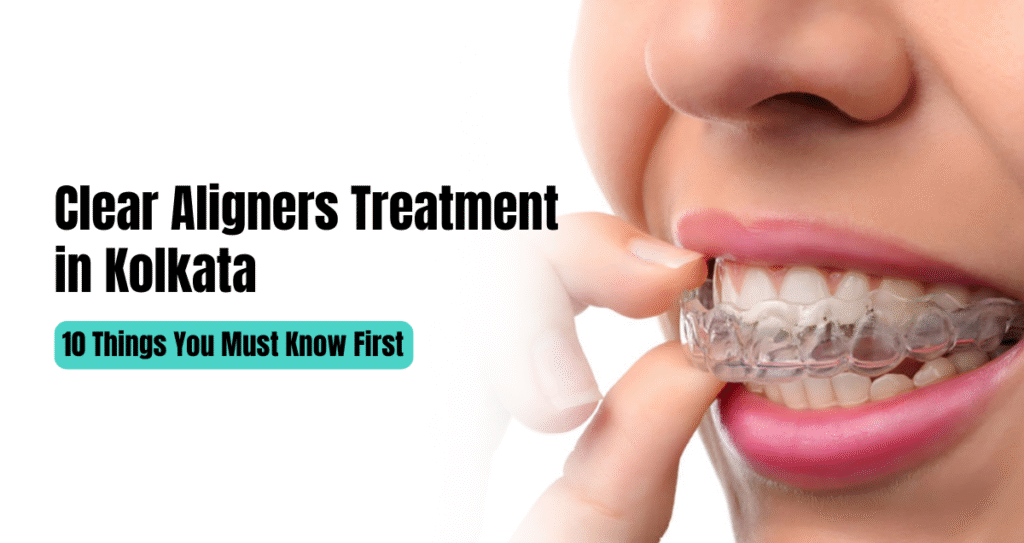
10 Things You Must Know Before Starting Aligners Treatment in Kolkata Clear aligners have become one of the most popular orthodontic treatments in Kolkata, especially among working professionals, college students, and adults who want a discreet way to straighten their teeth. While aligners offer excellent comfort and aesthetics, successful results depend on proper understanding and commitment. Before starting aligners treatment in Kolkata, it is important to know how the treatment works, who it is suitable for, and what responsibilities you must follow as a patient. This guide covers the most important points every patient should understand before beginning aligner therapy. 1. Not Everyone Is an Ideal Candidate for Aligners Although aligners are highly effective, they are not suitable for every dental condition. Clear aligners work best for mild to moderate alignment problems such as spacing, mild crowding, and minor bite issues. Severe crowding, complex bite problems, or jaw-related issues may still require braces or a combination of treatments. A detailed evaluation by an experienced orthodontist in Kolkata is essential before choosing aligners. 2. A Proper Orthodontic Evaluation Is Mandatory Aligners should never be started without a professional orthodontic assessment. During consultation, the orthodontist evaluates tooth alignment, bite, jaw position, gum health, and bone support. X-rays, photographs, and digital scans are used to plan safe tooth movement. Skipping this step or choosing aligners without proper diagnosis can lead to poor results or dental complications. 3. Aligners Use Advanced 3D Treatment Planning One major advantage of clear aligners treatment in Kolkata is digital treatment planning. Before treatment begins, a 3D simulation is created to show how your teeth will move step by step. This allows patients to: See the expected final result Understand treatment duration Know the number of aligner trays required This planning ensures predictable and controlled tooth movement. 4. You Must Wear Aligners 20–22 Hours a Day Aligners only work if they are worn as prescribed. Patients must wear aligners for at least 20–22 hours daily, removing them only while eating, drinking anything except water, and brushing. Inconsistent wear delays treatment and may affect results. Aligners are effective only when patient compliance is high. 5. Aligners Are Removable, but Discipline Is Required One advantage of aligners is removability, but this also means responsibility. Patients must remember to: Remove aligners before meals Brush teeth before reinserting Clean aligners regularly Forgetting to wear aligners or misplacing them can slow progress and increase treatment time. 6. Mild Discomfort Is Normal During Tray Changes When starting a new aligner tray, mild pressure or tightness is normal. This sensation indicates that teeth are moving as planned. The discomfort usually subsides within a day or two. Severe pain is uncommon and should be reported to your orthodontist. 7. Treatment Duration Varies From Person to Person The duration of aligners treatment in Kolkata depends on the complexity of the case and patient compliance. Average treatment duration: Mild cases: 6–9 months Moderate cases: 12–18 months Your orthodontist will give an estimated timeline, but wearing aligners properly plays a major role in achieving timely results. 8. Attachments May Be Required for Better Results Some aligner treatments require small, tooth-colored attachments bonded to certain teeth. These attachments help aligners grip teeth and move them more effectively. Attachments are temporary and usually removed at the end of treatment. They are discreet and do not affect appearance significantly. 9. Cost of Aligners Treatment in Kolkata Varies The cost of aligners depends on case complexity, aligner brand, and treatment duration. Approximate cost range in Kolkata: Basic aligners: ₹70,000 – ₹1,20,000 Premium aligners: ₹1,20,000 – ₹1,80,000 Invisalign treatment: ₹1,80,000 – ₹3,50,000 Choosing treatment based on expertise and planning is more important than choosing based on price alone. 10. Retainers Are Mandatory After Aligners Treatment After aligner treatment is complete, retainers are essential to maintain results. Teeth naturally tend to shift back to their old position if retainers are not worn. Your orthodontist will guide you on retainer type and duration. Skipping retainers can undo months of treatment. Why Choose City Smiles Dental Care for Aligners Treatment in Kolkata City Smiles Dental Care offers carefully planned aligners treatment focused on accuracy, safety, and long-term results. Each patient receives a detailed evaluation and customized treatment plan to ensure predictable tooth movement and comfort throughout the process. Why patients trust City Smiles Dental Care: Experienced orthodontist in South Kolkata Advanced digital scanning and planning Clear explanation of treatment expectations Focus on comfort and patient compliance Ethical, transparent treatment planning Emphasis on long-term stability with retainers Get the direction – https://share.google/M3Wrn6CCClS5JKrVL Conclusion Clear aligners are an excellent option for straightening teeth when chosen correctly and used responsibly. Understanding these 10 important facts before starting aligners treatment in Kolkata helps patients make informed decisions and achieve successful results. Consulting an experienced orthodontist and following instructions carefully ensures a smooth, effective, and satisfying aligner treatment journey. Frequently Asked Questions 1. Are clear aligners better than braces? Aligners are more aesthetic and comfortable for mild to moderate cases, while braces may be better for complex issues. 2. Can I eat anything during aligner treatment? Yes, as aligners are removed during meals, but brushing before reinserting is essential. 3. Do aligners affect speech? Mild speech changes may occur initially but usually resolve within a few days. 4. How often are follow-up visits needed? Typically every 6–8 weeks, depending on treatment progress. 5. Are aligners suitable for teenagers? Yes, aligners can be used for teenagers with proper supervision and compliance. About the Author Dr. Sreejeeta Dey BDS (MCODS Mangalore), MDS (JSS Mysore) Consultant Pediatric & Preventive Dentist Co-Founder, City Smiles Dental Care — Baghajatin, Kolkata Dr. Sreejeeta Dey is a child-focused dental specialist known for her gentle approach and strong emphasis on preventive care. With advanced training in pediatric dentistry from JSS Mysore, she is experienced in managing anxious children, performing painless treatments, and promoting early oral health habits. As the Co-Founder of City Smiles Dental Care, she is dedicated to creating a safe, friendly, and positive dental experience for every
Early Orthodontic Signs Parents Should Watch in Kids
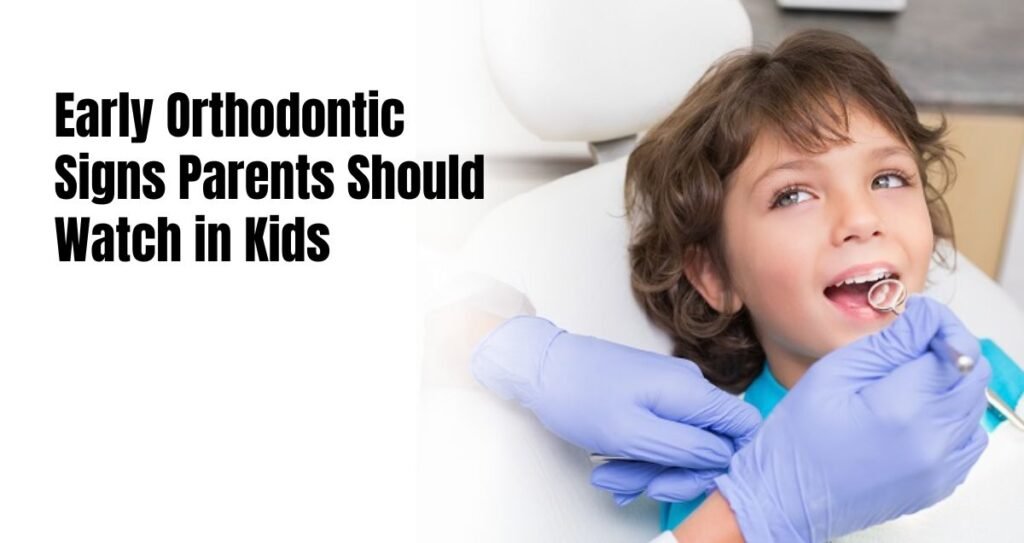
Early Orthodontic Signs Parents Should Watch in Kids Every parent dreams of seeing their child grow with a bright, confident and healthy smile. What many don’t realize is that orthodontic issues start developing much earlier than teenage years. These early indicators are often subtle, easy to miss and sometimes mistaken as “normal growing-up changes.” Understanding early orthodontic signs parents should watch in kids can help you take timely action — preventing future complications, reducing treatment duration and ensuring proper jaw development. At City Smiles Dental Care, we regularly meet parents who say, “I wish we came earlier.” Early detection truly changes everything. When identified in time, orthodontic problems become much easier to correct, giving your child a healthier smile at the right age without unnecessary stress or complex procedures. 1. Crowding or Overlapping Teeth (Often First Visible Sign) One of the first early orthodontic signs parents should watch in kids is crowded, overlapping or tightly packed teeth. If your child’s baby or permanent teeth seem to fight for space, come out twisted or appear misaligned, it usually means the jaw doesn’t have enough room. Long-term implications may include: Difficulty cleaning teeth properly Higher chances of cavities Gum issues Misaligned permanent teeth Poor bite development At City Smiles Dental Care, when we identify crowding early, we guide jaw growth and improve alignment naturally — often avoiding more complex treatments later. 2. Difficulty Biting or Chewing (Jaw Alignment Warning) If your child bites into food and struggles to tear, shift their jaw or chew unevenly, it is a key signal that something is not right. Problems like overbite, underbite, open bite or crossbite often start in early childhood and worsen over time. A child may: Bite their cheek frequently Break food into smaller pieces Prefer soft foods Chew only on one side These are important early orthodontic signs parents should watch in kids, because untreated bite issues can affect speech, digestion and oral development. 3. Mouth Breathing (A Silent Orthodontic Indicator) Many parents do not realize that mouth breathing has a direct effect on jaw and facial growth. Children who breathe through the mouth instead of the nose often develop narrow jaws, long facial patterns and misaligned teeth. Mouth breathing can also cause: Snoring Dry mouth Poor sleep quality Forward-leaning posture At City Smiles Dental Care, we examine not just the teeth but also airway patterns, because correcting breathing early helps improve overall oral development. 4. Thumb Sucking or Finger Sucking After Age 4 Thumb sucking is normal in toddlers, but when the habit continues beyond age 4 or 5, it becomes a serious orthodontic concern. The constant pressure of the thumb can push upper teeth forward, create spacing or lead to open bite. If your child still sucks their thumb, consider it one of the most important early orthodontic signs parents should watch in kids. Habit correction at the right time can prevent major alignment issues later. 5. Baby Teeth Falling Out Too Early or Too Late Baby teeth act as natural guides for permanent teeth. If they fall out too early, nearby teeth shift into empty spaces. If they fall out too late, permanent teeth may erupt in abnormal positions. Both situations indicate potential orthodontic problems and require timely evaluation. Most parents don’t understand these timings — and that’s okay. At our clinic, we explain everything clearly and guide parents so they feel confident and informed. 6. Teeth That Don’t Meet Properly (Bite Issues) Ask your child to gently close their mouth. Do the teeth meet evenly? Do they slide past each other? Is there a gap even when the mouth is closed? If yes, it signals a bite problem — one of the most crucial early orthodontic signs parents should watch in kids. Bite issues may lead to: Speech challenges Chewing difficulties Jaw discomfort Uneven tooth wear The earlier these are assessed, the easier they are to correct. 7. Speech Difficulties (Often Overlooked) Speech problems like lisping, unclear pronunciation or difficulty with certain sounds often trace back to improper tooth alignment or bite position. A pediatric dentist or orthodontist can diagnose whether the issue is dental in nature. At City Smiles Dental Care, we often collaborate with speech therapists to give children complete corrective support at the right age. 8. Teeth Grinding at Night (Bruxism) Grinding doesn’t always mean stress. In children, it often indicates: Alignment issues Airway obstruction Breathing difficulty Improper bite contact If your child wakes up with jaw pain, sore teeth or noise from grinding, consider it a sign worth evaluating. When Should Parents Visit an Orthodontist? Globally, dental associations recommend a child’s first orthodontic visit at age 7. This is when: Permanent teeth begin to erupt Jaw growth becomes more noticeable Most early signs appear At City Smiles Dental Care, early evaluation helps us: Track jaw growth Identify hidden issues Guide tooth eruption Reduce future treatment time Prevent complications Early orthodontic care = Better alignment + Lower cost + Healthier smile. See reviews, photos and directions: 👉 https://share.google/O2zpwt9X8bTR3Df2V FAQs 1. What age is ideal for a child’s first orthodontic check? Age 7 is the recommended age for early evaluation. 2. How long do braces usually take for children? Child treatments often finish faster because their bones are still growing. 3. Are clear aligners safe for kids? Yes, many kids qualify depending on their alignment needs. 4. Is early orthodontic treatment expensive? No. Early treatment often reduces the need for complex, costly treatments later. 5. What happens if orthodontic issues are left untreated? They may worsen into speech issues, jaw discomfort and misaligned permanent teeth. About the Author Dr. Rajshelhar Banerjee BDS (MCODS Mangalore), MDS (A.B. Shetty Dental College) Consultant Orthodontist | Certified Platinum Invisalign Provider Dr. Rajshelhar Banerjee is an experienced orthodontist specializing in creating beautifully aligned, healthy smiles through both traditional braces and advanced clear aligner therapy. Trained at MCODS Mangalore and A.B. Shetty Dental College, he is skilled in fixed orthodontics, Invisalign, growth modulation, and aesthetic smile design. As a Certified Platinum
How to Fix Gapped Teeth: Braces vs Clear Aligners Explained for South Kolkata Patients
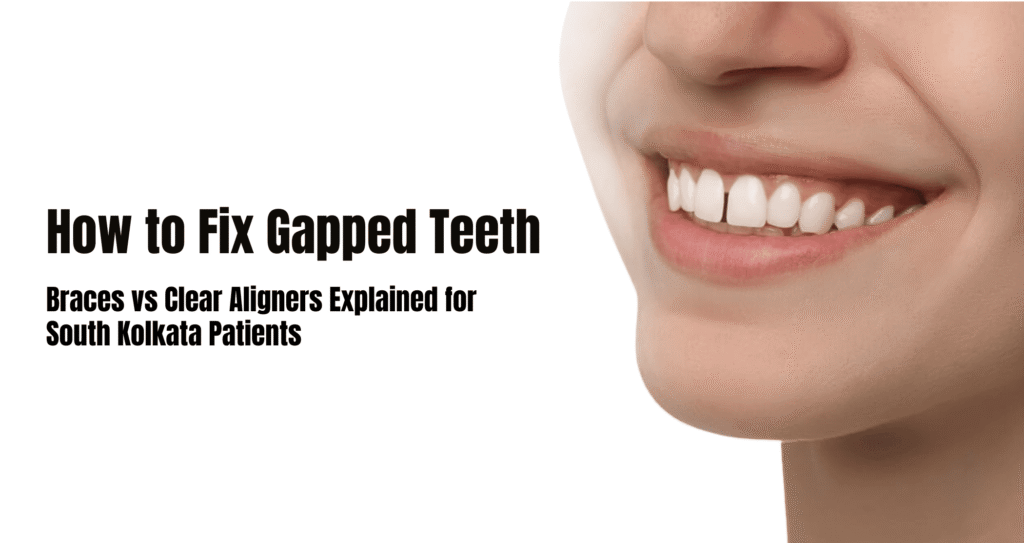
How to Fix Gapped Teeth: Braces vs Aligners in South Kolkata Gaps between teeth are common and completely treatable. Whether the spacing affects your smile confidence or makes chewing difficult, modern orthodontics offers multiple ways to fix it.If you live in South Kolkata, especially around Baghajatin, Jadavpur or Santoshpur, this guide will help you understand whether braces or clear aligners are the better choice for closing gaps in 2025. Why Do Gaps Form Between Teeth? Spacing between teeth can happen due to several reasons. Understanding the cause helps determine which treatment will work best. Common Causes of Gapped Teeth Naturally wide jaw structure Missing teeth Thumb sucking during childhood Tongue thrusting habit Gum disease affecting bone support Incorrect swallowing pattern Genetics or family history These gaps can make cleaning difficult and may cause shifting of surrounding teeth. Can Gaps Be Closed Without Braces? Yes, small to moderate gaps can often be closed using clear aligners. They work by applying gentle, controlled pressure to move teeth into their ideal positions. Best For Mild spacing Multiple small gaps Patients preferring invisible treatment People with good oral discipline However, larger gaps or spacing due to missing teeth may need braces or combined treatments. How Do Clear Aligners Fix Gaps? Clear aligners use a sequence of custom-made trays to gradually shift the teeth. Each tray moves your teeth closer to the target position. Why Many People Choose Aligners Almost invisible Removable while eating and brushing No wires or brackets Less discomfort Ideal for adults and working professionals Accurate digital planning How Do Braces Fix Gaps? Braces are a traditional and highly effective method for closing gaps of all sizes — from mild spacing to large gaps or complex bite issues. Why Braces Work Well Strong and consistent pressure Best for large gaps Suitable for children, teens and adults Faster results for severe spacing Works even when bite correction is needed Braces remain the most versatile option in orthodontics. Clear Aligners vs Braces: Which Works Better for Gapped Teeth? Both treatments are effective, but each has its advantages. Choose Clear Aligners If You want invisible treatment You have mild to moderate gaps You prefer removable options You need treatment with minimal lifestyle impact Choose Braces If You have large gaps Your teeth alignment is complex You need detailed bite correction You want a budget-friendly solution How Long Does It Take to Close Gaps? Treatment time depends on the size and number of gaps. Typical Duration Small gaps: 3 to 6 months Moderate gaps: 6 to 12 months Large gaps or bite issues: 12 to 18 months Aligners may work faster for small gaps, while braces are better for major corrections. Are Gaps Bad for Oral Health? Spacing isn’t just a cosmetic concern. It can affect oral hygiene and chewing. Possible Issues Food gets stuck between teeth Difficulty cleaning between gaps Risk of gum inflammation Teeth may shift over time Speech issues in some cases Fixing gaps can improve both appearance and overall dental health. Why Choose City Smiles Dental Care for Gapped Teeth Treatment in South Kolkata City Smiles Dental Care offers a complete range of orthodontic solutions tailored to your needs. What We Offer Clear aligners (Invisalign and other brands) Metal, ceramic and lingual braces 3D digital smile assessment Custom treatment plans Affordable EMI options Experienced orthodontic specialist Patients from Baghajatin, Santoshpur and Jadavpur trust our clinic for predictable and comfortable teeth alignment solutions. Areas We Serve in South Kolkata We are located conveniently for patients from: Baghajatin Santoshpur Jadavpur Garfa Patuli Garia South City Zone Final Takeaway Gapped teeth can be corrected effectively with either aligners or braces. The right choice depends on your spacing, comfort preferences and budget. With expert evaluation, you can achieve a confident smile in a few months. If you’re looking to fix gaps between your teeth, we can help you choose the best treatment based on your smile goals. Tap here to find City Smiles Dental Care on Google:https://share.google/sw0xDcxXZLRbNT7xS About the Author Dr. Rajshelhar Banerjee BDS (MCODS Mangalore), MDS (A.B. Shetty Dental College) Consultant Orthodontist | Certified Platinum Invisalign Provider Dr. Rajshelhar Banerjee is an experienced orthodontist specializing in creating beautifully aligned, healthy smiles through both traditional braces and advanced clear aligner therapy. Trained at MCODS Mangalore and A.B. Shetty Dental College, he is skilled in fixed orthodontics, Invisalign, growth modulation, and aesthetic smile design. As a Certified Platinum Invisalign Provider, he is recognized for his expertise in planning and executing complex aligner cases with precision. Known for his meticulous approach and patient-focused care, Dr. Banerjee ensures comfortable treatment and predictable results for every patient. At City Smile Dental Care, the focus is simple:Advanced dentistry. Zero fear. Total comfort.