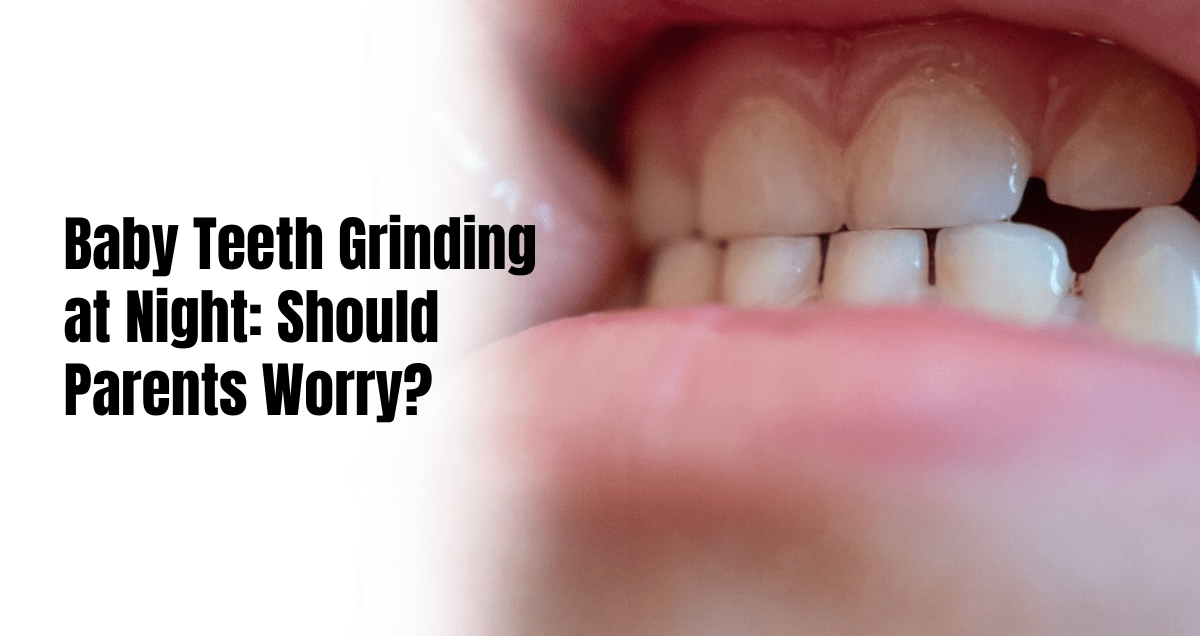
Many parents become anxious the first time they hear a grinding or scraping sound coming from their child’s room at night. The sound can be surprisingly loud and unsettling. Baby teeth grinding at night, medically known as bruxism in kids, is a fairly common condition, especially among toddlers and preschool-aged children.
While in many cases it is harmless and temporary, persistent teeth grinding in children can sometimes indicate underlying issues related to dental alignment, jaw development, or emotional stress. Understanding why it happens and when intervention is necessary can help parents make informed decisions without unnecessary worry.
What Is Baby Teeth Grinding?
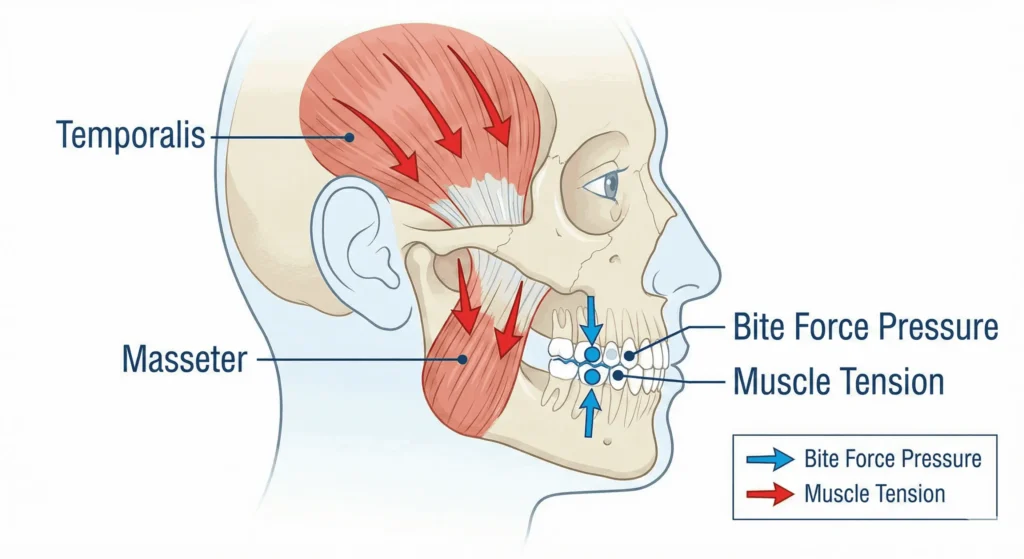
Teeth grinding, or bruxism, occurs when a child clenches or rubs their upper and lower teeth together unconsciously, most often during sleep. Some children also grind their teeth while awake, especially when concentrating or feeling stressed.
In children, this habit typically begins between ages 2 and 4, often coinciding with:
- Eruption of new baby teeth
- Changes in bite alignment
- Developmental milestones
Because baby teeth have thinner enamel compared to adult teeth, parents often worry that grinding will quickly cause damage. However, mild grinding usually does not result in serious harm.
Why Do Children Grind Their Teeth at Night?
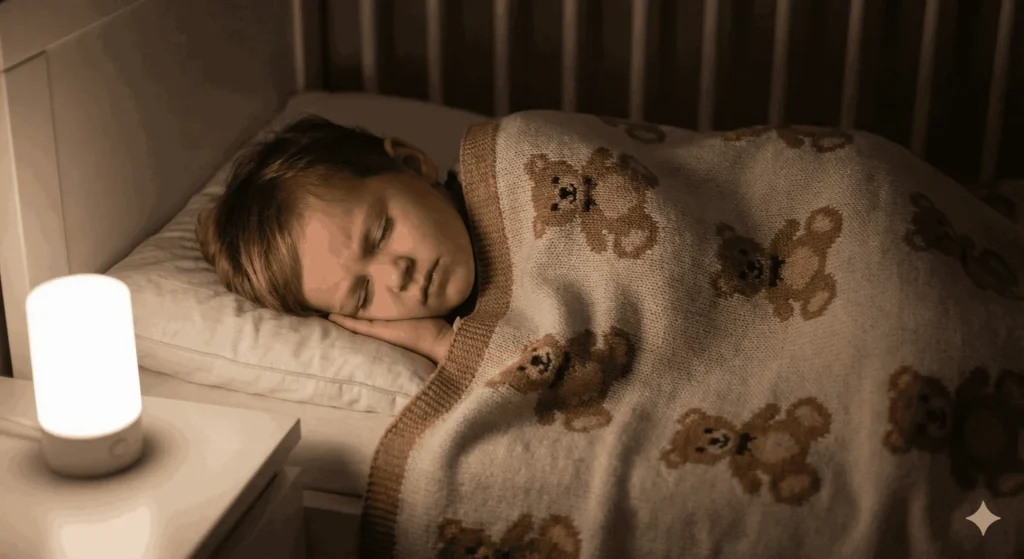
There is no single cause of baby teeth grinding at night. Instead, it is usually a combination of developmental and behavioral factors.
Natural Growth and Bite Adjustment
As baby teeth erupt and jaws grow, the bite constantly changes. Grinding may simply be the body’s way of adjusting the position of teeth.
Teething Discomfort
When new teeth are erupting, mild irritation in the gums can lead children to grind for relief.
Stress or Emotional Changes
Even young children experience stress. Changes in routine, starting school, sibling rivalry, or sleep disturbances may contribute to bruxism in kids.
Sleep Issues
Children with disrupted sleep patterns or mild airway concerns may grind their teeth during lighter sleep stages.
Hyperactivity or Active Personalities
Some highly active children show a higher tendency toward nighttime grinding.
Often, baby teeth grinding at night has no serious medical cause and gradually reduces as the child grows.
Is Teeth Grinding Normal in Young Children?
In most cases, yes. Occasional grinding in toddlers is considered a normal developmental phase. Many children naturally stop grinding by the age of 6, especially as permanent teeth begin to emerge.
If grinding:
- Is mild
- Does not cause pain
- Does not damage teeth
- Does not disturb sleep
then observation and routine dental monitoring are usually sufficient.
Potential Effects of Teeth Grinding in Children
While mild bruxism may not be harmful, prolonged or aggressive grinding can affect oral health.
Possible consequences include:
- Flattened or worn-down tooth surfaces
- Increased tooth sensitivity
- Jaw muscle soreness
- Headaches upon waking
- Minor cracks or chipping in severe cases
If left unchecked over time, grinding may contribute to bite irregularities or jaw discomfort.
When Should Parents Be Concerned?
Parents should not panic at the first grinding sound, but certain signs indicate that professional evaluation is necessary.
Seek dental advice if:
- Grinding is loud and occurs every night
- The child complains of jaw pain or facial soreness
- Morning headaches are frequent
- Teeth appear flattened or chipped
- The child has difficulty chewing
- Grinding continues beyond age 6 or 7
Persistent child grinding teeth while sleeping may suggest bite alignment issues that benefit from early evaluation.
Can Baby Teeth Grinding Affect Permanent Teeth?
Most children outgrow bruxism before permanent teeth fully erupt. However, if grinding continues into the mixed dentition stage (when both baby and permanent teeth are present), it may influence how permanent teeth align.
Early monitoring helps ensure that jaw growth and tooth eruption remain on track.
How Is Teeth Grinding Treated in Children?
Treatment depends on severity and underlying causes.
Mild Cases
- Monitoring during regular dental visits
- Encouraging stress reduction
- Improving bedtime routines
Moderate Cases
- Bite assessment
- Addressing airway or sleep concerns
- Behavioral guidance
Severe Cases
- Custom night guards (usually for older children)
- Early orthodontic intervention if required
Every child requires individualized evaluation before deciding on treatment.
Why City Smiles Dental Care Is the Right Choice for Managing Teeth Grinding in Kolkata
At City Smiles Dental Care, we understand that hearing your child grind their teeth at night can be concerning. Our focus is on carefully evaluating whether baby teeth grinding at night is a temporary developmental phase or linked to bite alignment or jaw growth issues. Each child undergoes a detailed assessment to monitor tooth wear, jaw development, and overall oral health. Located in South Kolkata, the clinic provides dependable and child-friendly dental care designed to protect growing smiles.
Why parents choose City Smiles Dental Care for child dental concerns:
- Early assessment of bruxism in children
- Monitoring jaw growth and teeth alignment
- Preventive approach to long-term dental problems
- Gentle, child-friendly examination methods
- Clear communication and guidance for parents
- Ethical and patient-first treatment planning
- Trusted dental clinic in South Kolkata
Conclusion
Baby teeth grinding at night is common and often part of normal growth and development. In many children, it resolves naturally without causing harm. However, persistent or severe grinding can lead to tooth wear, jaw discomfort, or bite problems. Observing symptoms carefully and seeking professional guidance when needed ensures healthy dental development and peace of mind for parents.
FAQs
- Is baby teeth grinding at night dangerous?
In most cases, it is harmless and temporary. Severe or persistent grinding should be evaluated. - At what age do children stop grinding their teeth?
Many children stop naturally by age 6. - Can stress cause teeth grinding in children?
Yes, emotional stress can contribute to bruxism. - Does my child need a night guard?
Night guards are usually recommended only for older children with significant tooth wear. - Can teeth grinding affect jaw growth?
Persistent grinding may influence jaw development and should be monitored.